
If you’ve ever tried to grab a hen off her nest, you already know the truth: hens do not go quietly. They flap, they peck, they scream like you’ve committed a crime, which is probably why so many people end up typing “how to steal a hen” into Google in the first place.
Here’s the thing. Most people asking this aren’t looking to sneak into a neighbour’s yard at midnight, and we won’t cover that, because taking someone else’s animals is illegal and can get a bird hurt in the process. What people actually mean, almost every time, is one of three things: how to catch a hen that won’t be caught, how to slide eggs out from under a broody hen without getting bitten, or how to stop actual thieves from walking off with their own flock. This guide covers all three, in plain language, with steps that actually work in a real backyard, not just in theory.
💬 Disclaimer: this guide is for general poultry-care information only — catching, handling, and collecting eggs from your own hens. It does not cover, and doesn’t endorse, taking someone else’s animals or property.
Quick Facts
| Best time to catch a hen | After dark, while she’s roosting |
| Best way to collect eggs from a broody hen | Gloved hand, slide sideways, don’t lift straight up |
| Time to break broodiness | Usually 3–5 days; stubborn cases up to 2 weeks |
| Main broodiness triggers | Warmth, dark nest box, egg build-up |
| Key hygiene note | Wash hands after handling chickens or eggs (salmonella risk) |
| Best theft deterrents | Locked coop, motion-sensor light, alert bird in the flock |
In this article:
- Why Hens Are So Hard to Catch in the First Place
- How to Catch (or "Steal") a Hen Without a 20-Minute Chase
- How to Collect Eggs from a Broody Hen Without Getting Pecked
- A Few Mistakes to Avoid
- How to Break a Broody Hen (If She Won't Stop Sitting)
- Protecting Your Hens from Actual Thieves
- Frequently Asked Questions
- Final Thoughts
Why Hens Are So Hard to Catch in the First Place
A hen sitting on eggs isn’t being difficult for fun. She’s guarding her nest, and every instinct in her body is telling her to fight for it. Add in the fact that chickens are naturally jumpy around sudden movement, and you’ve got a bird that’s part guard dog, part escape artist. This standoff is exactly why so many keepers end up joking about “stealing” a hen in the first place.
That’s why chasing a hen around the yard almost never works. It stresses the bird, wastes your morning, and usually ends with you empty-handed and out of breath. The trick isn’t speed, it’s timing, calm hands, and knowing exactly where to grip.
How to Catch (or “Steal”) a Hen Without a 20-Minute Chase
Whether you’re moving a hen to a new coop, treating an injury, or just need her off the nest for a moment, catching a chicken calmly comes down to a few habits.
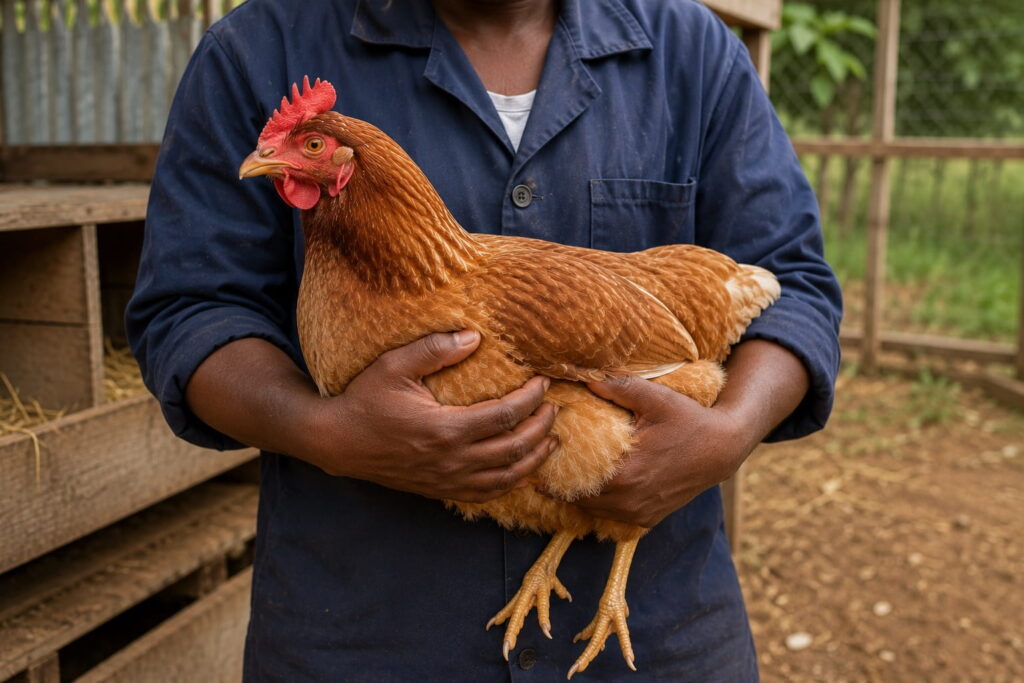
The easiest way to catch a hen is after dark, while she’s roosting. During the day, calmly guide her into a corner instead of chasing her across the yard, then support her body with both hands while gently securing her wings against her sides.
Move at night, if you can. Chickens go almost still once it’s dark and they’ve settled on the roost. Scoop her up gently with both hands, one under the breast and one supporting the legs, and she’ll barely stir.
During the day, corner her — don’t chase her. Herd her gently toward a wall, fence, or coop corner rather than running straight at her. Chickens panic when they feel cornered by open space; they calm down when the space narrows.
Keep your hands low and slow. A hand coming down fast from above looks like a hawk attack to a chicken. Approach from the side, low to the ground, and scoop rather than grab.
Use a net for flighty breeds. Some hens — especially lighter, more skittish breeds — are simply faster than your hands. A soft fishing or poultry net saves you both the stress.
Once she’s in your hands, hold her snugly against your body with her wings pinned gently to her sides. A hen that can’t flap feels secure, not trapped.
How to Collect Eggs from a Broody Hen Without Getting Pecked
This is the part most backyard keepers actually mean when they say “stealing eggs” — removing eggs from underneath a broody or protective sitting hen without triggering a peck-fest. A broody hen is simply a hen that has stopped laying and settled onto the nest, determined to hatch whatever eggs are under her, fertile or not.
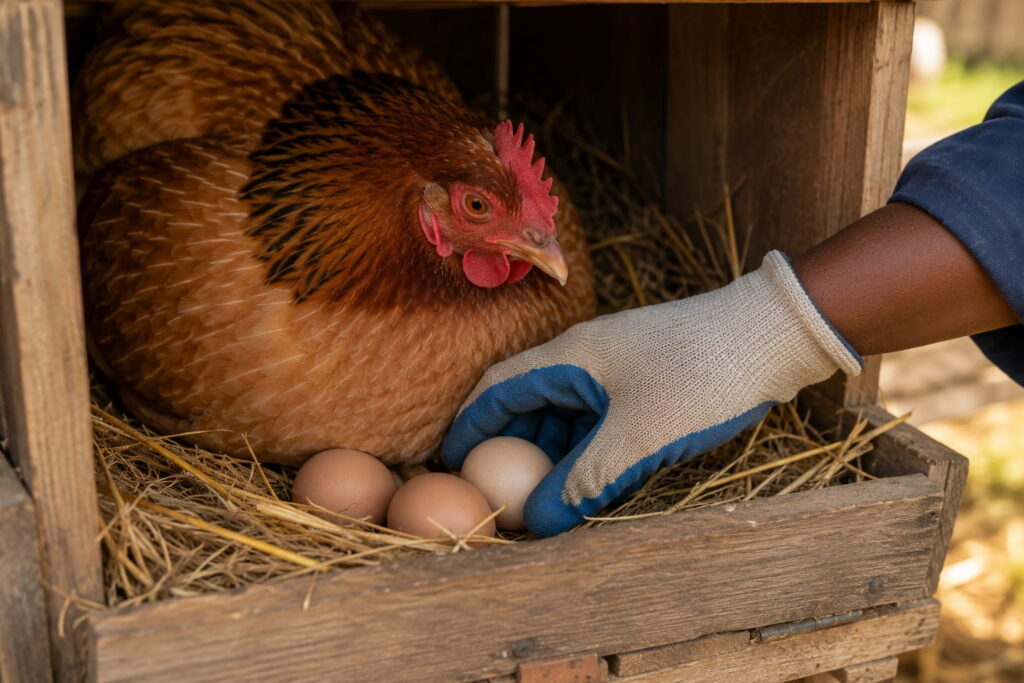
To collect eggs from a broody hen, approach calmly, wear a glove if needed, distract her with one hand over her back, and slide the eggs out from the side rather than lifting straight up.
- Wear a glove on your egg hand. A broody hen’s peck is quick and surprisingly hard. One glove is usually enough.
- Distract with your other hand first. Gently stroke her back or place a light hand over her wings so she can’t lift up suddenly.
- Slide, don’t yank. Slip your fingers under her breast feathers from the side, not straight from the front, and slide the eggs out sideways rather than pulling them up.
- Move quickly but gently. The whole motion should take a few seconds. Lingering gives her time to react.
- Leave a decoy egg if she’s still laying. A ceramic or wooden egg keeps her settled on the nest so she keeps using that spot, instead of hiding eggs somewhere new.
Do this daily and most hens get used to the routine within a week or two.
A Few Mistakes to Avoid
A little care here saves both you and the hen a bad day.
- Don’t grab a wing. It’s the fastest way to injure a bird, and it won’t stop her from flapping anyway.
- Don’t chase for more than a minute or two. If she’s not settling, back off and try again later — a stressed hen is harder to catch every time.
- Never carry a chicken by one leg. Support her body with both hands instead.
- Wash your hands after handling chickens or eggs. Poultry can carry salmonella, so this isn’t optional, even when the bird looks perfectly healthy.
- Keep young children supervised around broody or protective hens, since a determined peck can break skin.
If a hen becomes unusually aggressive, stops eating, looks weak, or stays broody for several weeks despite your best efforts, it’s worth checking in with an experienced poultry keeper or a vet rather than pushing through on your own.
How to Break a Broody Hen (If She Won’t Stop Sitting)
A hen that’s determined to hatch eggs, even infertile ones, will stop laying altogether and can lose condition sitting there for weeks. If you don’t want chicks, breaking the broodiness is kinder to her than letting her sit indefinitely.
- Remove her from the nest several times a day. Physically taking her off and putting her somewhere else, again and again, interrupts the hormonal cycle that keeps her broody.
- Cool her underside down. Broodiness is partly a heat response. A wire-bottomed cage or crate raised off the ground, away from the nest box, lets air circulate under her and cools her body temperature.
- Block access to the nest box for a few days. No nest, no sitting. Close it off or hang a curtain over the opening.
- Keep her busy. Fresh food, water, and a change of scenery, even a short spell in a separate run, helps snap her attention away from the nest.
Most hens break out of broodiness within three to five days using this approach. If she’s still sitting hard after a week or two, it’s worth having her checked, since some hens genuinely struggle to shake it.
Protecting Your Hens from Actual Thieves
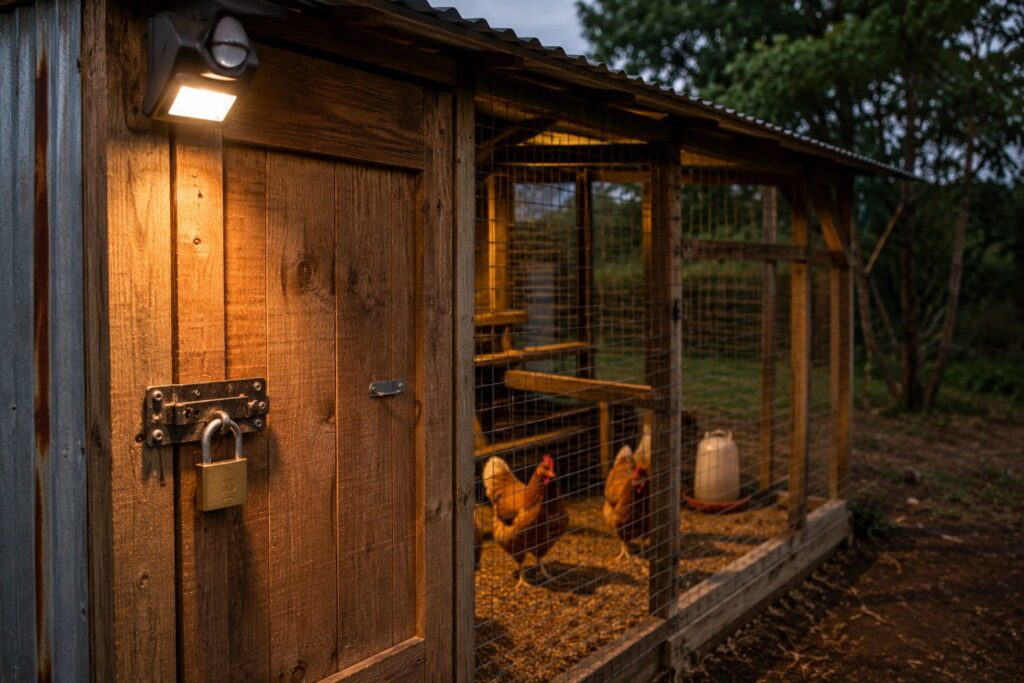
Now for the flip side, because chicken theft is a real and growing headache for backyard keepers, especially around festive seasons when demand for a good chicken dinner spikes.
- Lock the coop every single night, not just when you remember. A simple padlock or sliding bolt stops most opportunistic thieves cold.
- Light up the coop area. A motion-sensor light does more to scare off a thief than any lock, since most people who steal chickens don’t want to be seen doing it.
- Keep a noisy bird or two in the mix. Guinea fowl and certain rooster breeds raise an alarm the moment something unfamiliar approaches, which is often enough to send an intruder running. Guinea fowl are excellent alarm birds, but they’re also loud most of the day and tend to wander, so they’re not the right fit for every backyard.
- Avoid obvious routines. If your coop is visible from the road and you free-range at the same time every evening, you’re advertising a schedule. Vary it where you can.
- Mark valuable birds with numbered leg bands or photographs if you’re keeping a pricier breed. It won’t stop a theft, but it makes stolen birds harder to resell and easier to identify if recovered. Microchipping is possible but is usually reserved for specialist or high-value breeding stock rather than a typical backyard flock.
A little prevention goes a long way, most chicken theft is opportunistic, and removing the easy opportunity is usually enough to put thieves off entirely.
Frequently Asked Questions
How do you steal a hen?
In practice, “stealing” a hen just means catching or handling one that doesn’t want to be caught, corner her calmly, support her body with both hands, and avoid sudden movements. If you mean collecting eggs from underneath her, a gloved hand and a sideways slide does the job without a peck.
How do you catch a hen that won’t let you near her?
Corner her gently against a wall or fence rather than chasing in open space, and approach low and slow rather than reaching down from above.
How do you take eggs from a broody hen without being pecked?
Wear a glove, distract her with a hand over her back, and slide the eggs out sideways rather than lifting straight up.
How long does it take to break a broody hen?
Most hens stop broodiness within three to five days with consistent removal from the nest and a cooler resting spot. Stubborn cases can take up to two weeks.
Does removing the eggs stop a hen from being broody?
Not on its own. Taking the eggs away reduces what she has to sit on, but many hens will keep sitting on an empty nest anyway, broodiness is driven by hormones, not just the presence of eggs.
Why do hens go broody in the first place?
It’s a hormonal instinct triggered by warmth, darkness in the nest box, and a build-up of eggs, not something you can train out of a hen permanently, only manage each time it happens.
What’s the best way to stop chickens from being stolen?
Lock the coop nightly, add motion-sensor lighting, and keep a loud, alert bird in the flock to raise the alarm.
Final Thoughts
“Stealing” a hen, in the way most people actually mean it, isn’t about sneaking around, it’s about outsmarting a bird that’s naturally built to resist you. Learn to move calmly, time your approach right, and respect her instincts, and you’ll get the eggs, the catch, or the calm hen you’re after without a single scratch. And if it’s your own flock you’re worried about protecting, a locked coop and a bit of light go further than most people expect.
With a little patience and consistent handling, most hens become noticeably calmer around the same person over time, which makes everyday tasks like health checks, moving birds, and collecting eggs safer and easier for everyone involved.
