What is a lavender marriage and how does it happen in Zambia? Understand the meaning, causes, risks, and effects, with guidance for families and communities. Understanding a term that is quietly reshaping conversations about marriage, identity, and social pressure in Zambia.

What Is a Lavender Marriage?
Quick Definition: A lavender marriage is a legally recognised marriage between a man and a woman in which one or both partners are gay, lesbian, or bisexual — and where the marriage is entered into primarily to conceal that fact from family, society, employers, or the community. It is a marriage of social convenience, not romantic love.
The term has nothing to do with the colour. Lavender has historically been associated with LGBTQ+ identity since at least the 1920s, and the phrase “lavender marriage” grew from that cultural context.
For most people in Zambia, this term is new. Many are encountering it online, through social media, TikTok videos, or articles, and trying to understand what it actually means and whether it is happening here at home.
The short answer is: yes. And understanding it requires understanding not just the definition, but the social conditions that make it happen.
Lavender Marriage Meaning Explained
At its core, a lavender marriage is a marriage of concealment.
One or both people in the relationship identify as gay, lesbian, or bisexual, but they marry someone of the opposite sex to appear heterosexual. From the outside, the marriage looks completely normal. It follows all the expected social, religious, and legal forms.
But the emotional and sexual reality inside the marriage is very different from what is presented to the world.
Some important clarifications:
- It is not the same as a forced marriage, though social pressure often plays a role
- It is not always agreed upon by both partners, sometimes only one person knows the full arrangement
- It’s not a new trend, it has existed across many cultures for centuries, under different names
- It is not something limited to celebrities, it happens among ordinary people, including in Africa and Zambia
The term “lavender marriage” is sometimes used interchangeably with mixed-orientation marriage or marriage of convenience, though these terms have slightly different shades of meaning.
History of Lavender Marriage
The concept is old. The term, however, is relatively modern.
In the early 20th century, particularly in Hollywood during the 1920s to 1950s, major film studios began inserting morality clauses into their actors’ contracts. Being openly gay could end a career overnight. Some studios reportedly arranged marriages between closeted gay actors and other actors or staff, specifically to manage public perception and protect box office revenue.
This is where the term “lavender marriage” became widely documented. Actors like Rock Hudson, who was gay and under enormous industry pressure, married women to protect their careers and public image.
But this was never just a Hollywood story.
Across Asia, the Middle East, and Africa, similar arrangements have existed for as long as social and legal systems have punished same-sex love. In China, these arrangements are known as Xinghun (nominal marriage). In South Asia, they have been reported extensively in Pakistani and Indian communities in the UK, where family expectations and cultural honour played strong roles.
And in sub-Saharan Africa, peer-reviewed research has documented that some men who have sex with men marry women, including lesbian women, specifically so that both partners can conform to family and community expectations while maintaining a private life that differs from what is shown publicly.
The term may be new to many Zambians, but the reality it describes is not.
Why Do People Enter Lavender Marriages? Common Reasons Explained
People do not enter lavender marriages out of carelessness. They enter them because the pressure not to feels unbearable.
Here are the most common reasons:
1. Fear of family rejection
In Zambia and many African cultures, family ties are central to identity and wellbeing. Being disowned, or feared to be disowned, because of one’s sexuality is a real threat. A lavender marriage can feel like the only way to maintain those family bonds.
2. Social and community pressure
Communities, especially in smaller towns and rural areas, often enforce strict norms around marriage. Being unmarried past a certain age can itself bring scrutiny and gossip. Marrying, even in a lavender arrangement, can feel like relief.
3. Fear of legal consequences
In Zambia, same-sex sexual conduct is criminalised under Sections 155 and 156 of the Penal Code, with penalties as severe as fifteen years to life imprisonment. This creates intense fear of exposure and can push LGBTQ+ individuals toward arrangements that provide legal and social cover.
4. Religious and church pressure
Zambia is constitutionally declared a Christian nation. Many Zambian churches actively teach that homosexuality is sinful, and some church communities can respond with exclusion or hostility if a member is known or suspected to be gay. Marriage is often seen as the expected Christian life path, creating additional pressure.
5. Career and financial security
In some professions and workplaces, especially in public service, education, or religious organisations, being known as gay or lesbian can mean losing a job. A visible marriage can serve as a form of professional protection.
6. Protection from violence
Social stigma in Zambia against LGBTQ+ people is documented to sometimes result in harassment or violence. Being visibly married reduces the risk of being identified and targeted.
7. Genuine care or friendship
Some arrangements grow out of real affection between two people who understand each other’s situations. They may not be in love romantically, but they trust each other, and they choose to build a shared life on that foundation.
Not all of these reasons are equally sympathetic or unproblematic. Some arrangements harm the other partner deeply, especially when that partner does not fully know what they have entered into.
Is Lavender Marriage Happening in Zambia?
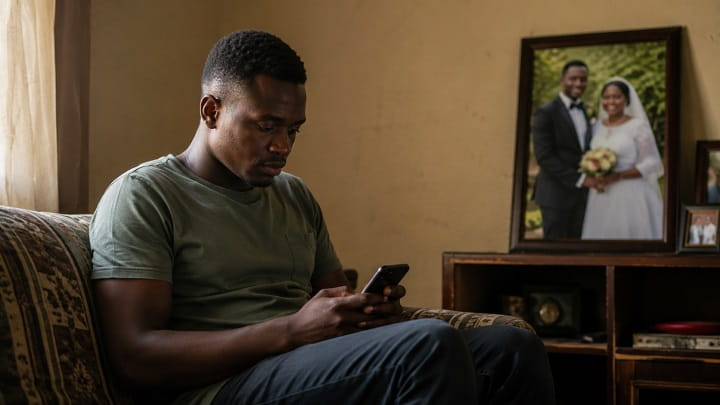
This is the question many Zambians are genuinely asking.
The honest answer is: it is likely more common than it appears, though it is extremely difficult to document precisely. By definition, these arrangements are hidden.
Research published in peer-reviewed journals has documented that in several East and Southern African countries, including Zambia, some men who have sex with men marry women as a form of social cover. Some of these arrangements involve mutual awareness; others do not.
Zambia’s specific context makes lavender marriages more, not less, likely:
- Homosexual conduct is criminalised with severe penalties
- The country is constitutionally a Christian nation, with strong church involvement in public life
- Family and community expectations around marriage are intense
- Social stigma against LGBTQ+ people is well-documented
- There are no legal protections against discrimination based on sexual orientation
These conditions do not create LGBTQ+ people, sexuality is not shaped by law or culture. But they do create conditions where LGBTQ+ people feel they have no choice but to hide.
Marriage and Sexuality in Zambia: The Social and Legal Context
To understand lavender marriages in Zambia, you have to understand the environment they exist within.
Legal position: Zambia’s Penal Code criminalises same-sex sexual conduct. The law carries maximum penalties of fourteen to life years in prison. Zambia does not recognise same-sex marriages or civil unions. These laws were inherited from British colonial rule and have remained largely unchanged since independence in 1964.
Constitutional position: Zambia’s constitution declares the country a Christian nation. This shapes the relationship between church, state, and public morality in ways that have direct implications for how LGBTQ+ people are treated in public life.
Social attitudes: Surveys and reports consistently show that social attitudes toward LGBTQ+ people in Zambia are predominantly negative. Younger generations in urban areas, particularly those with internet access, tend to hold slightly more varied views, but acceptance is far from widespread.
Church influence: Religious institutions, particularly Pentecostal, Catholic, UCZ, and mainline Protestant churches, play a very significant role in Zambian community life. Many churches take a strong stance against homosexuality and celebrate heterosexual marriage as a sacred and essential institution.
This is the environment within which any lavender marriage in Zambia exists. It is not a casual or free choice, it is a survival calculation made under real pressure.
Lavender Marriage Cultural Impact: Family and Community Effects in Zambia
A lavender marriage does not just affect the two people in it. It ripples outward.
For the unknowing partner: If one spouse enters the marriage without full knowledge of the arrangement, they may spend years confused about why their marriage feels emotionally distant, why intimacy is absent or uncomfortable, and why something they cannot name seems wrong. This can cause lasting damage to self-esteem, emotional security, and trust.
For children: Children born into or raised in these marriages are often loved and cared for. But they may also grow up in a household with underlying tension that is never explained. They may eventually discover the truth, which can require significant emotional processing.
For families: Families who have celebrated a lavender marriage as a success, a child who married, started a family, met expectations, may one day face an unexpected truth. How families process this depends enormously on their faith, their maturity, and the depth of their relationships.
For communities: Communities enforce marriage norms not out of cruelty, but because they believe in the institutions they have built. When lavender marriages are eventually exposed, which sometimes happens, communities may feel deceived. This can fuel hostility toward LGBTQ+ people more broadly, rather than leading to honest reflection on what drove the arrangement in the first place.
For the LGBTQ+ person themselves: Living a double life is not cost-free. The psychological burden of sustained concealment is well-documented and significant.
Lavender Marriage in Christian and Traditional Society in Zambia
It would be dishonest to write about lavender marriages in Zambia without engaging seriously with the Christian and traditional perspectives that shape how most Zambians view marriage.
The Christian view of marriage, held by the vast majority of Zambian churches, is that marriage is a covenant between one man and one woman, designed by God, and that sexual intimacy is intended only within that covenant. From this perspective, a lavender marriage is problematic on multiple levels: it involves deception, it may involve extramarital sexual activity, and it treats marriage as a social tool rather than a sacred commitment.
Many Christians would say that the real problem is not lavender marriage specifically, but the dishonesty at its core. Marriage built on concealment, from this view, undermines the foundation that marriage is meant to rest on: truth, love, and covenant faithfulness.
Traditional African values in Zambia, rooted in concepts of family, community, and lineage, also place marriage at the centre of social life. Marriage is not just a personal matter; it is a family and community affair. From this perspective, an arrangement that conceals the true nature of a relationship from the family is seen as a form of disrespect.
A note on complexity: These perspectives are sincerely held and deeply meaningful to many people. At the same time, it is worth noting that the same pressures, religious, familial, communal, are part of what drives people into lavender marriages in the first place. Addressing the phenomenon honestly may require those communities to ask difficult questions about what happens when the standards they enforce leave some of their members with no acceptable path forward.
This is not a call to abandon values. It is a call to think carefully about how values are applied, and what unintended consequences that application can create.
Lavender Marriage vs Traditional Marriage: Key Differences

| Feature | Traditional Marriage | Lavender Marriage |
|---|---|---|
| Primary motivation | Love, companionship, family | Social protection, concealment |
| Sexual orientation alignment | Both partners heterosexual (typically) | One or both partners non-heterosexual |
| Mutual knowledge | Full, shared understanding | Sometimes only one partner knows fully |
| Emotional intimacy | Generally expected and pursued | Often limited or absent |
| Sexual intimacy | Generally expected | Often absent or infrequent |
| External appearance | What it looks like inside is usually what it is | Externally conventional; internally very different |
| Driving force | Personal desire and choice | Social, legal, or religious pressure |
| Risk to uninformed spouse | Lower | Higher — potential for deep emotional harm |
| Long-term sustainability | Variable | Often fragile without full honesty |
| Children involved | Common | Possible, and adds complexity |
Lavender Marriage Benefits and Risks: What You Should Know
It is important to be honest about both sides of this, without idealising or demonising either.
Perceived Benefits
- Social safety — reduces risk of discrimination, violence, or legal consequences
- Family acceptance — allows the person to maintain family relationships that might otherwise be severed
- Economic stability — may protect employment and financial standing
- Reduced isolation — provides a socially legible identity and role
- Mutual support — in some consensual arrangements, both partners genuinely care for each other and benefit from the relationship
Real Risks
- Deception of an innocent spouse — if only one partner knows the full arrangement, the other may suffer significant emotional harm
- Emotional suppression — living a hidden identity over years takes a serious toll on mental health
- Relationship breakdown — lavender marriages often become unsustainable as both partners’ needs go unmet
- Children caught between realities — children may be confused, or may one day have to process a difficult truth
- Social consequences if exposed — in Zambia’s current climate, exposure can have severe legal and social consequences
- HIV and sexual health risks — research has documented that some married MSM (men who have sex with men) in sub-Saharan Africa, including Zambia, have outside sexual partners, which can create health risks for wives who are unaware
Lavender Marriage Effects: Emotional, Mental, and Relationship Impact

On the person concealing their identity:
Sustained identity concealment is psychologically costly. Living in fear of discovery, managing two separate realities, and suppressing genuine emotional and sexual needs over years or decades can lead to anxiety, depression, emotional numbness, and in some cases crisis situations.
This is not a moral judgement. It is a description of what the research on identity concealment consistently shows.
On the partner who does not know:
An unknowing spouse may spend years questioning themselves, wondering why they are not enough, why their partner seems emotionally distant, why intimacy feels strained. They may blame themselves for problems that are not caused by anything they have done. When the truth eventually emerges, it can shatter trust in a profound way.
On a partner who does know:
In fully consensual arrangements, both partners understand the situation. But even here, emotional challenges arise. The knowing partner may feel loneliness, a sense of missed romantic opportunity, or social pressure to perform a marriage that does not reflect their inner reality.
On relationships with family and friends:
Both partners may feel they cannot be fully honest with anyone outside the arrangement. This isolation, from friends, family, and church community, can compound the psychological burden.
Reflection question: Have you ever felt that you had to perform a version of yourself that does not reflect who you really are? What did that cost you, emotionally?
Lavender Marriage Signs, Red Flags, and Common Misunderstandings
This section is written carefully. There is no definitive checklist for identifying a lavender marriage. Many of the things that people identify as “signs” are also normal features of marriages going through a rough patch, personality differences, or cultural variation in how affection is expressed.
That said, some patterns do appear in documented cases:
- A spouse who is persistently emotionally unavailable without explanation
- An almost complete absence of physical intimacy that is never addressed or resolved
- A sense that the marriage exists more for external purposes (family, community, career) than for the relationship itself
- A partner who maintains a secretive social life that does not involve the other
- Feelings of profound loneliness within the marriage that are dismissed when raised
Important: None of these signs alone, or even several together, proves a lavender marriage. Many marriages go through periods of emotional distance or low intimacy for many other reasons. If you are concerned about your marriage, seeking professional counselling is far more useful than trying to diagnose the situation from a list.
Lavender Marriage: Myth vs Fact

| Myth | Fact |
|---|---|
| “Lavender marriages are just a Western thing” | They are documented across Asia, Africa, and the Middle East, wherever strong social or legal pressure against same-sex relationships exists |
| “If you are in a lavender marriage, you are a bad person” | People in these situations are often acting out of fear, not malice. That does not mean harm is not caused, but it is not that simple |
| “The partner always knows” | Often they do not. This is one of the more painful aspects of the phenomenon |
| “Lavender marriages are always planned” | Some begin as genuine attempts at heterosexual relationships that do not work; others are planned from the beginning |
| “Gay people cannot love their spouses” | Many people in lavender marriages genuinely care for their partners, even if the marriage does not fulfil all of both people’s needs |
| “Lavender marriage is illegal in Zambia” | The marriage itself is legal. What may be criminalised under Zambia’s Penal Code is the same-sex sexual conduct that may occur outside it |
| “This only happens in cities” | Social pressure in rural and peri-urban areas can be even more intense, making lavender marriages more likely, not less |
Lavender Marriage in Zambia: Guidance for Parents, Teachers, and Churches
For Parents
If you have a child, adult or young, who you suspect may be LGBTQ+, the most important thing you can do is keep the relationship open.
Young people who fear rejection at home are more likely to make desperate decisions, including entering into marriages that are not honest. A home where a young person feels they can talk, even about difficult things, reduces the pressure that drives secretive arrangements.
You do not have to abandon your values to be a parent who listens. Listening is not the same as agreeing.
For Teachers
Young people are learning about these concepts online, often without adult guidance or context. Schools and teachers who can discuss marriage, relationships, identity, and social pressure in factual, respectful terms provide something valuable: a grounded perspective before social media provides a distorted one.
This does not require taking a position on sexuality. It requires being willing to explain what terms mean and why people make the choices they make.
For Churches
Churches occupy a uniquely powerful role in Zambian social life. Many people, including LGBTQ+ people, rely on their church community for belonging, support, and meaning.
Churches that create space for honest pastoral conversations, without immediately condemning or exposing, are more likely to walk alongside people in genuinely helpful ways. The goal of pastoral care is not to perform correct belief in public; it is to accompany real people through real struggles.
A church community where LGBTQ+ people feel they will be destroyed if discovered is one that inadvertently pushes those people into deceptive arrangements. That outcome serves no one’s values well.
For Community Leaders
Community expectations around marriage are powerful. They are not wrong to exist. But when those expectations are enforced without any space for exception, nuance, or compassion, they can drive private suffering underground.
Communities that want to strengthen marriage as an institution may find it worth asking: are our norms creating space for honest marriages, or are we creating conditions where people feel they must deceive in order to belong?
Healthy Relationship Tips for Navigating Marriage Pressures in Zambia

Whether or not a lavender marriage is part of your experience, these principles apply to every relationship:
- Honesty builds trust — secrets that affect a partner’s life are not just personal choices; they have consequences for another person
- Marriage is not a solution to social pressure — entering a marriage to satisfy family or community expectations, without genuine compatibility, tends to create more problems than it solves
- Both partners deserve to know what they are entering — informed consent is a fundamental part of a fair relationship
- Emotional intimacy matters — a marriage without genuine emotional connection will struggle, regardless of what it looks like from outside
- Seek counsel early — many relationship problems, if addressed early, are manageable; left unaddressed, they become crises
- Respect your own needs — suppressing who you are indefinitely is not sustainable; finding safe ways to be honest is usually better in the long run, even if it is difficult
Lavender Marriage Support: Counselling and Communication Guidance

If you are in a marriage that feels dishonest, whether you are the person concealing something, or the partner who suspects something is wrong, the most productive step is to seek support.
Talking to a counsellor: A qualified relationship counsellor or therapist can create a confidential space where you can be honest about what you are experiencing. This is true whether you are the person who has been hiding something, or the partner who is confused and hurting.
In Zambia, counselling services are available through hospitals, private practices, and some NGOs. Faith-based counselling is also available through many churches, though the quality and approach varies.
Communication within the relationship: If you are in a lavender marriage and your partner does not know, the path forward is rarely simple. But it typically involves, at some point, greater honesty. How and when that happens, and what support structures are in place when it does, matters enormously.
If you are the unknowing partner and you have begun to suspect something, raising concerns with a counsellor before confronting your partner directly can help you prepare emotionally for different possible outcomes.
Online communities: Some people find support in speaking with others who have been through similar experiences. Online spaces, including some based in Africa, exist for this purpose. Be cautious about which spaces you engage with, and ensure you are not sharing personal identifying information.
What to Do If You Feel Trapped in a Lavender Marriage in Zambia

This section is for anyone, regardless of gender or sexuality, who feels they are in a marriage that is causing them harm.
You are not alone. Many people are in marriages they feel they cannot leave, for financial, cultural, religious, or safety reasons. Feeling trapped is not weakness. It is a response to real constraints.
Your feelings are valid. If you feel deceived, confused, lonely, or emotionally harmed within your marriage, those feelings deserve to be taken seriously, by you, and by any professional you speak with.
Practical steps:
- Speak confidentially with a trusted counsellor, doctor, or social worker
- If you are in physical danger, contact the Zambia Police Service or seek help from a trusted community leader or organisation
- If you are considering leaving the marriage, seek legal advice about your rights under Zambian family law
- Also, if you have children, their safety and wellbeing should be prioritised in any decisions made
For LGBTQ+ individuals who feel trapped in a lavender marriage:
The legal environment in Zambia makes open discussion extremely difficult. Seeking support from trusted, confidential sources, a private counsellor, a trusted friend, or an organisation that works discreetly with vulnerable people, is important before making any major decisions.
Do not make sudden, public decisions that could expose you or your family to harm without having support in place first.
Frequently Asked Questions About Lavender Marriage in Zambia
What is the simple meaning of lavender marriage?
A lavender marriage is a legally recognised marriage between a man and a woman where one or both partners are gay, lesbian, or bisexual. It is entered into primarily to conceal that fact from family, society, or authorities, not for romantic love. It is a form of marriage of convenience.
Is lavender marriage happening in Zambia?
It is almost certainly happening, though it is difficult to document because these arrangements are by nature hidden. Zambia’s legal and social environment, including criminalisation of same-sex conduct and strong community and religious pressure to marry, creates exactly the conditions that historically produce lavender marriages.
Is a lavender marriage illegal in Zambia?
The marriage itself is legal, it is a standard civil or customary marriage between a man and a woman. What may be illegal, under Zambia’s Penal Code, is any same-sex sexual conduct that occurs alongside it. The marriage as a legal institution is not illegal.
What is the difference between a lavender marriage and a normal marriage?
In a traditional marriage, both partners typically share a romantic and sexual bond. In a lavender marriage, one or both partners are not heterosexual, and the marriage is entered into primarily for social, legal, or family reasons, not romantic ones. The key differences are motivation, emotional and sexual intimacy, and often, full disclosure between partners.
What are the signs of a lavender marriage?
There is no definitive checklist. Some patterns that appear in documented cases include persistent emotional unavailability, very limited or absent physical intimacy, a marriage that seems to exist more for external appearances than internal connection, and a partner who maintains a secretive personal life. However, many of these signs can also reflect other relationship problems. Professional counselling is more useful than trying to self-diagnose.
Why would someone agree to be in a lavender marriage?
People agree for many reasons: fear of family rejection, fear of legal consequences, social and community pressure, financial security, or genuine care and friendship for the other person. In Zambia, the legal and social risks of being known as LGBTQ+ are significant enough that a lavender marriage can feel like the safest available option.
Can a lavender marriage ever work?
It depends entirely on the nature of the arrangement and the honesty between the partners. Fully consensual arrangements, where both people understand the situation and choose it freely, are more likely to be sustainable than arrangements built on concealment. But even consensual lavender marriages carry real emotional costs and risks. There is no simple answer.
What should I do if I think my marriage might be a lavender marriage?
Seek confidential professional support before taking any action. A counsellor or therapist can help you process your feelings, understand your situation more clearly, and think through your options. Reacting in anger or confronting publicly without support in place can make a complex situation worse.
Is lavender marriage sinful from a Christian perspective?
Christian perspectives on this vary. Most Zambian churches would say that the concealment involved in lavender marriages is incompatible with the honesty that Christian marriage requires. Some would go further and say that any sexual orientation outside heterosexuality is sinful in itself. These are deeply held views within the Zambian church community. People holding these views would generally counsel that any person struggling with questions of sexuality should seek pastoral support and be honest with God and their spouse, rather than building a marriage on concealment.
Where can someone in Zambia get help if they are struggling with these issues?
Options include private counselling services, hospital-based mental health services, trusted pastoral leaders, or NGOs working in health and wellbeing in Zambia. If you are in physical danger, contact the Zambia Police Service. For legal advice related to marriage, consult a qualified lawyer or a legal aid clinic.
This article is educational in nature. It does not constitute legal, medical, or pastoral advice. Individuals facing complex personal situations should seek qualified professional support.
Related Posts: