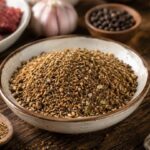
Everything you need to know about breakfast sausage seasoning — spices, flavor science, homemade blends, common mistakes, and regional styles explained.

Table Of Contents
- What is in breakfast sausage seasoning?
- How does breakfast sausage get its flavor?
- What gives breakfast sausage that distinct taste compared to other sausages?
- What herbs are in breakfast sausage?
- What is the spice they put in sausage?
- What are the three basic ingredients in sausage?
- What makes pork sausage breakfast sausage?
- Is there a difference between regular sausage and breakfast sausage?
- Can I season breakfast sausage to taste like Italian sausage?
- What is the secret to great sausage seasoning?
- What are the most common sausage spices?
- What are the best spice blends for sausage?
- What is number 10 sausage seasoning?
- What are the ingredients in Old Plantation sausage seasoning?
- What is the seasoning in Old Yorkshire sausage?
- What are Cumberland sausages seasoned with?
- What's in an Old English sausage?
- What is breakfast sausage in the UK?
- What is a traditional Yorkshire breakfast?
- What is the unhealthiest breakfast meat?
- Is breakfast sausage already seasoned?
- What can I add to breakfast sausage to make it taste better?
- How to make your own breakfast sausage?
- What is the secret to juicy sausage?
- What are common mistakes in sausage making?
- How to season something to taste like sausage?
- What is a breakfast sausage that tastes like McDonald's?
- What's the best tasting breakfast sausage?
- What's the secret to making sausage taste like it came from a butcher?
- What are the best spice blends to put on sausage for cooking?
- Can I use different spices for sausage?
- How are sausages seasoned in professional operations?
- What are the ingredients in a complete homemade breakfast sausage seasoning blend?
- Does MSG belong in sausage seasoning?
- Why does my homemade breakfast sausage taste bland?
- What's a complete reference for sausage spice ratios?
What is in breakfast sausage seasoning?
Classic American breakfast sausage seasoning is built around sage, black pepper, salt, and a touch of sweetness — typically brown sugar or maple syrup. Beyond that core, most recipes layer in thyme, marjoram, red pepper flakes, and sometimes a pinch of nutmeg or allspice.
The full standard blend looks something like this:
- Sage — the defining herb; earthy, slightly piney, unmistakably “breakfast”
- Black pepper — coarse-ground for bite and warmth
- Kosher salt — draws moisture, enhances every other flavor
- Thyme — herbal backbone that deepens the sage
- Marjoram — gentler than oregano; adds subtle floral complexity
- Red pepper flakes — heat, used sparingly in mild versions, more aggressively in “hot” blends
- Nutmeg or allspice — optional, but adds a quiet warmth that rounds everything out
- Brown sugar or maple syrup — a small amount balances the savory and cuts any bitterness from the sage
The ratio matters more than the ingredient list. Too much sage and the sausage tastes medicinal. Too little and it reads as generic ground pork. Most experienced sausage makers use roughly 1 teaspoon of dried sage per pound of meat as a starting baseline, then adjust everything else around that anchor.
How does breakfast sausage get its flavor?
Breakfast sausage gets its recognizable flavor from the combination of sage and pork fat working together, amplified by black pepper and salt. No single spice does it alone — the flavor is genuinely a system.
Here’s the science behind it: fat is a flavor carrier. When dried herbs like sage and thyme are mixed with ground pork containing a meaningful fat percentage (ideally 20–30%), the fat-soluble aromatic compounds in those herbs dissolve and distribute through every bite. That’s why sausage made with ultra-lean pork tastes flat even when correctly seasoned — there isn’t enough fat to carry or sustain the flavor.
Salt plays a second critical role beyond seasoning. It begins to break down myosin proteins in the meat, which creates a stickier texture and helps the sausage hold together without needing fillers. This protein extraction is what gives a properly mixed sausage patty its cohesive snap versus the crumbly texture of insufficiently worked meat.
The Maillard reaction during cooking is the final layer. When a sausage patty hits a hot cast iron pan, the sugars and amino acids at its surface undergo rapid browning, creating hundreds of new flavor compounds that smell and taste nothing like raw seasoned pork. That caramelized crust is not decoration — it’s a massive flavor event.
What gives breakfast sausage that distinct taste compared to other sausages?
Sage. Full stop. That single herb is what makes breakfast sausage immediately identifiable.
Most other fresh sausages — Italian, bratwurst, chorizo, merguez — don’t use sage. Italian sausage leans on fennel seed and garlic. Bratwurst gets its character from white pepper, caraway, and mace. Chorizo is built around smoked paprika. Sage is breakfast sausage’s signature in a way that no other spice owns any other sausage.
Beyond sage, the sweet-savory balance is distinctive. Breakfast sausage is one of the few savory sausage styles that intentionally incorporates sweetness — maple, brown sugar, or molasses — as a core flavor note rather than an afterthought. That contrast of herb, pork fat, pepper heat, and gentle sweetness is specifically engineered to pair well with eggs, pancakes, and toast.
What herbs are in breakfast sausage?
The primary herbs are sage, thyme, and marjoram, with sage carrying by far the most weight. Many recipes also add dried parsley, which contributes freshness without asserting itself much.
Fresh sage versus dried sage is worth understanding. Dried sage is more concentrated — about three times more potent by volume — and releases its aromatics more readily when mixed into raw meat. Fresh sage works well but needs to be very finely minced to distribute evenly. Most professional sausage makers prefer dried rubbed sage for patties because of the consistency it provides.
Marjoram often gets skipped in home recipes but it’s worth seeking out. It’s sweeter and less camphor-forward than oregano, and it softens the edge of sage without competing with it. Traditional European-style breakfast sausages — particularly British ones — rely on marjoram heavily.
What is the spice they put in sausage?
Across sausage traditions worldwide, black pepper is the universal sausage spice — it appears in nearly every sausage style in the world. Salt is technically a mineral, not a spice, but it’s equally non-negotiable.
Beyond that, the defining spice depends entirely on the style:
- Breakfast sausage: sage
- Italian sausage: fennel seed
- Bratwurst: white pepper, nutmeg, caraway
- Andouille: smoked paprika, cayenne, garlic
- Chorizo (Spanish): pimentón (smoked paprika)
- Chorizo (Mexican): ancho chili, cumin, vinegar
- Merguez: harissa, cumin, coriander
- Cumberland sausage: black pepper, nutmeg, mace, thyme
The spice is the sausage’s identity. Change the primary spice and you’ve changed the sausage style completely — same pork, entirely different dish.
What are the three basic ingredients in sausage?
Every sausage in the world is built on the same three-part foundation: meat, fat, and salt.
Everything else — herbs, spices, fillers, binders, smoke — is layered on top of those three. Remove any one of them and the sausage stops working as a sausage.
Meat provides protein structure. It gives the sausage its bulk and its chew. Most traditional sausages use pork shoulder (also called Boston butt), which is forgiving, flavorful, and has a reasonable natural fat content.
Fat is not optional. It carries flavor, keeps the sausage moist during cooking, and is essential for a cohesive texture. A sausage with too little fat turns granular and dry. The minimum usable fat content is around 15%; 20–30% is ideal depending on the style.
Salt does more than season. It draws moisture from the proteins and initiates myosin extraction, the process that creates the sticky protein matrix that binds sausage together. Without adequate salt — typically 1.5–2% of the total meat weight — the sausage won’t hold its shape.
What makes pork sausage breakfast sausage?
The seasoning blend and intended flavor profile, not the type of meat itself. Ground pork is the base for many sausages, but breakfast sausage is characterized by its specific herb and spice mixture — centered on sage, thyme, and black pepper — and its slight sweetness.
The designation “breakfast sausage” in the American context also implies a fresh (unsmoked, uncured) sausage typically made into patties or small links, eaten in the morning alongside eggs and toast. It’s a style classification, not a cut of pork classification.
That said, the cut of pork does matter for quality. Pork shoulder with its 20–25% fat content produces significantly better breakfast sausage than extra-lean ground pork from the loin. Lean pork creates dry, crumbly patties regardless of how well-seasoned they are.
Is there a difference between regular sausage and breakfast sausage?
Yes — and the difference is primarily the seasoning blend, the sweetness profile, and typically the absence of smoke or curing agents.
“Regular sausage” is a vague category that covers Italian, bratwurst, kielbasa, and dozens of regional styles. Breakfast sausage is a specific American fresh sausage style defined by its sage-forward herb blend and mild sweetness.
Key practical distinctions:
- Breakfast sausage uses sage, thyme, black pepper, and often a sweetener; it’s always fresh (unsmoked)
- Italian sausage uses fennel seed, garlic, and red pepper flakes; sweet or hot but not sweet in the sugar sense
- Smoked sausage (like andouille or kielbasa) has been fully cooked via smoking and has a different texture and flavor entirely
The fat content and texture also differ subtly. Breakfast sausage is typically more finely ground and has a softer, more uniform texture than Italian sausage, which is often coarser.
Can I season breakfast sausage to taste like Italian sausage?
Yes, easily. The conversion is straightforward because both start with the same ground pork base.
To turn breakfast sausage into Italian-style:
- Remove (or drastically reduce) the sage and thyme
- Add fennel seed — this is the defining move; use about ¾ teaspoon per pound
- Add garlic powder or minced fresh garlic
- Add red pepper flakes for heat (sweet Italian uses very little; hot Italian uses more)
- Add a small amount of paprika for color
- Skip any sweetener
If your breakfast sausage is already fully seasoned and cooked, you can’t uncook it — but you can compensate when using it in a recipe by adding fennel seed and garlic to the dish itself. It won’t be identical but it’ll shift the flavor profile meaningfully.
What is the secret to great sausage seasoning?
Three things that most home cooks underestimate: correct salt percentage, adequate fat, and resting time.
Salt percentage matters more than most people realize. Professional sausage makers use between 1.5% and 2% salt by weight of the total meat. That sounds precise because it needs to be. Under-salted sausage tastes flat no matter what else you’ve done right. Over-salted sausage is unpleasant in a different way. Weighing salt rather than measuring by volume is the single biggest improvement most home sausage makers can make.
Fat percentage is the second thing. If you buy extra-lean ground pork and season it perfectly, it will still taste dry and one-dimensional. Aim for ground pork that’s at minimum 20% fat, or grind pork shoulder yourself.
Resting time is the sleeper variable. After mixing ground pork with seasonings, refrigerate the mixture for at least 30 minutes — ideally several hours or overnight. This resting period allows the salt to begin protein extraction and lets the fat-soluble aromatics in your herbs and spices fully penetrate the meat. Sausage fried immediately after mixing is always less flavorful than sausage given time to rest.
What are the most common sausage spices?
Across all sausage traditions, these spices appear most frequently:
Black pepper — universal; appears in nearly every regional style worldwide.
Salt — foundational; not negotiable.
Garlic — appears in Italian, Polish, Spanish, Cajun, and dozens of other styles.
Paprika — from sweet Hungarian to smoked Spanish; used for color and flavor in many styles.
Fennel seed — dominant in Italian sausage; appears in some French styles too.
Sage — the signature herb of American breakfast sausage.
Coriander — common in South African boerewors, German bratwurst, and merguez.
Nutmeg and mace — classic in British styles, bratwurst, and white sausages.
Caraway — used in German and Central European sausages.
Cumin — dominant in chorizo and Middle Eastern lamb sausages.
Red chili (cayenne or ancho) — heat component in Cajun, Mexican, and spicy Italian styles.
Thyme and marjoram — British sausage staples; also common in French and American styles.
What are the best spice blends for sausage?
The best spice blend is entirely contextual — best for which style and which intended use. But here are the workhorses:
Classic American Breakfast Blend: Dried sage, thyme, black pepper, salt, red pepper flakes, brown sugar. Clean, versatile, works in patties or links.
Hot Breakfast Blend: Same as above with doubled red pepper and added cayenne.
Maple Breakfast Blend: Core breakfast blend with maple syrup replacing brown sugar and a pinch of nutmeg.
Italian Sweet Blend: Fennel seed, garlic, paprika, black pepper, salt, a tiny pinch of sugar.
Italian Hot Blend: Same with red pepper flakes, cayenne, and sometimes a touch of anise seed.
British/Cumberland Blend: Coarse black pepper, nutmeg, mace, thyme, sage (much more restrained than American); rusk (bread filler) is traditional.
Country/Old Plantation Style: Heavy black pepper, sage, a touch of red pepper and ginger — this is closer to old Southern American farmhouse style, made famous by blends like AC Legg’s.
What is number 10 sausage seasoning?
AC Legg’s Blend No. 10 is a pre-mixed pork sausage seasoning blend that’s been used by small butcher shops and meat processors across the American South and Midwest for decades. It’s a benchmark blend — when people describe what “real” country breakfast sausage tastes like, they’re often unconsciously describing Legg’s No. 10.
The blend is sage-forward with prominent black pepper, red pepper heat, and enough salt to function as a complete seasoning without additions. It’s designed to be mixed at roughly 3–4 ounces per 10 pounds of ground pork. Many small-town butchers in the Southeast have used it as their house sausage for generations, which is why it has a nostalgic familiarity for a lot of people.
Similar commercial blends include Old Plantation Blend 10 and various regional equivalents. These products exist because consistency across large batches is hard to achieve by eyeballing individual spices.
What are the ingredients in Old Plantation sausage seasoning?
Old Plantation Pork Sausage Seasoning Blend 10 is a professionally formulated commercial blend primarily used by small meat processors and butchers. Its typical composition includes salt, red pepper, black pepper, sage, and sometimes additional herbs. Like AC Legg’s, it’s a salt-included complete blend designed to be mixed directly with ground pork at a set ratio.
These old-style commercial blends are worth sourcing for anyone who wants to replicate traditional Southern American breakfast sausage without fine-tuning individual spices. The flavor profiles were developed decades ago and haven’t changed — which is precisely why people trust them.
What is the seasoning in Old Yorkshire sausage?
Traditional Yorkshire sausage has a seasoning profile that is notably different from both American breakfast sausage and Cumberland sausage. It’s considerably more restrained and herb-forward than American styles.
Classic Yorkshire seasoning centers on white pepper or black pepper, mace, nutmeg, and sage, with very little heat and a background note of thyme. The pepper is present but not aggressive. Mace (the outer casing of nutmeg) is a distinctly British sausage spice that Americans rarely use; it adds a warm, slightly citrusy depth that’s hard to replicate with nutmeg alone.
Yorkshire sausages also traditionally contain rusk — a dried wheat breadcrumb — which acts as a filler and binder, contributes to the lighter, more open texture, and absorbs the rendered fat during cooking to keep the sausage moist. The rusk content can be anywhere from 10–20% in traditional recipes, which is part of why authentic Yorkshire sausage has a distinctly different texture from American-style links.
What are Cumberland sausages seasoned with?
Cumberland sausage, made in the Cumbria region of northern England and protected by UK geographical indication, is defined by its exceptionally high pepper content — particularly coarse black pepper — along with nutmeg, mace, and thyme.
The distinguishing features of Cumberland seasoning:
- Black pepper in quantities that would seem excessive in other sausage styles — it’s the dominant flavor note
- Mace and nutmeg — warming spices that complement the pepper without sweetness
- Thyme — gentle herbal backbone
- No sage — unlike American breakfast sausage, Cumberland traditionally avoids sage
- No garlic — another marker of British regional style
- Very little or no sweetener
The high pepper content is what gives Cumberland sausage its immediately recognizable heat and punch. It’s not aggressive heat like chili pepper, but cumulative, building black pepper warmth. Authentic Cumberland is also sold in a long coil rather than individual links — another regional tradition.
What’s in an Old English sausage?
Old English sausage (distinct from both Yorkshire and Cumberland styles) is a somewhat loosely defined category that generally refers to a traditional British fresh pork sausage with a mild herb and spice profile.
Common components include sage, mace, nutmeg, white pepper, and salt, often with rusk as a filler. Some recipes include ginger, which adds a dry warmth. Old English sausages are typically milder than Cumberland, less specific than Yorkshire, and tend to have a slightly more generous fat content.
The “Old English” designation is often used commercially to signal a traditional flavor profile versus more contemporary or internationally influenced blends. In butcher shops across England, you’ll find significant variation — the recipe is more of a loose tradition than a standardized formula.
What is breakfast sausage in the UK?
In the UK, what gets served at a traditional fry-up (full English breakfast) is simply called a banger — a pork sausage, usually from a regional style like Cumberland, Lincolnshire, or an unbranded “pork sausage” from the local butcher.
British breakfast sausages differ from American breakfast sausage in several key ways:
- They contain rusk (bread filler), giving a softer, lighter texture
- They are typically less sweet — no maple or brown sugar
- They are less sage-forward — sage appears but isn’t the signature note the way it is in American sausage
- They use mace and nutmeg more than American recipes do
- They are always links, never patties in the traditional context
Lincolnshire sausage, another popular British style, is heavily sage-flavored — more so than other British regional styles — making it arguably the closest British equivalent to American breakfast sausage in terms of herb character.
What is a traditional Yorkshire breakfast?
A traditional Yorkshire breakfast, sometimes called a “Full Yorkshire” or simply a regional full English, typically includes back bacon, sausages (usually Yorkshire or Cumberland style), fried or scrambled eggs, black pudding, grilled tomato, baked beans, mushrooms, and toast or fried bread.
What distinguishes it from a full English elsewhere in Britain is the local sourcing emphasis — proper Yorkshire bacon, regional sausages from a local butcher, and sometimes the addition of a Yorkshire Tea bread or even a slice of fat rascal on the side. Black pudding is non-negotiable in traditional Yorkshire breakfasts in a way that it isn’t always elsewhere.
The sausages at a proper Yorkshire breakfast would most likely be fat, skin-on pork links with the moderate pepper and mace profile characteristic of the region — distinctly different from the patty-format, sage-heavy, slightly sweet breakfast sausage an American would recognize.
What is the unhealthiest breakfast meat?
From a nutritional standpoint, processed breakfast meats with added nitrates, high sodium, and significant saturated fat are the least healthy choices. That typically includes commercially made bacon, heavily processed breakfast sausage links made with filler meats, and cured breakfast items like certain Canadian bacon preparations.
Specific concerns:
- Sodium: Many commercial breakfast sausage links contain 400–700mg of sodium per serving, which is significant against a 2,300mg daily limit
- Saturated fat: Two links of standard pork breakfast sausage can contain 7–9g of saturated fat
- Nitrates/nitrites: Used in cured and smoked breakfast meats as preservatives; associated in observational studies with increased risk of certain cancers when consumed frequently in large amounts
- Processed meat classification: The WHO classifies processed meats (including many sausage products) as Group 1 carcinogens — though this refers to regular consumption, not occasional use
Homemade breakfast sausage made from quality pork and seasoned without excess salt is considerably better nutritionally than most commercial versions, primarily because you control the sodium, additives, and fat ratio.
Is breakfast sausage already seasoned?
Store-bought breakfast sausage — both raw and pre-cooked — is always pre-seasoned. Brands like Jimmy Dean, Bob Evans, Johnsonville, and Banquet all use proprietary spice blends applied before packaging. You cook it as-is.
Raw breakfast sausage sold by a butcher may or may not be pre-seasoned depending on the shop — ask before adding your own spices.
If you buy plain ground pork from a supermarket, that is not seasoned at all. It’s just pork. You’d need to add a full seasoning blend to make breakfast sausage from it.
One important note: even “seasoned” commercial sausage can taste flat after cooking because the herbs and spices used in mass production are often lower in quality or added in smaller quantities than artisan recipes. This is why homemade breakfast sausage consistently tastes more vibrant than store-bought.
What can I add to breakfast sausage to make it taste better?
If you’re working with pre-made commercial breakfast sausage that tastes bland, there are a few ways to improve it:
During cooking: Add fresh sage leaves to the pan alongside the sausage — they’ll crisp up and infuse the rendered fat with intense herbal flavor. Minced garlic and a pinch of red pepper flakes added to the skillet near the end of cooking add dimension without changing the breakfast sausage identity.
Before cooking (if raw): Mix in additional dried sage, black pepper, and a small amount of brown sugar or maple syrup. Even half a teaspoon of extra sage per pound makes a noticeable difference. Let the mixture rest in the fridge for at least 30 minutes after adding extra seasoning.
With acidic contrast: Breakfast sausage paired with something bright — hot sauce, a squeeze of lemon over scrambled eggs on the same plate — perks up the overall flavor experience even if the sausage itself hasn’t changed.
Finishing with maple: Brushing patties with a small amount of real maple syrup in the last 30 seconds of cooking adds caramelization and rounds out any flatness.
How to make your own breakfast sausage?
Making breakfast sausage from scratch requires ground pork, seasoning, cold temperatures, and patience. Here’s the process from someone who’s actually done it:
The meat: Start with pork shoulder, not lean ground pork from the supermarket. If you can grind it yourself, use a coarse plate first, then grind again through a finer plate. If buying pre-ground, look for ground pork with visible fat. 20–25% fat is your target.
The seasoning blend per pound of pork:
- 1 teaspoon dried rubbed sage
- ¾ teaspoon kosher salt (use less if using table salt)
- ½ teaspoon black pepper
- ¼ teaspoon dried thyme
- ¼ teaspoon dried marjoram
- ⅛ teaspoon red pepper flakes
- 1 teaspoon brown sugar or 1 tablespoon maple syrup
- Optional: pinch of nutmeg, pinch of allspice
The process: Keep everything cold — cold meat, cold bowl, cold hands if possible. Mix the spices into the pork using your hands, working quickly but thoroughly until the seasoning is evenly distributed and the meat begins to feel slightly sticky. Refrigerate for at least an hour. Form into patties about ¾-inch thick, cook in a cast iron skillet over medium heat until browned on each side and cooked through (internal temperature 160°F).
What makes it great: Resting the seasoned meat overnight is worth the wait. The difference in flavor depth between same-day sausage and overnight-rested sausage is significant.
What is the secret to juicy sausage?
Fat content, cold temperatures during mixing, and not overcooking. These three factors separate great sausage from dry, crumbly sausage.
Fat content is the foundation. There is no technique or resting trick that compensates for insufficient fat. If your pork is too lean, the sausage will be dry regardless of everything else you do.
Temperature control during mixing is something professional sausage makers are almost religious about. Fat that warms up during mixing begins to smear rather than stay in discrete pockets. Smeared fat distributes unevenly, leads to a gummy texture, and drains out during cooking rather than staying inside the sausage where it belongs. Keep meat below 38°F during mixing — some people chill the mixing bowl in the freezer beforehand.
Not overcooking is the final piece. Breakfast sausage patties reach safe internal temperature at 160°F. At 170°F they’re drying out. At 180°F they’re done. Use a thermometer and pull them the moment they hit 160°F.
Cooking method also matters. Medium heat is better than high heat for patties. High heat cooks the exterior quickly while the interior takes longer to come up to temperature, producing gray, steamed-tasting sausage with a burnt outside. Medium heat builds color gradually and gives the interior time to catch up.
What are common mistakes in sausage making?
These are the mistakes that genuinely ruin sausage — not minor variations, actual failures:
Using meat that’s too lean. This is the most common and most fixable mistake. Buy ground pork shoulder, not “lean” ground pork. If grinding your own, add back fat if the shoulder doesn’t have enough.
Not seasoning by weight. Eyeballing spices produces inconsistent results. 1% variation in salt can mean the difference between flat sausage and perfectly seasoned sausage. A kitchen scale is not optional for serious sausage making.
Overworking the mixture. You want to mix until the seasoning is distributed and the meat develops slight stickiness — that’s protein extraction working correctly. Beyond that point, continued mixing creates a dense, pasty texture. Overworked sausage feels like a hot dog in a patty format: rubbery and unpleasant.
Skipping the rest. Cooking immediately after mixing means the seasoning hasn’t had time to bloom into the meat. The flavors taste disjointed rather than integrated.
Cooking at too high a temperature. High heat produces a grey, steamed interior and a burned exterior. Medium heat over a reliable cast iron pan is the correct approach.
Adding too much moisture. Some recipes call for water or ice water to help mixing. This is appropriate when making linked sausage. For patties, it’s often unnecessary and can lead to a looser, crumblier texture.
Under-seasoning from fear of over-seasoning. Sausage dilutes spice flavors significantly as it cooks. Season slightly more aggressively than you think necessary, fry a small test patty, adjust, then proceed.
How to season something to taste like sausage?
If you’re trying to make ground beef, ground turkey, or even plant-based protein taste like pork sausage, the critical components are:
Sage (the most important single variable), black pepper, salt, thyme, and fat. The fat is non-negotiable — if your base protein is lean, add olive oil, butter, or pork fat while cooking.
A basic “tastes like sausage” seasoning per pound of ground meat:
- 1 tsp dried sage
- ½ tsp black pepper
- ¾ tsp salt
- ¼ tsp thyme
- ¼ tsp marjoram
- Pinch of red pepper flakes
- 1 tsp brown sugar
Mix thoroughly and rest before cooking. For ground beef versions, add a small amount of fennel seed to the above and reduce sage slightly — beef holds up well to fennel in a way that pushes it toward a hybrid Italian/breakfast flavor that reads as “sausage” to most people.
What is a breakfast sausage that tastes like McDonald’s?
McDonald’s uses a proprietary pork sausage patty with a seasoning profile that leans on sage, black pepper, and a mild savory blend — not particularly sweet, not particularly spicy, with a very consistent fine grind and moderately high fat content that keeps it juicy.
Several food writers have noted that Jimmy Dean Regular Premium Pork Sausage comes closest among retail brands, particularly when formed into similar-sized thin patties and cooked on a flat griddle surface. The fine grind and fat content match reasonably well.
For a homemade version, the key adjustments from a standard breakfast sausage recipe are: use a finer grind, reduce the sage slightly, omit any sweetener, add a touch more salt, and press the patties thinner (about ½ inch rather than ¾). Cooking on a flat griddle or in a heavy skillet without moving the patty until fully set on one side produces the right crust.
What’s the best tasting breakfast sausage?
Taste is subjective, but in most comparative tastings and consumer rankings, a few consistent winners emerge:
Among national brands: Jimmy Dean Premium Pork (Original) consistently scores well for flavor balance and juiciness. Johnsonville’s Original Recipe links perform strongly on herb flavor. Bob Evans Original wins fans for its slightly sweet, classic country profile.
Among artisan/regional products: Small-batch sausage from a quality local butcher shop — made with quality pork shoulder and hand-seasoned — almost universally outperforms mass-market options because the herbs are fresher, the fat content is more intentional, and the grind is more thoughtfully executed.
Homemade wins every time against mass production when made with proper technique. The quality differential is large enough that even a first attempt with good pork and fresh herbs is likely to impress.
What’s the secret to making sausage taste like it came from a butcher?
Beyond technique, it comes down to ingredient sourcing and spice freshness.
Dried sage that’s been sitting in a cabinet for three years has very little flavor left. The aromatic compounds in dried herbs degrade quickly when exposed to light, heat, and air. Fresh dried herbs — purchased recently from a store with reasonable turnover — taste dramatically different from old herb jars.
The second butcher secret: toasting whole spices before grinding. Whole black peppercorns briefly toasted in a dry pan and then coarsely ground produce a pepper note you cannot replicate with pre-ground pepper. Many regional butchers use whole spices ground fresh.
Third: the quality of the pork itself. Heritage breed pork — from breeds like Berkshire, Duroc, or Tamworth — has deeper, more complex flavor than commodity pork. If you’re making homemade sausage, sourcing from a farmer’s market or specialty butcher makes a meaningful difference.
What are the best spice blends to put on sausage for cooking?
If you’re cooking pre-made sausage links rather than making from scratch, the best additions are finishing flavors:
Smoked paprika — adds color and smokiness without heat; brush on links before broiling for beautiful color.
Maple and black pepper glaze — 1 tablespoon maple syrup plus ½ teaspoon coarse pepper; brush on during the last 2 minutes of cooking.
Fresh herb butter — finish a pan of sausage links by adding a pat of butter and fresh sage or thyme, basting the links in the foaming herb butter.
Fennel and chile crisp — spoon over finished links for an Italian-adjacent upgrade.
Can I use different spices for sausage?
Absolutely — and experimenting with different spice bases is how regional sausage diversity evolved in the first place.
Some non-traditional but excellent sausage spice directions:
Smoked paprika, cumin, and garlic — pushes breakfast sausage toward a Spanish or Tex-Mex profile; excellent in breakfast burritos.
Za’atar and sumac — Middle Eastern-inspired; pairs well with lamb sausage.
Gochugaru (Korean chili flakes) — replaces red pepper flakes for a different heat profile with fruity undertones.
Lemongrass, galangal, and lime leaf — Southeast Asian sausage profile; transforms the entire dish.
Fennel pollen instead of fennel seed — more aromatic and subtle; expensive but excellent.
The baseline principle: every spice direction works as long as you balance heat, salt, herb, and fat appropriately. Change the dominant herb or spice and you’ve effectively invented a new sausage.
How are sausages seasoned in professional operations?
Commercial sausage makers use pre-measured seasoning blends applied by weight at precise ratios to ground meat, then machine-mixed at controlled temperatures. The mixing happens in stainless steel bowl cutters or paddle mixers chilled with dry ice or ice water to keep temperatures below 40°F.
Regional butchers typically use either proprietary house blends they’ve developed over decades or quality commercial blends like AC Legg’s, applied by the tablespoon or ounce per pound.
The most critical professional practice that home cooks consistently underutilize is the test patty. Before forming a full batch, a small portion of seasoned sausage is fried and tasted. Adjustments are made to the raw batch. This is non-negotiable in any serious operation.
What are the ingredients in a complete homemade breakfast sausage seasoning blend?
A complete from-scratch breakfast sausage seasoning blend you can mix in advance and store:
Per 1 lb of pork, use 1 tablespoon of this blend:
- 2 tablespoons dried rubbed sage
- 1 tablespoon + 1 teaspoon kosher salt
- 1 tablespoon black pepper (freshly ground preferred)
- 1 tablespoon brown sugar
- 2 teaspoons dried thyme
- 2 teaspoons dried marjoram
- 1 teaspoon red pepper flakes
- ½ teaspoon ground nutmeg
- ½ teaspoon garlic powder (optional)
Mix together and store in an airtight jar away from heat and light. This makes roughly enough for 2–3 pounds of pork. Scale up to make a larger batch — it keeps for 6 months in a sealed container.
Does MSG belong in sausage seasoning?
It’s a legitimate addition, and some commercial blends include it. MSG (monosodium glutamate) enhances umami — the savory depth that makes food taste more fully developed and satisfying. In sausage, it doesn’t make the seasoning taste of MSG; it makes the pork and herbs taste more intensely of themselves.
If you’re open to using it, add ¼ teaspoon per pound of meat alongside your standard seasoning. The effect is subtle but real. Many regional Southern American sausage blends have included MSG for decades precisely because it extends and deepens the savory quality.
For those who prefer to avoid MSG, the same umami lift can be achieved partially through longer rest times (allowing glutamate to develop naturally from protein breakdown) and through using a small amount of soy sauce or Worcestershire sauce — both of which are naturally glutamate-rich.
Why does my homemade breakfast sausage taste bland?
Almost always, one of four problems:
1. Insufficient salt. This is the most common cause. Salt doesn’t just add saltiness — it amplifies every other flavor in the sausage. Under-salted sausage tastes muted and flat across all dimensions.
2. Old spices. Dried herbs lose their potency rapidly. Sage, thyme, and marjoram that have been in the cabinet for more than a year have a fraction of the aromatic compound concentration they once had.
3. No resting time. Fresh-mixed, immediately cooked sausage tastes noticeably less developed than sausage given time to rest. The seasoning needs time to integrate with the fat and protein.
4. Overly lean meat. Fat carries flavor. Without adequate fat, the seasoning compounds have nothing to bind to and the sausage tastes thin regardless of spicing level.
The diagnostic approach: make a small test patty, fry it, taste it honestly. If it’s salt-flat: add more salt. If it’s herb-flat: more sage and thyme, plus longer resting. If it’s dry and mealy: you have a fat problem that needs to be addressed at the meat selection stage.
What’s a complete reference for sausage spice ratios?
For anyone making sausage from scratch, these baseline ratios (all per pound of meat) provide reliable starting points:
Breakfast Sausage: 1 tsp sage, ¾ tsp salt, ½ tsp black pepper, ¼ tsp thyme, ¼ tsp marjoram, ⅛ tsp red pepper, 1 tsp brown sugar
Hot Breakfast: Same + ¼ tsp cayenne, doubled red pepper flakes
Italian Sweet: ¾ tsp fennel seed, ½ tsp garlic powder, ½ tsp salt, ½ tsp black pepper, ½ tsp paprika, ¼ tsp sugar
Italian Hot: Same + ½ tsp red pepper flakes, pinch cayenne
Cumberland-Style: 1½ tsp coarse black pepper, ½ tsp salt, ¼ tsp mace, ¼ tsp nutmeg, ¼ tsp thyme
Yorkshire-Style: ½ tsp white pepper, ½ tsp salt, ¼ tsp mace, ¼ tsp nutmeg, ¼ tsp sage, 10-15% rusk by meat weight
These are starting points, not final recipes. Always fry a test patty and adjust before committing to a full batch.
Related Posts: