Homemade Breakfast Sausage Seasoning Recipe
A blend of sage, fennel seeds, black pepper, thyme, smoked paprika, salt, and a touch of brown sugar — mixed and massaged into 1 lb of ground meat. The key difference from store-bought: ratio balance and an overnight rest. Works with pork, turkey, chicken, beef, or venison. Shelf life up to 2 years when stored airtight away from heat.
Featured snippet · direct answer
Spice role breakdown
| Ingredient | Amount/lb | Role | Why it matters |
|---|---|---|---|
| Fennel seeds | 1 tsp | Essential | Defines classic sausage flavor |
| Rubbed sage | 1 tsp | Essential | Breakfast sausage’s identity herb |
| Salt | 1 tsp | Base | Draws out moisture, seasons evenly |
| Black pepper | 1 tsp | Base | Provides heat backbone |
| Dried thyme | ½ tsp | Base | Earthy herbal depth |
| Smoked paprika | ¼ tsp | Base | Color and gentle smokiness |
| Red pepper flakes | ¼ tsp | Optional | Adjustable heat level |
| Brown sugar | 1 tsp | Optional | Balances spice, aids browning |
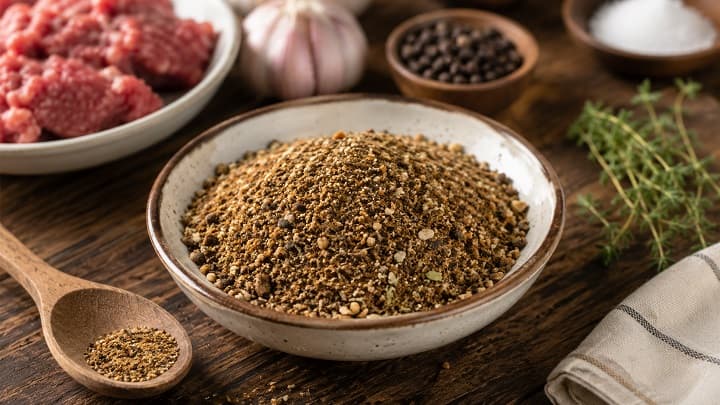
How I Finally Nailed Homemade Breakfast Sausage Seasoning (After Years of Bland Patties)
I spent the better part of two years buying store-bought breakfast sausage and quietly accepting that it tasted like seasoned cardboard. Then I quit pork for a while and the options got even worse — most turkey sausages from the grocery store had the flavor of a damp paper towel. That’s when I went deep on making my own blend. Here’s everything I learned.
Why Store-Bought Seasoning Packets Disappoint
The problem isn’t one missing spice. It’s ratios. Pre-made packets lean too hard on salt and pepper and skip the two things that give breakfast sausage its identity: sage and fennel seeds. Fennel seeds are actually the dried fruit of the fennel plant, and they’re essential for getting that true sausage taste. Most commercial blends cut them out entirely to save cost.
The Core Blend (What Actually Works)
After testing a dozen combinations, I landed on this as my base for one pound of ground meat:
- 1 tsp salt
- 1 tsp black pepper
- ½ tsp rubbed sage
- ½ tsp dried thyme
- ½ tsp fennel seeds
- ¼ tsp smoked paprika
- ¼ tsp red pepper flakes
- 1 tsp brown sugar (optional but important — more on this below)
Use approximately 1 tablespoon of this spice mix per pound of ground meat, adjusting up or down to your taste preference.
The Brown Sugar Debate
I know — sugar in sausage sounds wrong. I resisted it too. But that touch of brown sugar really does give it that breakfast sausage hint of sweetness that makes it taste like something from a diner, not a home kitchen. It doesn’t make it sweet. It rounds out the pepper and balances the sage.
If you’re strict keto or sugar-free, Swerve Brown is a zero-calorie sugar substitute that tastes and caramelizes just like real brown sugar — I’ve used it and can’t tell the difference in a finished patty.
The Step Most People Skip: Resting the Meat
This is the single biggest mistake I made early on. I’d mix the seasoning into the meat and cook it immediately, then wonder why it tasted like pork with spice sprinkled on top.
For best results, refrigerate the seasoned meat overnight so all the flavors can develop and marry with the meat. Even two hours makes a noticeable difference. One commenter on Chef Billy Parisi’s recipe put it perfectly: sausage comes from the Italian word for “salted meat” — the ground meat should sit with the salt and spices for at least 24 hours, otherwise it will taste like pork patties with spices on top.
How I Mix It (The Method Matters)
I dump the spices into a small mason jar first and shake. That’s it. You get a perfectly even blend without any clumping.
Do NOT overmix the meat and seasoning. I cannot stress this enough. Overworking ground meat activates the proteins too early and turns your patties rubbery. Mix until just combined — fifteen seconds with your hands, no more.
If you’re crushing fennel seeds (which I recommend over pre-ground), place them in a small sandwich bag and crush with a rolling pin or meat mallet. It takes ten seconds and releases the oils far better than buying them pre-ground.
Cooking the Patties
Form the sausage into small patties about 2½ to 3 inches in diameter, then add oil to a cast-iron skillet over medium heat and fry the patties for 3 to 4 minutes per side until browned and cooked through.
Cast iron is not optional in my kitchen for this. A non-stick pan will cook them, but you won’t get the crust that makes a breakfast sausage patty worth eating.
Fry a small piece of the sausage first and taste it before forming all your patties — this lets you adjust salt or heat before you’re committed to the whole batch.
If You’re Using Turkey or Chicken
Lean meat needs two adjustments. If using lean meat like turkey, add some cooking fat to the skillet — or mix softened butter into the meat along with the seasoning. The fat is what keeps a patty juicy; without it, turkey sausage dries out fast.
For ground chicken, massage the seasoning in and form into 10 patties per pound, then pan fry in a tablespoon of olive oil.
Make a Big Batch and Store It
It’s simple to double or even triple the batch and store it for later. Keep the blend in an airtight container in a cool, dry place — and avoid storing it near the stove, where heat will dull the spices. A properly stored blend will keep for one to two years.
I keep mine in a labeled 4oz mason jar in the back of my spice drawer. Every Sunday morning I measure out a tablespoon, mix it into a pound of ground turkey that I seasoned the night before, and have patties on the table in eight minutes.
Quick Variations Worth Trying
- Spicy: add ⅛ tsp cayenne on top of the red pepper flakes
- Maple style: swap brown sugar for a teaspoon of maple syrup mixed directly into the meat
- Sugar-free: leaving out the sugar affects the flavor only slightly, so feel free to omit it
- No-pork blend: this seasoning works equally well on ground beef, turkey, chicken, or venison
Once you make your own blend twice, you’ll never go back to a packet.
Related Posts: