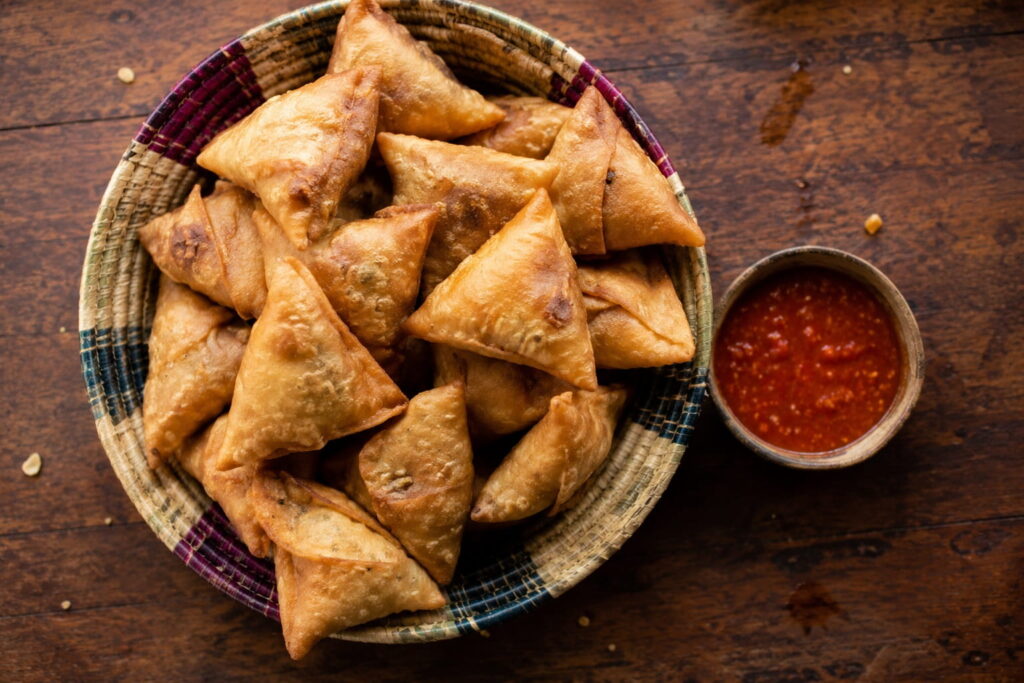
If you’ve ever wondered how to make samosas in Zambia the way they’re sold at a market stall, you already know the warm, spiced smell that comes with a pan of sizzling oil. Samosas are not just a snack here. In Zambia, a good samoosa is a small ceremony, made from scratch, folded with patience, and shared at almost every gathering from a church fundraiser in Kitwe to a birthday party in Lusaka.
This guide will show you exactly how to make samosas in Zambia, from preparing the dough and spiced filling to folding and frying them until crispy and golden. Whether you are making samosas for the first time or trying to nail a crispier result than last time, you will find everything you need right here.
Table of Contents
- How to Make Samosas in Zambia (Quick Answer)
- What Are Zambian Samosas (Samoosas)?
- Ingredients for Homemade Samosas in Zambia
- Step-by-Step: How to Make Samosas in Zambia
- How to Know Your Zambian Samosas Are Done Right
- Tips for Making Crispy Samosas in Zambia
- Zambian Samosa Filling Variations to Try
- Can You Freeze Zambian Samosas?
- What to Serve with Zambian Samosas
- Storing and Reheating Zambian Samosas
- Common Mistakes and How to Avoid Them
- A Note on the Zambian Samoosa Tradition
- Frequently Asked Questions
- Recipe Summary
How to Make Samosas in Zambia (Quick Answer)
To make authentic Zambian samosas, start with a spiced minced beef filling made with onions, potatoes, curry powder, and a touch of chilli. Then prepare a soft flour dough, roll it into thin double-layer sheets, briefly cook the sheets on a dry pan to separate them, cut them into semi-circles, fold and seal each one into a cone around the filling, and deep-fry at 170–180°C until crisp and golden brown. The result is a homemade Zambian samoosa recipe that’s crunchy on the outside and packed with flavour inside.
What Are Zambian Samosas (Samoosas)?
Before jumping into the recipe, it helps to understand what makes the Zambian version distinct.
Samosas are deep-fried pastry pockets stuffed with a savoury filling. They are known by different spellings across the region — samosa, samoosa, and occasionally samusas, but the dish is the same. Across East and Southern Africa, the snack arrived through Indian and Arab trade routes centuries ago, and each country has since made it its own.
In Zambia, the traditional filling is spiced minced meat, sometimes mixed with potatoes, carrots, or green peas. The pastry is made from scratch using a thin, semi-cooked dough that creates those signature flaky, crisp layers when fried. That homemade dough is honestly what sets a Zambian samoosa apart from most.
Ingredients for Homemade Samosas in Zambia
This authentic Zambian beef samosa recipe makes approximately 16 to 20 crispy homemade samosas, depending on how generously you fill them.
For the Dough
- 3 cups (375 g) plain white wheat flour, plus extra for dusting
- 1 tablespoon cooking oil or ghee
- 1 teaspoon salt
- ¾ to 1 cup (180–240 ml) warm water
For the Spiced Minced Meat Filling
- 400 g beef mince (or chicken mince)
- 1 medium onion, finely chopped
- 2 medium potatoes, boiled and diced into small cubes
- ½ cup frozen peas or diced carrots (optional but highly recommended)
- 2 garlic cloves, minced
- 1 teaspoon fresh ginger, grated
- 1 teaspoon curry powder
- ½ teaspoon ground cumin
- ½ teaspoon chilli flakes or one fresh chilli, finely chopped
- ½ teaspoon smoked paprika
- Salt and black pepper to taste
- 2 tablespoons cooking oil for frying the filling
- A small handful of fresh parsley or coriander, chopped
For Sealing
- 3 tablespoons wheat flour
- 4–5 tablespoons water (mixed into a thick paste)
For Frying
- Enough cooking oil to deep-fry (vegetable oil works well)
Step-by-Step: How to Make Samosas in Zambia
Step 1: Make the Filling First
Always start with the filling so it has time to cool before you assemble. Hot filling tears the dough.
Heat 2 tablespoons of oil in a pan over medium heat. Add the chopped onion and cook for about 3 minutes until it softens and turns translucent. Then add the garlic and ginger, stirring for another minute.
Next, add the minced meat. Break it apart with a wooden spoon as it browns. Once the meat is cooked through, about 6 to 8 minutes, drain off any excess liquid.
Add the curry powder, cumin, chilli, paprika, salt, and pepper. Stir everything together well. After that, fold in the diced boiled potatoes and peas or carrots. Mix gently so the potatoes don’t turn to mush. Taste and adjust the seasoning, Zambian samoosas should have a good kick, so don’t be shy with the spices.
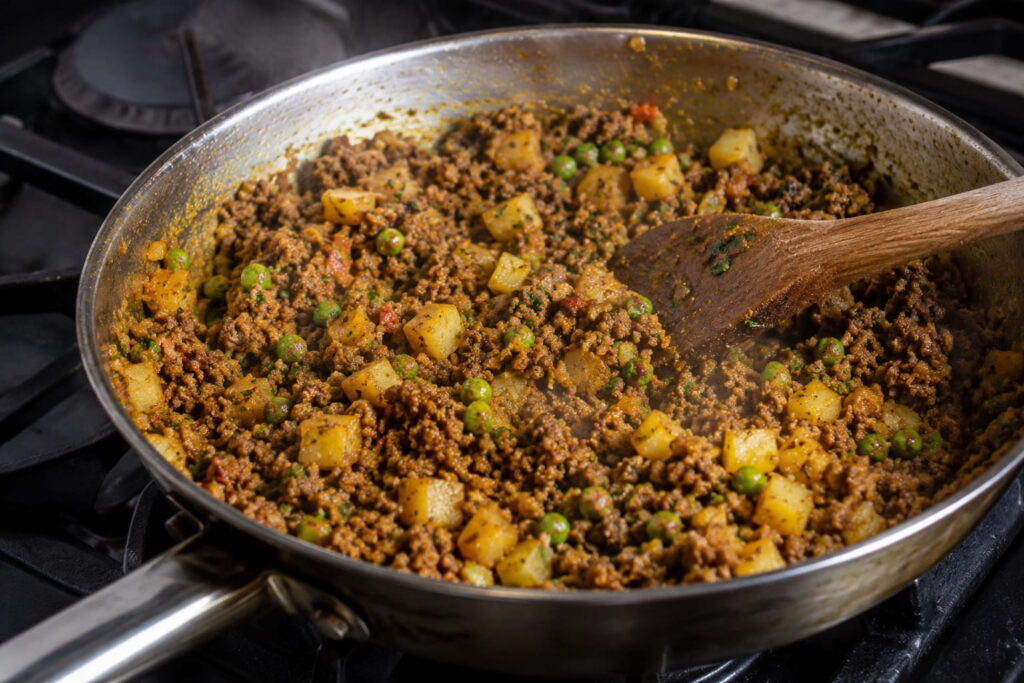
Stir in the chopped parsley or coriander, then remove the pan from heat. Spread the filling onto a large plate and leave it to cool completely. This step matters. A cool filling is much easier to work with.
Step 2: Make the Dough
Combine the flour and salt in a large bowl. Add the oil and rub it through the flour with your fingers until the mixture resembles rough breadcrumbs. This step gives the dough its slight flakiness later.
Gradually pour in the warm water, mixing as you go. You want a soft, smooth dough that is not sticky. Knead it on a lightly floured surface for about 5 minutes. The dough should feel pliable and smooth, similar to chapati dough.
Cover it with a damp cloth and let it rest for 15 minutes. Resting makes it easier to roll out thinly without it springing back.
Expert Tip: For extra-flaky Zambian samosas, keep the oil at a steady medium heat and allow the dough to rest fully before rolling. Rested dough produces thinner pastry layers that fry up crisp and light.
Step 3: The Zambian Double-Pancake Technique
This is where the authentic Zambian method gets interesting, and it is the key to those thin, flaky pastry layers.
Divide the dough into small balls, roughly 50 g each (about the size of a golf ball). You should get around 8 to 10 balls.
Roll each ball into a thin round, roughly the size of a small plate, about 15 cm in diameter. Lightly brush the surface of one round with oil, then dust it with a little flour. Place a second round on top of it, pressing lightly so they stick together. Now roll this double-layered round out even thinner, aim for about 20 to 25 cm in diameter.
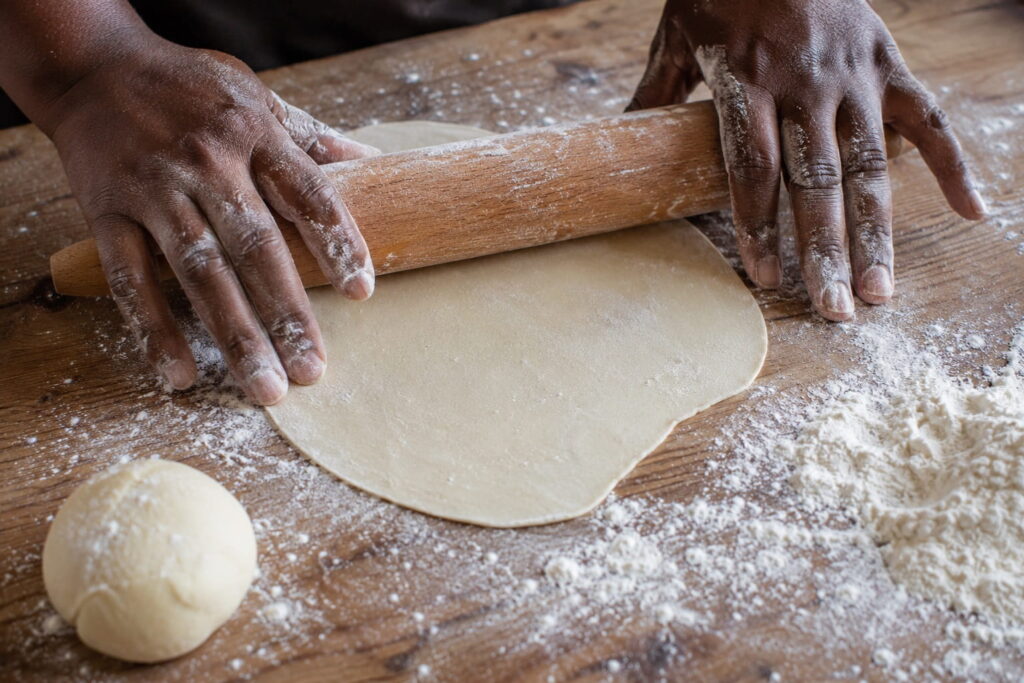
Place this double-round onto a dry pan or tawa over medium heat. Cook each side for just 15 seconds. You are not cooking it fully, just setting the dough enough so the two layers separate cleanly. Remove it from the heat and let it cool for a moment, then gently peel the two thin rounds apart. This gives you two very thin, pliable pastry sheets from each pair.
Cut each sheet in half. You now have semi-circles, each one ready to fold into a cone and fill.
Step 4: Fold and Fill (How to Fold Samosas in Zambia)
Mix the flour and water together in a small bowl until you have a smooth, thick paste. This is your glue.
Take one semi-circle and fold the straight (cut) edge into a cone shape, overlapping the two corners and pressing them together. Seal this seam firmly with a little of the flour paste. You should now have a small open cone.
Spoon 1 to 2 tablespoons of cooled filling into the cone. Do not overfill, leave about 1 cm of dough free at the top so you can seal it properly.
Fold the remaining open edge over the filling and press it down firmly. Run a little flour paste along the edge and pinch it shut. Press along all seams again to make sure there are no gaps. Any unsealed edge will burst open in the oil, so take your time here.
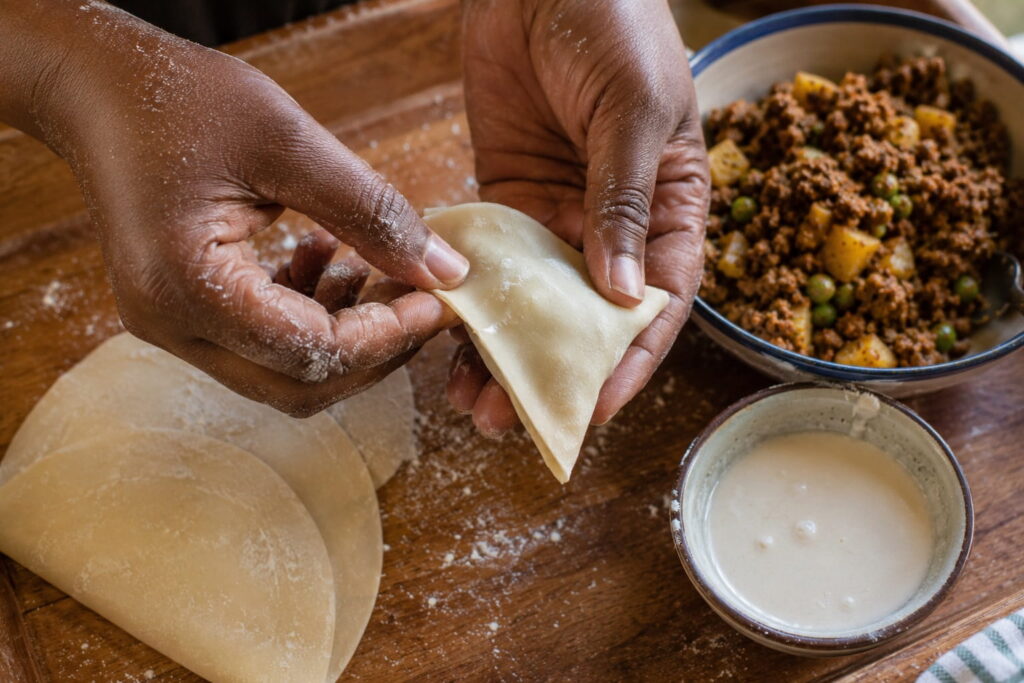
Set the sealed samosas on a clean tray as you work. You can dust them lightly with flour to prevent sticking.
Step 5: Fry to Golden Perfection
If you want a truly crispy samosa recipe Zambia families swear by, this final step is where it comes together. Pour enough oil into a deep pan or pot to submerge the samosas, at least 5 to 7 cm deep. Heat the oil over medium heat. To test if it is ready, drop in a small piece of dough. If it rises to the surface and sizzles within a few seconds, the oil is at the right temperature (around 170–180°C).
Lower the samosas gently into the oil in small batches. Avoid crowding the pan. Fry them for approximately 8 to 10 minutes, turning occasionally, until they are deep golden brown on all sides.
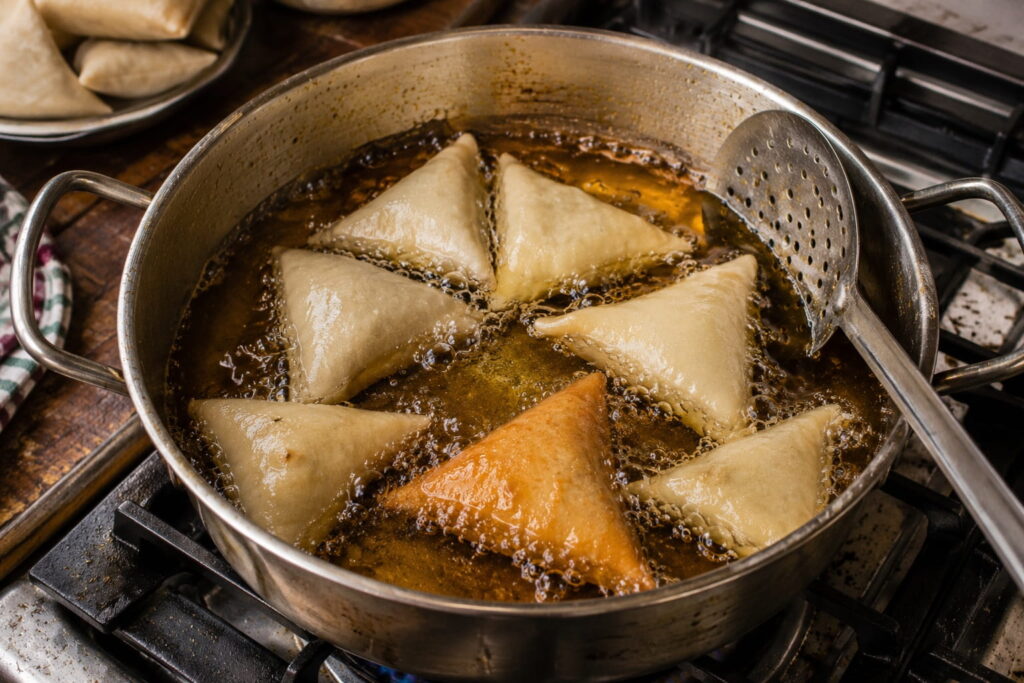
Remove them with a slotted spoon and place them on paper towels to drain off the excess oil.
Resist the temptation to fry them on high heat to speed things up. High heat browns the outside too quickly while the inside stays doughy. Medium, steady heat is what creates that even crunch.
How to Know Your Zambian Samosas Are Done Right
A well-made Zambian samosa has a few tell-tale signs. The outer shell is uniformly golden, not pale, not dark brown, but a rich amber colour. When you pick one up, it should feel light and crisp. When you bite into it, the pastry shatters cleanly rather than bending, and the filling inside is hot, moist, and fragrant with spice.
If your samosas are coming out greasy, the oil was probably too cool when you added them. If they are too dark on the outside and raw inside, the oil was too hot. Both are easy fixes once you know what to look for.
Tips for Making Crispy Samosas in Zambia
Cool the filling completely. This cannot be stressed enough. Hot filling creates steam inside the dough and makes it soggy before it even hits the oil.
Seal every edge. Run your finger along every seam after pressing. Hold each samosa up and gently squeeze, if you feel any give along the edges, add more paste and press again.
Rest the dough. That 15-minute rest makes a noticeable difference. Rested dough rolls out more easily and tears less.
Taste your filling before you fold. Adjust the salt and spice level before the filling goes inside the pastry. Once it is sealed, you cannot fix it.
Maintain your oil temperature. If you fry too many samosas at once, the oil temperature drops and they absorb more grease. Work in batches of 4 to 6 depending on your pan size.
Zambian Samosa Filling Variations to Try
Vegetarian Zambian Samosas: Replace the minced meat entirely with a mixture of boiled potatoes, carrots, green peas, and finely diced cabbage. Season generously with curry, cumin, and chilli. The result is just as satisfying.
Chicken Samosas: Use finely minced or shredded cooked chicken instead of beef. Chicken takes on spice beautifully and is slightly lighter in texture.
Cheese and Jalapeño: Not traditional, but popular at Zambian braais. Mix grated cheddar with sliced jalapeños and a little onion for a crowd-pleasing twist.
Baked Samosas: If you prefer a lighter option, brush the assembled samosas with a thin coat of oil and bake them at 200°C for 20 to 25 minutes, turning halfway through. They will not be quite as crispy as fried, but they are still very good.
Can You Freeze Zambian Samosas?
Yes, and this is one of the best things about making samosas. Once you have assembled and sealed them (before frying), arrange them on a tray without touching each other and place them in the freezer for 2 hours. After that, transfer them to a zip-lock bag or container. They will keep well for up to one month.
When you are ready to eat, you do not need to thaw them first. Simply lower them straight from frozen into hot oil and fry for 12 to 14 minutes. They come out just as crispy as fresh.
What to Serve with Zambian Samosas
Samosas are wonderful on their own, but a good dipping sauce makes them even better. In Zambia, a few favourites work particularly well alongside them.
A simple chilli sauce, whether Nando’s or a homemade tomato and chilli blend, is the most common pairing. Mango chutney brings a sweet contrast that cuts through the richness of the fried dough. Some people also serve samosas with a cool yoghurt and mint dip, especially at larger gatherings.
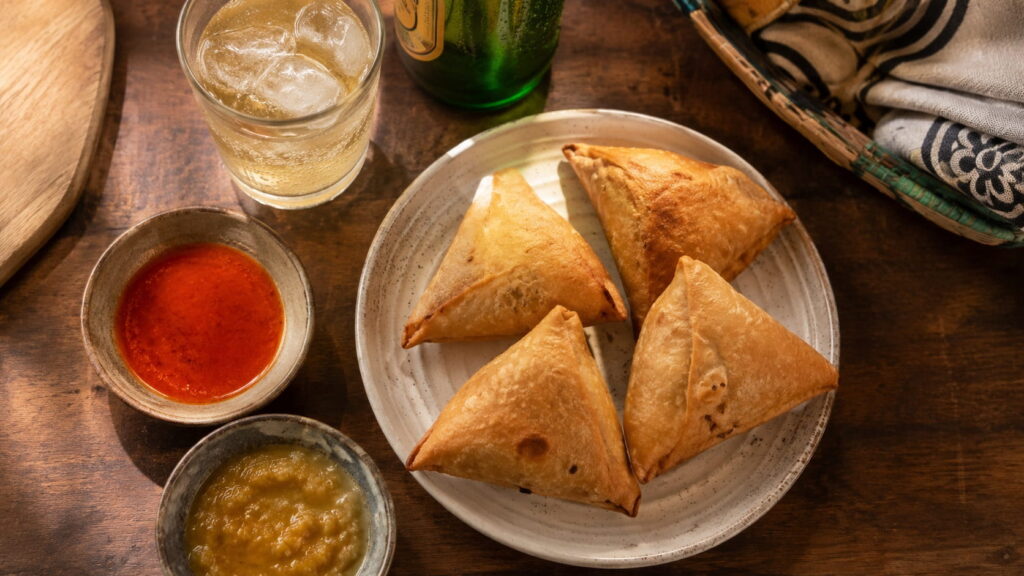
For drinks, a cold Mosi lager or a glass of homemade ginger beer both complement the spice of the filling nicely.
Storing and Reheating Zambian Samosas
Leftover fried samosas should be stored in an airtight container once they have cooled completely. They will keep in the fridge for up to 3 days.
To reheat them properly, use an oven at 180°C for about 10 minutes rather than a microwave. The microwave makes the pastry soft and rubbery. The oven brings back most of the crispness you want.
Common Mistakes and How to Avoid Them
Dough that tears when folding: This usually means it was not rested long enough, or it was rolled too thin. Give the dough its full 15 minutes of rest and do not stretch it when shaping the cone.
Filling leaking in the oil: The seal was not tight enough. Always double-check every seam before frying.
Pale, soft samosas: The oil was not hot enough. Let it come to temperature properly before adding the first batch.
Samosas bursting at the top: They were overfilled. Stick to 1 to 2 tablespoons of filling and leave a clear margin at the top for sealing.
A Note on the Zambian Samoosa Tradition
In many Zambian households, samosas are made in bulk, often with the whole family involved. One person rolls the dough, another folds the cones, children press the seams, and whoever has the steadiest hand manages the frying. It is slow work, but it is also the kind of cooking that turns an afternoon into a shared memory.
That is really what this recipe is designed for. It is not the kind of dish you rush through on a weeknight. Instead, it is something you make when you have a bit of time, good company, and a real appetite for something homemade and deeply satisfying.
Once you master it, and after one or two practice batches you will, Zambian samosas become one of those recipes you will reach for again and again.
Frequently Asked Questions
How long does it take to make samosas from scratch?
Making homemade Zambian samosas takes about 1 hour and 10 minutes, including preparing the filling, making the dough, assembling the samosas, and frying them until crispy and golden.
What is the traditional filling for Zambian samosas?
Most Zambian samosas are filled with spiced minced beef, onions, and potatoes, sometimes with the addition of peas or carrots for extra texture and colour.
Can I bake samosas instead of frying them?
Yes. Brush the assembled samosas lightly with oil and bake them at 200°C for 20 to 25 minutes, turning halfway through, until golden and crisp.
Can I freeze homemade samosas?
Yes. Freeze them uncooked in a single layer until solid, then transfer to a bag or container. They will keep for up to a month and can be fried straight from frozen.
Why are my samosas not crispy?
This is usually down to oil that wasn’t hot enough, dough rolled too thick, or too many samosas added to the pan at once, which drops the oil temperature.
What is the difference between a samosa and a samoosa?
There is no real difference, they are the same snack. “Samoosa” is simply the spelling more commonly used across Zambia and the rest of Southern Africa.
Can I make samosa wrappers ahead of time?
Yes. The semi-cooked pastry sheets can be prepared a day in advance and stored in the refrigerator, separated with baking paper and covered to prevent drying out.
Recipe Summary
| Prep Time | 45 minutes |
| Cook Time | 25 minutes |
| Total Time | ~1 hour 10 minutes |
| Makes | 16–20 samosas |
| Difficulty | Intermediate |
Dough: 3 cups flour · 1 tbsp oil · 1 tsp salt · ¾–1 cup warm water
Filling: 400 g beef mince · 2 boiled potatoes · ½ cup peas · 1 onion · 2 garlic cloves · 1 tsp ginger · 1 tsp curry powder · ½ tsp cumin · ½ tsp chilli flakes · ½ tsp paprika · parsley
Method: Make filling → cool → make dough → rest → double-layer roll → half-cook → peel apart → cut → cone → fill → seal → fry at 170–180°C for 8–10 minutes until golden.
Nutrition (per samosa, approx.): 180–220 kcal · 7g protein · 9g fat · 20g carbohydrates
Made these? Share them — samosas are always better when there are enough to go around.
Related Posts: