Learn how artisanal mining formalization works in Zambia, how to get a licence, what the new laws say, and how small-scale miners can benefit legally and safely.
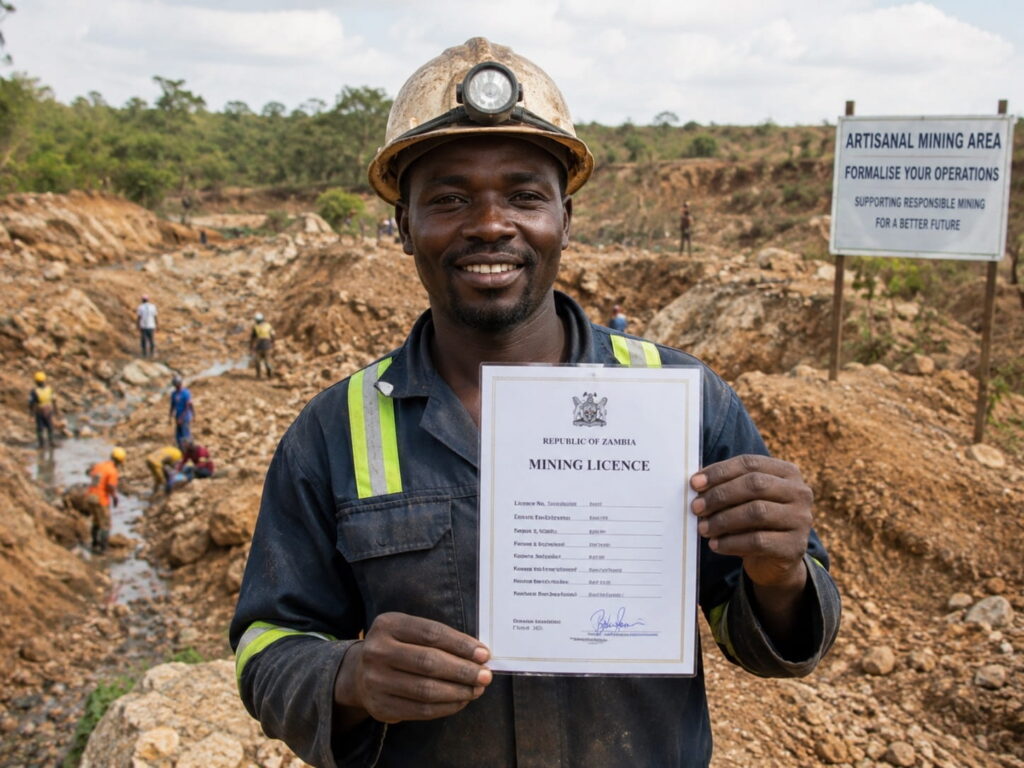
Over 100,000 Zambians dig for minerals every day, most of them without a single piece of paperwork.
That one fact captures both the scale of artisanal mining in Zambia and the urgency of what the government is now trying to fix. In mid-2025, thousands of people descended on the Kikonge area in North-Western Province chasing gold. Security forces had to be deployed to clear the site. Less than a year later, the state-owned mining firm ZCCM-IH launched a formal joint venture, Kyalo Goldfields Limited, specifically to bring those same miners into a legal, safer, and more profitable system.
This is what artisanal mining formalization looks like in practice: a country trying to turn chaos into opportunity.
If you are a miner, a young person considering mining as a livelihood, a community leader, or simply someone trying to understand what is happening in Zambia’s mining sector, this guide is for you.
What is Zambia artisanal mining formalization? Zambia artisanal mining formalization is the process of bringing informal small-scale miners into the legal mining system through licensing, safety compliance, taxation, environmental regulation, and access to formal markets.
Zambia Artisanal Mining Sector at a Glance
| Estimated miners | 100,000+ |
| Main minerals | Gold, copper, emeralds, manganese |
| Women & youth participation | ~30% |
| Key provinces | Copperbelt, North-Western, Central |
| Main challenge | Informal operations and unsafe mining |
| Major reform laws | 2024 MRC Act & 2025 Geological Act |
Table of Contents
- What Is Artisanal Mining?
- What Is Artisanal Mining Formalization in Zambia?
- Why Formalization Matters for Zambia
- Illegal Mining vs. Formalized Mining: The Real Difference
- Zambia's Current Mining Laws (2024–2025 Updates)
- How to Apply for an Artisanal Mining Licence in Zambia
- People Also Ask About Artisanal Mining Licences in Zambia
- Benefits of Formalization for Miners and Communities
- Challenges Facing Small-Scale Miners in Zambia
- Common Mistakes Artisanal Miners Make in Zambia
- The Kikonge Gold Rush: What It Teaches Us
- Government Support Programs for Artisanal Miners in Zambia
- Environmental Responsibilities of Artisanal Miners in Zambia
- Expert Tips for Beginner Artisanal Miners in Zambia
- People Also Ask About Illegal Mining and Formalization in Zambia
- The Future of Artisanal Mining in Zambia
- Frequently Asked Questions About Artisanal Mining in Zambia
- Key Takeaways
What Is Artisanal Mining?
Artisanal mining is small-scale mining done mainly by hand or with basic equipment, picks, shovels, basic crushing machines, and sometimes simple processing tools. It is the kind of mining that does not require a large company or heavy industrial machinery.
In Zambia, artisanal miners extract a wide variety of minerals: copper, gold, gemstones like emeralds and amethyst, manganese, sand, gravel, and clay. Some mine in rural areas. Others work in the Copperbelt, near Ndola or Kitwe, recovering leftover minerals from old mine dumps and tailings.
The key distinction the law makes is this:
- Artisanal mining — done by an individual Zambian citizen with basic tools, within a small area
- Small-scale mining — slightly larger operations, still done by Zambians or citizen-owned companies, but with more structure and equipment
- Large-scale mining — major industrial operations, often involving foreign investors, using heavy machinery
Both artisanal and small-scale mining are reserved exclusively for Zambian citizens or Zambian-owned companies. Foreign nationals cannot hold artisanal mining rights in Zambia.
💡 Quick Fact: An estimated 100,000 artisanal and small-scale miners operate in Zambia. About 30% are women and youth. Yet the average annual income of an artisanal miner is roughly US$200, less than half the country’s gross national income per person.

What Is Artisanal Mining Formalization in Zambia?
People hear the word “formalization” and often think it just means filling in forms.
It is much more than that.
According to Zambia’s own National Formalization Strategy, developed with support from the ACP-EU Development Minerals Programme and the United Nations Development Programme (UNDP), formalization is the full process of bringing an informal mining operation into the legal system. It includes:
- Getting a legal mining licence
- Reporting production to the government
- Paying royalties and taxes appropriately
- Following safety and environmental rules
- Accessing banking, loans, and formal markets
- Joining or forming registered cooperatives or associations
Think of it this way: legalization changes your paperwork status. Formalization changes your entire economic reality.
A miner who is only “legalized” has a permit but still sells gold to unauthorized traders, still uses dangerous chemicals without protection, and still cannot get a bank loan. A truly formalized miner has legal rights, market access, safety equipment, and a sustainable business.
Myth vs. Reality: What Most People Get Wrong About Mining Formalization
| Myth | Reality |
|---|---|
| Formalization only benefits the government | It also protects miners legally and financially — you gain enforceable land rights, access to loans, and fair market prices |
| Small miners cannot get licences | Cooperatives can apply collectively, sharing costs and paperwork — making the process far more accessible than going alone |
| Mercury is the only way to process gold | Mercury-free alternatives exist and are actively being introduced in Zambia through planetGOLD Zambia, with training available at no cost |
| Informal mining is safer from taxes | Illegal mining carries criminal penalties far heavier than any royalty payment — fines, imprisonment, and total loss of equipment |
| Formalization is too expensive for ordinary miners | The new ASM Fund and programs like CEEC exist specifically to cover the financial barriers most miners face |
| Only educated or connected people can navigate the system | Cooperatives and NGO partners help miners through the process — you do not have to do it alone |
“A miner who is only legalized has a permit but still sells gold to unauthorized traders. A truly formalized miner has legal rights, market access, safety equipment, and a sustainable business.”
Why Formalization Matters for Zambia
Many people searching for small-scale mining opportunities in Zambia are now trying to understand how the country’s new formalization system works, and why getting a mining licence in Zambia matters more than ever before.
Mining is the backbone of Zambia’s economy. It accounts for over 70% of the country’s export earnings and contributes 12% to GDP. Copper gets most of the attention, Zambia wants to reach 3 million metric tonnes of copper production by 2032, up from about 800,000 today, but artisanal mining quietly supports hundreds of thousands of families.
Yet most of that economic activity happens outside the formal system.
When artisanal miners operate informally:
- The government loses tax and royalty revenue. Minerals are extracted but never declared.
- Miners have no legal protection. If someone takes over their site or they get injured, they have no legal recourse.
- Gold and gemstones get smuggled out. Zambia sits within a major smuggling corridor linked to the DRC. Billions of dollars in gold leave African countries illegally each year.
- Environmental damage goes unchecked. Nobody is legally responsible for repairing land or cleaning water sources.
- Mercury poisons communities. Artisanal gold miners across sub-Saharan Africa use mercury to separate gold from ore. It is cheap and accessible, and deeply toxic to the human body and waterways.

Formalization addresses all of these problems at once.
Illegal Mining vs. Formalized Mining: The Real Difference
This is one of the most important things to understand, and most articles get it wrong or ignore it entirely.
| Factor | Illegal/Informal Mining | Formalized Mining |
|---|---|---|
| Legal status | No licence; criminal risk | Licensed; legally protected |
| Income | Sold to middlemen at low prices | Access to formal markets and better prices |
| Safety | No standards; high accident risk | Must meet Occupational Health & Safety rules |
| Environmental impact | No accountability | Must rehabilitate mined land |
| Access to finance | Banks will not lend | Can qualify for loans and grants |
| Market access | Local, unregulated buyers only | International responsible sourcing markets |
| Mercury use | Common and uncontrolled | Pathway to mercury-free certification |
| Government support | None | Access to training, extension services, ASM Fund |
| Legal disputes | No recourse | Resolved through Mining Appeals Tribunal |
Operating without an Artisanal Mining Licence is illegal in Zambia and can result in fines, loss of equipment, and imprisonment. The risks are not theoretical, miners at Kikonge and Mumfumbwe in 2025 were removed by security forces, losing all the work they had put in.
Real Story: How Formalization Changed a Mining Cooperative in Mufumbwe
Picture ten young miners in Mufumbwe, North-Western Province. They know where the gold is. They work hard, six days a week, pulling ore from a site they have been working for two years.
But they have no licence.
Every week, a middleman drives in from town and buys their gold at a fraction of its real value. They cannot refuse, they have no legal standing to demand better, no bank that will lend them money for proper equipment, and no government office they can walk into for help. If authorities show up, they scatter and lose everything.
Now imagine the same ten people, same site, but formalized.
They register as a cooperative, a straightforward process that costs far less than most miners assume. They apply for an Artisanal Mining Licence collectively, splitting the costs and paperwork. With a valid licence, they approach the Citizens Economic Empowerment Commission for a small equipment loan. They buy a basic crusher. Their output doubles.
They sell through an authorized buyer at a declared price. They pay their mineral royalties, modest at their production level, and keep accurate records. When planetGOLD Zambia’s field officers visit the region, the cooperative qualifies for mercury-free processing training.
Two years later, those same ten young people have a functioning, legal business. Not wealthy, but stable, protected, and growing.
That is exactly what formalization is designed to make possible. The path is not easy, but it exists.
Zambia’s Current Mining Laws (2024–2025 Updates)
Zambia’s legal framework for mining has gone through major changes. Every miner needs to understand what is now in force.
The Minerals Regulation Commission Act No. 14 of 2024
This is the principal law governing mining in Zambia today. It came into full force on 13 June 2025 after the Minister of Mines signed the Commencement Order. It repeals and replaces the old Mines and Minerals Development Act of 2015.
Key things this law does:
- Establishes the Minerals Regulation Commission (MRC) as the main licensing and oversight body
- Creates a Mining Appeals Tribunal to resolve disputes about licences
- Covers artisanal mining, small-scale mining, large-scale mining, gemstone mining, health, safety, and environment
- Reserves artisanal mining rights exclusively for Zambian citizens
The Geological and Minerals Development Act No. 2 of 2025
This newer law covers exploration, geological surveys, and the mapping of Zambia’s mineral resources. Importantly for small-scale miners, it:
- Establishes a dedicated Director of Artisanal and Small-Scale Mining with the mandate to promote sustainable development in the sector
- Creates the Artisanal and Small-Scale Mining Fund, a dedicated funding mechanism to support formalization
What Happens to Existing Mining Licences in Zambia?
If you already hold a licence issued under the old 2015 Act, it remains valid until its expiry date. You do not need to immediately re-apply. But when it expires, renewal will be under the new system.
Zambia Mining Local Content Rules: What Changes in 2026
From 1 January 2026, new Mining Local Content Regulations require mining companies to allocate at least 20% of their annual procurement to Zambian suppliers, rising to 25% after two years and 35% within three years. This opens doors for small Zambian businesses supplying equipment, transport, food, and services to mines.
How to Apply for an Artisanal Mining Licence in Zambia

To get an Artisanal Mining Licence in Zambia, you must be a Zambian citizen, identify a legal mining area, complete prescribed application forms (Form I), pay the application fee, and submit your documents to the Minerals Regulation Commission. The Commission reviews the application, may conduct a site visit, and issues the licence if requirements are met.
Here is a practical step-by-step guide:
Step 1: Confirm Eligibility
You must be a Zambian citizen. Artisanal mining rights cannot be held by foreigners. If you want to operate as a group, you can form a cooperative, all members must be Zambian citizens. Registering as a cooperative actually makes the licensing process smoother and gives your group more negotiating power.
Step 2: Identify a Legal Mining Area
Not all land is open for artisanal mining. You cannot mine in:
- National parks or game management areas
- Protected forest reserves
- Areas already licensed to another miner
- Certain restricted areas (such as the Ndola Rural Emerald Restricted Area)
The Minerals Regulation Commission maintains a cadastre (map registry) of available mining areas. Zambia has recently moved from the old FlexiCadastre system to a new online licensing platform. Check the MRC’s current portal or visit their offices in Lusaka to identify open areas.
Step 3: Gather Your Documents
You will typically need:
- National Registration Card (NRC) — certified copy
- Completed Form I (the standard application form for mining rights)
- Proof of address
- Sketch or description of the mining area you are applying for
- Application fee payment receipt
If applying as a cooperative:
- Certificate of registration for the cooperative
- List of all members with their NRCs
- Minutes from a meeting authorizing the application
Step 4: Submit Your Application
Submit all documents and the application fee to the Minerals Regulation Commission. Fees vary depending on the size and type of licence, confirm current fees directly with the MRC, as these are updated periodically.
Step 5: Review and Site Visit
The MRC will review your application. For artisanal licences, they may conduct a site visit to confirm the area and check for conflicts with existing rights. This is also when they assess whether the proposed site raises any environmental red flags.
Step 6: Licence Issued
Once approved, you receive your Artisanal Mining Licence specifying:
- The exact area you may mine
- The minerals you are authorized to extract
- Conditions you must comply with
- Duration of the licence
Licences must be renewed before expiry. Missing the renewal window means you lose your rights to that area.
Step 7: Register for Tax with the Zambia Revenue Authority
A formal miner must be registered with the Zambia Revenue Authority (ZRA). You will pay mineral royalty tax on the value of minerals you produce. Keeping proper records of your production is not just good business, it is a legal requirement.
Artisanal Mining Licence Fees in Zambia
This is one of the most searched questions, and one of the most poorly answered across the internet.
The honest answer is that licence fees in Zambia change periodically depending on the type of licence, the size of the area applied for, the mineral category, and administrative decisions by the Minerals Regulation Commission. Any specific figure published online, including on this page, can become outdated without notice.
What miners should know:
- Artisanal mining licences are generally lower in cost than small-scale or large-scale licences, reflecting the smaller scope of operations
- Cooperative applications spread the fee across all members, making the per-person cost significantly more manageable
- Renewal fees may differ from initial application fees, confirm both before you apply
- Additional costs to budget for include any required environmental assessments, transport to MRC offices, and document preparation
To get the current fee schedule: Contact the Minerals Regulation Commission directly, visit their offices in Lusaka, or check the official Ministry of Mines and Minerals Development website at mmmd.gov.zm. Do not rely on secondhand figures from other miners or outdated web pages.
Licence fees change periodically depending on licence type, location, and mineral category. Always confirm current fees directly with the Minerals Regulation Commission before submitting your application.
People Also Ask About Artisanal Mining Licences in Zambia
Is artisanal mining legal in Zambia?
Yes, but only with a valid Artisanal Mining Licence. Mining without one is a criminal offence that can result in fines, imprisonment, and confiscation of your equipment and minerals. The licence is issued by the Minerals Regulation Commission under the Minerals Regulation Commission Act No. 14 of 2024, which came into full force in June 2025.
How much is a mining licence in Zambia?
Licence fees are set by the Minerals Regulation Commission and are updated periodically. Because fees can change, the most reliable step is to contact the MRC directly or visit their offices for the current fee schedule before you apply. Fees vary based on the type of licence (artisanal vs. small-scale) and the size of the area being applied for.
Can foreigners do small-scale mining in Zambia?
No. Artisanal mining rights are reserved exclusively for Zambian citizens. Small-scale mining licences must be held by citizen-owned, citizen-influenced, or citizen-empowered companies. Foreign nationals and foreign-owned companies cannot hold artisanal mining rights in Zambia under the current law.
What minerals do artisanal miners mine in Zambia?
Artisanal miners in Zambia extract a wide range of minerals depending on the region. The most common include gold (especially in North-Western Province), copper (Copperbelt), emeralds and other gemstones (Central and North-Western Provinces), manganese, and non-metallic minerals like sand, gravel, and clay used in construction.
Benefits of Formalization for Miners and Communities
Many miners hesitate to formalize because they assume it will cost them more than it gives. The evidence from Zambia and other African countries shows the opposite is true.
Benefits of Formalization for Individual Miners in Zambia
- Legal protection — your rights to a mining area are legally recognized and enforceable
- Better prices — formal miners can sell to certified buyers and access international markets that pay fairer prices
- Access to finance — banks and microfinance institutions can lend to licensed operators; the new ASM Fund specifically targets this gap
- Safety — formal miners must meet occupational health and safety standards, reducing injuries and deaths
- Peace of mind — you cannot be arrested or have your equipment seized simply for mining
How Mining Formalization Benefits Zambian Communities
- Jobs and income — formalized operations tend to be more stable, employing more community members consistently
- Tax revenue — royalties and taxes paid by formal miners fund schools, roads, and clinics
- Environmental protection — licensed miners are legally responsible for restoring mined land
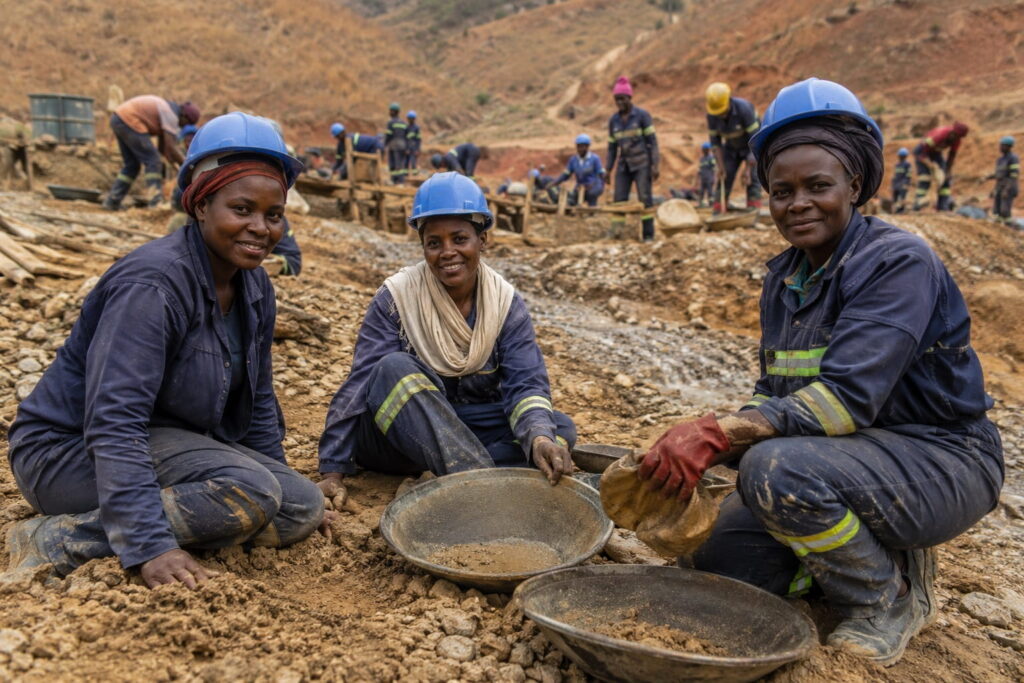
- Women and youth empowerment — cooperatives have opened spaces for women and young people to participate in a sector historically dominated by older men
For Zambia’s Economy
- Reduced gold smuggling — formalized gold is sold through declared channels, keeping wealth inside Zambia
- Diversification — reducing dependence on a few large copper mines
- Better data — the government gets accurate production figures to plan national mineral strategy
Challenges Facing Small-Scale Miners in Zambia
Formalization is the right direction. But it is not easy, and pretending otherwise does not help anyone.
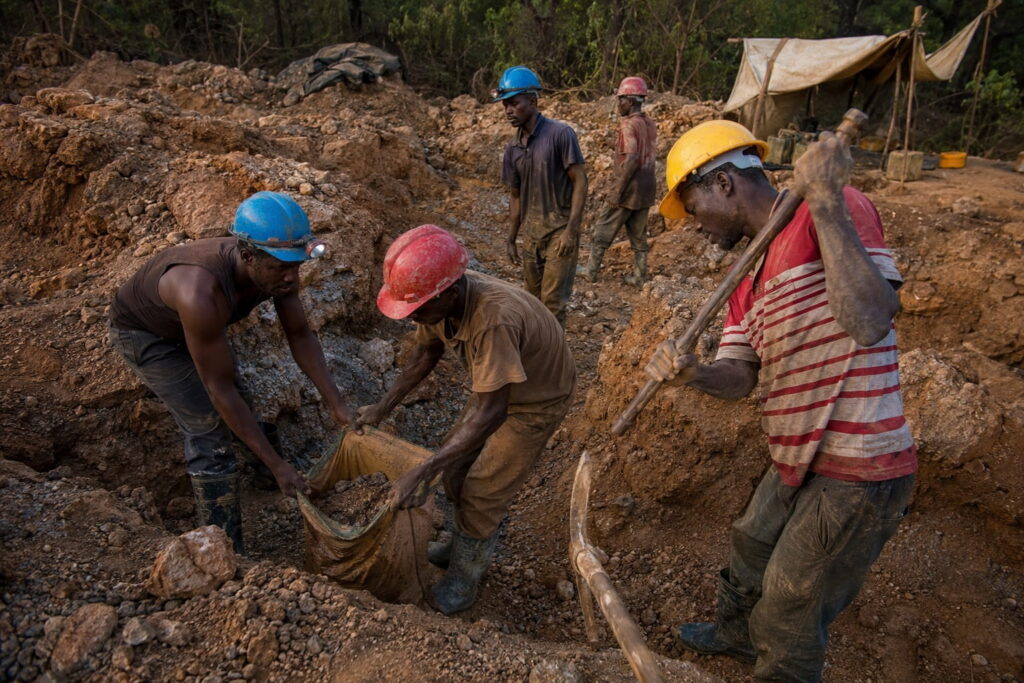
Did You Know? Zambia’s artisanal mining sector supports an estimated 100,000+ miners, yet many still operate without formal licences or access to banking services, meaning their labour, land rights, and earnings remain entirely unprotected under the law.
1: High Cost of Compliance for Artisanal Miners
Licensing fees, environmental assessments, and safety equipment all cost money that many artisanal miners simply do not have. Without affordable financing, the entry barriers keep informal miners out of the formal system even when they want to join.
2: Bureaucracy and Distance from Licensing Offices
For a miner in Kalabo or Chavuma, travelling to Lusaka to process paperwork is expensive and time-consuming. The new online system helps, but many rural miners lack reliable internet or the literacy to navigate digital platforms.
3. Limited Geological Information
Miners often work blind, they have no access to geological surveys telling them where minerals are concentrated and at what depth. This leads to wasted effort and higher risks of accidents.
4: Limited Access to Mining Equipment in Zambia
Basic mechanized equipment, even a small crusher or water pump, is beyond the budget of most individual artisanal miners. Without it, productivity stays very low.
5. Predatory Middlemen
Informal miners are especially vulnerable to traders who buy their output at far below market value. Without formalization, miners have no leverage to demand better prices and no legal recourse if they are cheated.
6. Mercury Dependency
Artisanal gold miners across Zambia still predominantly use mercury amalgamation to process gold. It is the cheapest and most accessible technique, but it is toxic, and increasingly it locks miners out of international markets that require mercury-free sourcing.
7. Land Conflicts Between Miners and Communities in Zambia
Artisanal miners frequently clash with large-scale operators, local chiefs, and other community members over land rights. Without a formal licence clearly demarcating their area, these disputes often have no legal resolution.
Common Mistakes Artisanal Miners Make in Zambia
These are the errors that cost miners the most, financially, legally, and physically.
- Mining without a licence and assuming nobody will notice. Enforcement is increasing, particularly near gold deposits.
- Not renewing licences on time. An expired licence means you have no legal rights to the area. Someone else can apply for it while you are still working it.
- Selling to unauthorized buyers. Selling gold or gemstones to unlicensed dealers is illegal and forfeits your right to fair market prices.
- Skipping environmental assessments. Even for small operations, environmental damage can result in personal liability.
- Working alone instead of in a cooperative. Individual artisanal miners have limited negotiating power and struggle to access finance. Cooperatives are much stronger.
- Ignoring safety protocols. Mine collapses, flooding, and mercury poisoning are the leading causes of death and serious injury among artisanal miners in Zambia. Safety is not a bureaucratic formality — it is survival.
- Not keeping production records. Without records, you cannot prove your output for tax purposes, for loan applications, or for price negotiations.
The Kikonge Gold Rush: What It Teaches Us
In mid-2025, thousands of people streamed into the Kikonge area of North-Western Province after word spread of gold deposits there.
It was disorderly, dangerous, and ultimately unsustainable. Security forces were eventually deployed to remove miners from the site.
But the government’s response went beyond simply clearing people away. In May 2026, ZCCM Investments Holdings — Zambia’s state-backed mining investment company — incorporated Kyalo Goldfields Limited, a joint venture with Mining Mineral Resources Sprl (a DRC-based company experienced in operating in artisanal mining environments). ZCCM-IH holds 51% of the venture; the private partner holds 49%.
Kyalo’s mandate is specifically to:
- Formalize artisanal mining in the Kikonge area
- Introduce safer and more mechanized production methods
- Develop local gold processing capabilities
- Work alongside existing cooperatives rather than displacing them
The Permanent Secretary in the Ministry of Mines, Hapenga Kabeta, stated that partnerships with experienced investors “will help modernize gold mining, boost productivity, and create sustainable economic opportunities for local communities.”
A similar situation unfolded in Mumfumbwe in July 2025, when mining associations publicly supported the government’s decision to halt illegal operations, calling for formalization and cooperation rather than continued informality.
What does this teach us?
The gold is real. The economic opportunity is real. But without formalization, miners will continue to be displaced, cheated, and put in danger, while Zambia loses the revenue from its own resources.
Government Support Programs for Artisanal Miners in Zambia
The Artisanal and Small-Scale Mining Fund
Established under the Geological and Minerals Development Act of 2025, this fund is specifically designed to provide financial support to artisanal and small-scale miners. It addresses one of the biggest barriers to formalization: lack of money to comply with the process.
Details on how to apply will be available through the Ministry of Mines and Minerals Development and the Minerals Regulation Commission.
ACP-EU Development Minerals Programme
This international programme, implemented with UNDP and the Ministry of Mines, has worked directly with artisanal miners across Zambia, including women’s cooperatives like the Chibelenga Women’s Cooperative in Livingstone. Their work includes:
- Training on sustainable mining practices
- Support for cooperative formation and registration
- Business development guidance
- Advocacy for policy improvements
planetGOLD Zambia
Launched in November 2024, this five-year initiative is funded by the Global Environment Facility (GEF) and implemented by the UN Environment Programme in collaboration with the Zambia Environmental Management Agency (ZEMA). Its targets:
- Reduce 1.14 metric tonnes of mercury use from artisanal gold mining
- Support over 11,000 miners through formalization assistance
- Provide access to mercury-free processing technology
Mercury-free certification is not just about health, it is increasingly a requirement for selling gold to premium international buyers.
Citizens Economic Empowerment Commission (CEEC)
The CEEC provides business development funding to Zambian citizens, including miners. Cooperatives and small mining enterprises can apply for support.
Zambia Development Agency (ZDA)
The ZDA supports investment facilitation and business registration. It can assist mining enterprises looking to scale up or attract formal investment partnerships.
Environmental Responsibilities of Artisanal Miners in Zambia
Being a formal miner means accepting responsibility for the environment, not just while you mine, but after.
During mining:
- Prevent soil erosion by managing waste rock properly
- Do not dump tailings (the leftover material after mineral extraction) into rivers or streams
- Use proper containment if you work with chemicals
- Avoid mercury use entirely if possible; explore gravity separation methods or contact planetGOLD Zambia for alternatives
After mining:
- Rehabilitation — fill old pits, re-grade disturbed land, and replant vegetation where possible
- If you used chemicals, properly treat or contain contaminated soil and water
The law holds licence holders personally responsible for environmental damage on their licensed areas. This is not bureaucratic language — miners have faced legal liability for destroyed farmland and polluted water sources.
Expert Tips for Beginner Artisanal Miners in Zambia
Starting in artisanal mining can feel overwhelming. These practical points can help you begin on the right foot.
1. Join or form a cooperative first. A registered cooperative can apply for a mining licence collectively, share the costs of compliance, access finance, and negotiate better prices. Operating as a lone individual is harder in every way.
2. Visit the Minerals Regulation Commission before you mine. Get accurate information on available areas, current fees, and required documents directly from the authority. Secondhand information, especially from other miners, is often outdated or wrong.
3. Start small and legal. Mine a small, clearly demarcated area within your licence boundaries. Expanding beyond your licensed area is illegal even if there are clearly visible minerals just outside the boundary.
4. Keep records of everything. Record your daily production, sales, and expenses in a simple notebook or phone. These records protect you during tax assessments, loan applications, and disputes.
5. Learn about your mineral before you mine it. Different minerals require different extraction and processing methods. Gold, copper, emeralds, and sand all have different rules, different market channels, and different hazards.
6. Invest in basic safety equipment. At minimum: hard hats, heavy-duty gloves, and rubber boots for underground work. If you are using chemicals, you need protective eyewear and gloves rated for chemical exposure. This is not optional.
7. Sell only to licensed buyers. Zambia’s minerals regulations require sales through authorized channels. Selling to unlicensed middlemen is illegal and typically means you earn far less than the mineral’s true value.
People Also Ask About Illegal Mining and Formalization in Zambia
What are the risks of illegal mining in Zambia?
The risks are both legal and physical. On the legal side, mining without a licence is a criminal offence, you face fines, imprisonment, and permanent confiscation of equipment and any minerals you have extracted. On the physical side, unlicensed sites have no safety oversight: pit collapses, flooding, and toxic chemical exposure are common causes of death and serious injury. Illegal miners also have no legal recourse if they are cheated by buyers, injured on site, or forcibly removed, as happened to thousands of miners at Kikonge in 2025.
How do artisanal miners sell their minerals legally in Zambia?
Licensed artisanal miners must sell their output through authorized buyers and channels. For gold, this means selling to licensed gold dealers or state-backed buyers operating within Zambia’s formal gold value chain. Selling to unlicensed middlemen or informal traders is itself an offence, even if you hold a valid mining licence. The government’s push to build local processing infrastructure, including through Kyalo Goldfields in North-Western Province, is partly aimed at creating more accessible formal buying points for small miners.
What support is available for small-scale miners in Zambia?
Several programs now exist specifically for this sector. The new Artisanal and Small-Scale Mining Fund (established under the 2025 Geological Act) provides direct financial support. The ACP-EU Development Minerals Programme offers training, cooperative support, and business development guidance. The planetGOLD Zambia initiative (launched November 2024) supports over 11,000 miners with formalization assistance and mercury-free technology. The Citizens Economic Empowerment Commission (CEEC) and the Zambia Development Agency (ZDA) also offer funding and business support that licensed miners can access.
Why do so many Zambian miners still operate informally?
The barriers are real and well-documented: licensing costs money that many miners do not have upfront, rural miners face long distances to reach government offices, geological information is not widely accessible, and basic equipment is out of reach for individuals. Predatory middlemen also benefit from keeping miners informal, an unlicensed miner has no leverage to demand fair prices. Formalization efforts that ignore these barriers tend to fail. The most successful approaches, like cooperative-based formalization, tackle the cost and distance problems collectively rather than putting the entire burden on individual miners.
The Future of Artisanal Mining in Zambia
The direction is clear. Zambia is moving toward a more structured, regulated artisanal mining sector, but the pace of change depends on how quickly the systems can catch up with the reality on the ground.
Several trends will define the next five years:
New legislation is now in force
The Minerals Regulation Commission Act and the Geological and Minerals Development Act represent the most significant legal reforms in a decade. They create specific institutions for artisanal mining support that did not previously exist.
Gold is the frontier
The Kikonge/Mumfumbwe story is not over. Global gold prices hit record highs in 2024 and 2025, and that economic pressure will keep pulling informal miners toward gold deposits. Kyalo Goldfields and the formalization agenda around gold will be one of the most closely watched stories in Zambian mining.
Mercury-free certification will open new markets
Miners who transition away from mercury will qualify for premium international supply chains. This is a real commercial advantage, not just an environmental talking point.
High-resolution geological mapping is expanding
The government’s aerial geological survey, 34% complete as of late 2025, will eventually produce detailed mineral maps covering all of Zambia. When that data becomes accessible to small-scale miners, it will transform the sector’s productivity.
Women and youth are rising
Programs like the Chibelenga Women’s Cooperative are proof that with structured support, women-led artisanal mining can succeed commercially and sustainably.
For decades, artisanal miners helped sustain families across Zambia while operating in uncertainty and risk. They dug without maps, sold without contracts, and worked without safety nets, keeping households alive on margins most people would not accept.
Formalization will not solve every challenge overnight. But it gives miners something they rarely had before: legal recognition, safer working conditions, and a realistic path toward building sustainable businesses from Zambia’s mineral wealth.
Frequently Asked Questions About Artisanal Mining in Zambia
What is formalization in mining?
Mining formalization is the process of bringing informal mining activities into the legal, regulated, and financially recognized system through licensing, safety compliance, taxation, and environmental management. It is not just about getting a permit, it means a miner gains legal protection, access to finance, formal market channels, and government support, while the state gains tax revenue, production data, and environmental accountability.
What is the difference between artisanal mining and small-scale mining in Zambia?
Artisanal mining is done by individual Zambian citizens using basic hand tools within a small licensed area. Small-scale mining is slightly larger, involves more equipment, and must be conducted by a citizen-owned or citizen-controlled company.
Can foreigners get an artisanal mining licence in Zambia?
No. Artisanal mining rights are reserved exclusively for Zambian citizens. Small-scale mining licences must also be held by citizen-owned or citizen-controlled companies.
What happens if I mine without a licence?
Mining without a licence is a criminal offence in Zambia. You can face fines, imprisonment, confiscation of equipment and minerals, and removal from the site.
How long does an artisanal mining licence last?
Licence durations vary. You should confirm current terms with the Minerals Regulation Commission, as these details changed under the 2024 Act.
How much does an artisanal mining licence cost in Zambia?
Fees are set by the Minerals Regulation Commission and updated periodically. Contact the MRC directly or visit their offices for current fee schedules.
Can women apply for an artisanal mining licence?
Yes — Women are fully eligible to apply individually or through cooperatives. Programs like the ACP-EU Development Minerals Programme and planetGOLD Zambia specifically support women’s participation in artisanal mining.
Do I need an environmental impact assessment for artisanal mining?
For small artisanal operations, a full environmental impact assessment may not always be required, but you are still responsible for environmental conditions in your licensed area. Larger small-scale operations do require formal environmental assessments.
What minerals can artisanal miners extract in Zambia?
Artisanal miners in Zambia mine copper, gold, gemstones (emeralds, amethyst, tourmaline), manganese, sand, gravel, clay, and other minerals, depending on what is available in their licensed area.
Where do I submit a mining licence application?
To the Minerals Regulation Commission (MRC). Zambia has also moved to a new online licensing system. You can inquire at MRC offices or the Ministry of Mines and Minerals Development for the current submission process.
What is the Artisanal and Small-Scale Mining Fund?
This is a new government fund established under the Geological and Minerals Development Act of 2025. It is designed to provide financial support specifically for artisanal and small-scale mining operations to help them formalize and grow.
Key Takeaways
- About 100,000 artisanal and small-scale miners operate in Zambia, most of them informally.
- Formalization is the full process of bringing miners into the legal, financial, and safety systems, not just issuing a permit.
- Artisanal mining rights in Zambia are reserved exclusively for Zambian citizens.
- Zambia’s new mining laws, the Minerals Regulation Commission Act (2024) and the Geological and Minerals Development Act (2025), have created new institutions specifically to support the artisanal sector, including a dedicated Director of ASM and an ASM Fund.
- The Kikonge gold rush in North-Western Province (mid-2025) showed both the risk of unregulated mining and the government’s serious intent to formalize, leading to the creation of Kyalo Goldfields Limited in May 2026.
- Operating without a licence is illegal and carries criminal penalties. No amount of mineral wealth justifies that risk.
- Cooperatives are the most practical entry point for beginner miners: they share costs, access finance more easily, and negotiate better prices.
- Mercury-free certification is becoming a commercial requirement for international markets, miners who adopt cleaner methods will access better-paying buyers.
- The government is expanding geological mapping, creating new funding mechanisms, and building the first dedicated institutional support structure for artisanal and small-scale mining in Zambia’s history.
Sources
- Minerals Regulation Commission Act No. 14 of 2024 — Republic of Zambia, Ministry of Mines and Minerals Development
- Geological and Minerals Development Act No. 2 of 2025 — Republic of Zambia, Ministry of Mines and Minerals Development
- Zambia Blueprint for a National Formalization and Business Acceleration Strategy — ACP-EU Development Minerals Programme
- planetGOLD Zambia Programme — UN Environment Programme / Global Environment Facility
- Ministry of Mines and Minerals Development — Zambia — Republic of Zambia
Related Posts: