Discover how Zambia mining sector infrastructure funding, from the $491M US-Zambia MCC compact to $20B in private capital, is reshaping the Copperbelt and positioning Zambia as Africa’s critical minerals hub.
Key Takeaways
- Zambia requires an estimated $15–20 billion in investment to reach its 3-million-tonne copper production target by 2031.
- The $491 million US–Zambia MCC Compact has been expanded to directly support critical minerals infrastructure alongside agriculture.
- The Lobito Corridor — backed by over $6 billion in global commitments — will cut export transport costs and reduce Zambia’s dependence on longer southern and eastern routes.
- Private mining investment pledges have already exceeded $10 billion since 2021, with major expansions underway at Kansanshi, Lumwana, Mopani, and Mingomba.
- Power supply reliability remains the single biggest structural constraint standing between current output and Zambia’s 2031 ambitions.
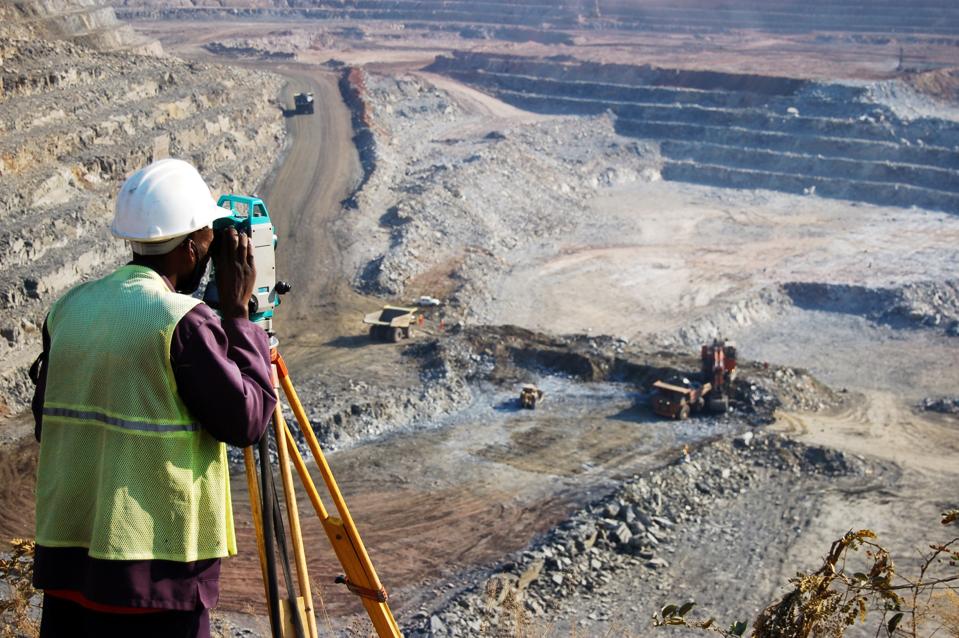
Something significant happened in Lusaka on June 18, 2026. Zambia and the United States, acting through the Millennium Challenge Corporation (MCC), quietly signed an amendment that redirected a $491 million grant program originally built around agriculture to also cover critical minerals infrastructure. It barely made international headlines. But for anyone tracking Zambia mining sector infrastructure funding closely, it was one of the clearest signals yet that the country is entering a structurally new chapter.
Here is a breakdown of every major layer of mining infrastructure financing in Zambia: where the money is coming from, which projects it targets, who the key investors are, and what it all means for businesses, communities, and the global copper supply chain.
Zambia Mining Sector Infrastructure Funding at a Glance
Here is a snapshot of the capital flows currently shaping Zambia’s mining infrastructure landscape.
| Funding Source | Amount | Primary Purpose |
|---|---|---|
| MCC Compact (US–Zambia) | $491 million | Roads, agriculture & critical minerals corridor |
| Lobito Corridor (global) | $6 billion+ | Transcontinental rail & port logistics |
| Private mining investment (2022–2026) | ~$10–12 billion | Mine expansion & brownfield development |
| Total investment needed (2026–2031) | $15–20 billion | Production tripling to 3M tonnes |
| Barrick Gold – Lumwana | $2 billion | Mine modernisation & throughput expansion |
| KoBold Metals – Mingomba | $2.5 billion | New copper mine targeting 300,000 tpa |
| First Quantum – Kansanshi expansion | Multi-billion | Processing upgrades & pit development |
These figures do not represent a single programme. They represent overlapping waves of public grants, development finance, and private capital, all converging on the same strategic geography at the same time.
Zambia Mining Infrastructure by the Numbers
- 890,346 tonnes — Zambia’s record copper output in 2025, up 8% year-on-year
- $491 million — US MCC compact now extended to cover critical minerals infrastructure
- $6 billion+ — total committed globally to the Lobito Corridor
- $15–20 billion — total investment required to reach Zambia’s 2031 copper targets
- 3 million tonnes — the government’s copper production target by 2031
- 13.7% — mining sector contribution to Zambia’s GDP in 2023
- 30% — share of government revenue derived from mining
- ~$4,500/tonne — Zambia’s estimated all-in copper production cost, among the world’s lowest
- $10–12 billion — mining investment pledges attracted since 2021
Zambia Mining Infrastructure Challenges: Why Logistics Has Held Back Growth
To understand why mining infrastructure financing in Zambia matters so much, you first need to understand the geographic reality the country operates within.
Zambia sits landlocked at the heart of southern Africa, sharing borders with eight countries. Getting copper from a mine near Solwezi or Kitwe to a shipping container bound for Rotterdam or Baltimore is not cheap or fast. For most of Zambia’s ninety-plus years of mining history, ore has moved south through Zimbabwe or east through Tanzania and Mozambique, routes that are long, expensive, and increasingly congested.
The consequence is that Zambia has long been competitive on geology but constrained by logistics. Production costs sit at roughly $4,500 per tonne, among the world’s lowest, yet transport costs have historically eaten into those margins. Every major mining company operating in the Copperbelt has consistently ranked infrastructure as a top operational concern, alongside power supply.
So when international funding targets roads, rail links, and corridor logistics across the Copperbelt and North-Western Province, it is not peripheral spending. It is structural investment in the one condition that unlocks everything else.
The $491 Million MCC Compact: Agriculture Meets Critical Minerals
The Original $491 Million MCC Compact: What It Covered
The Zambia–US Millennium Challenge Corporation Compact II was first signed in 2024 with a clear mandate: improve farm-to-market connectivity for Zambian smallholder farmers. Its pillars included rural road rehabilitation, irrigation infrastructure upgrades, post-harvest storage and cold-chain logistics, agro-processing equipment, and agricultural policy reform.
The total package comes to approximately $491 million, structured as a $458 million US contribution through the MCC and around $33 million from the Zambian government itself.
How the June 2026 MCC Amendment Expanded the Compact’s Scope
The June 18 amendment did not scrap those agricultural goals or change the budget. Instead, it realigned the spatial targeting of the infrastructure components. Priority road segments in North-Western and Copperbelt Provinces were specifically aligned with the Lobito Corridor, one of Africa’s most significant emerging trade and logistics routes.
The logic is simple: a rehabilitated road in Copperbelt Province serves both the farmer using it to reach a buyer and the logistics operator hauling copper concentrate toward a rail connection. The same kilometre of tarmac generates economic value across both sectors simultaneously, what Zambia’s Ministry of Finance called a “co-investment logic” rather than a diversion of resources.
As Secretary to the Treasury Felix Nkulukusa stated at the signing, the compact “affirms a shared commitment to unlock economic opportunities and advance sustainable growth through strategic infrastructure investments and governance reforms.”
What the Amendment Adds Beyond Roads
Beyond road rehabilitation, the June 2026 amendment includes provisions to strengthen mining sector governance, increase investment in mineral exploration, and improve the long-term maintenance of road assets. It also maintains access to finance for electricity, irrigation, logistics, and processing equipment for agri-SMEs, meaning rural communities benefit alongside mining logistics operations.
This dual-purpose design is what distinguishes the MCC’s approach from conventional foreign aid. Disbursement is performance-based, which creates accountability mechanisms that straight grants typically lack.
The Lobito Corridor: The Infrastructure That Changes Zambia’s Export Geometry
What Is the Lobito Corridor?
The Lobito Corridor is a transcontinental multimodal transport route connecting the mineral-rich interiors of Zambia and the Democratic Republic of Congo to Angola’s Atlantic-facing port of Lobito. For landlocked copper and cobalt producers, it offers something historically difficult to achieve: reliable, lower-cost access to ocean freight routes serving European and North American buyers directly.
The African Finance Corporation (AFC) is leading development of the railway expansion segment linking Zambia’s Copperbelt into the broader corridor network. Financing agreements for the Angolan leg were signed in early 2026, a $753 million package including $553 million from the US International Development Finance Corporation, with full financial close targeted for the fourth quarter of 2027. Financial close is the point at which all funding is formally committed and construction can proceed without interruption.
Why Western Governments Are Funding the Lobito Corridor
Global financial commitments to Lobito Corridor infrastructure have now surpassed $6 billion, drawn from Western governments, multilateral development banks, and private infrastructure partners. The scale of Western backing reflects an explicitly strategic motivation.
Over the past two decades, Chinese state-owned enterprises have embedded themselves deeply in African mineral supply chains, through preferential rail access, port concessions, and long-term offtake arrangements that effectively route strategic minerals through Chinese-controlled logistics infrastructure. Copper and cobalt moving through Lobito can reach Atlantic shipping lanes without passing through any Chinese-controlled node, giving Western governments and buyers the supply chain security they are actively seeking.
For Zambia, the corridor’s significance is more immediate: it lowers transport costs, improves mine economics, and makes the country more competitive as an export origin, which in turn attracts further Copperbelt infrastructure funding and drives production growth.
The Bigger Picture: $15–20 Billion in Mining Infrastructure Investment Required
The MCC compact is significant. But it sits within a far larger mining infrastructure financing story unfolding across Zambia over the next decade.
Zambia’s government has set an ambitious production target: triple copper output from approximately 890,000 tonnes per year to 3 million tonnes annually by 2031. In 2025, the country produced a record 890,346 metric tonnes, an 8% increase from 2024, positioning it as Africa’s second-largest copper producer. But reaching 3 million tonnes demands a wholesale transformation of mining capacity, processing infrastructure, power supply, and logistics networks.
Analysts estimate the total investment required at $15–20 billion over 2026–2031. Approximately 70% of that target must come from expanding existing operations rather than building entirely new ones, a realistic acknowledgment that brownfield expansions are faster, cheaper, and carry lower regulatory risk. Currently committed capital accounts for roughly 20% of what is needed, which means Zambia must continue attracting billions in fresh foreign direct investment over the next five years.
Who Is Investing: Key Players in Zambia Mining Infrastructure Development
First Quantum Minerals
The single largest private investor in Zambia’s mining sector, First Quantum operates both the Kansanshi mine, Zambia’s largest copper producer, and the Sentinel open-pit operation in North-Western Province. Kansanshi is currently undergoing a multi-billion-dollar expansion covering pit development, processing upgrades, and supporting infrastructure expected to sustain production growth for decades.
Barrick Gold
Barrick operates the Lumwana mine near Solwezi and has committed a $2 billion modernisation programme targeting higher throughput and an extended mine life. The investment reflects strong long-term confidence in Zambia’s North-Western Province as a production hub.
KoBold Metals
Backed by significant US private capital and using AI-driven mineral discovery methods, KoBold Metals is advancing the Mingomba copper project in the Copperbelt. The company is targeting $2.5 billion in investment and approximately 300,000 tonnes of annual output by the early 2030s, which would alone contribute around 10% toward the national 3-million-tonne target.
Mopani Copper Mines
Now operated by International Resources Holding (UAE), Mopani underwent recapitalisation and saw 40%-plus production growth in 2025. It is the most prominent brownfield revival story in the Copperbelt and demonstrates the upside still sitting in established but underinvested assets.
Vedanta Resources / Konkola Copper Mines
Vedanta is progressively reviving Konkola after years of legal challenges, contributing to the sector’s broader output recovery and demonstrating that even previously troubled assets can be restored with the right capital and management focus.
Canadian Junior Explorers
Companies such as Midnight Sun Mining, advancing the Dumbwa copper discovery near Solwezi across a continuous 20-kilometre soil anomaly, represent the next generation of Zambia mining investment. A pro-exploration environment, clearer permitting rules, and improving logistics infrastructure are making the jurisdiction more attractive for the junior capital that typically leads the next production cycle.
Investment Incentives Underpinning Mining Infrastructure Financing in Zambia
Zambia has worked deliberately to make itself competitive for mining capital. The Investment, Trade and Business Development Act of 2022 created a comprehensive framework of fiscal and non-fiscal incentives specifically targeting the sector.
Fiscal Incentives for Mining
- Accelerated depreciation on capital equipment and specialised vehicles over five years
- Duty-free importation of machinery and equipment for five years
- Zero dividend tax for mining licence holders actively operating
- 25% mining deduction on capital expenditure covering buildings, shaft sinking, and related infrastructure
- Zero-rated VAT on selected capital equipment supplied to large-scale mining licence holders
- Guaranteed input tax claims for 10 years on pre-production exploration expenditure
Downstream Processing Incentives
The government has prioritised value addition beyond raw ore extraction, and the incentive framework reflects that directly:
- Zero import duty on plant and equipment for downstream processing
- 100% accelerated depreciation on processing machinery
- SEZ-linked incentives for processing plants within designated zones
- An industrial park in Copperbelt Province designated specifically for electric vehicle battery manufacturing and assembly
What Else Zambia Guarantees Investors
Beyond the tax framework, the ITBD Act 2022 provides:
- Investment guarantees against state nationalisation
- Facilitation of immigration permits and secondary licensing
- Business partnership linkages through the Zambia Development Agency
- Direct investment advisory support on Zambia’s regulatory environment
These incentives have produced measurable results. Since 2021, Zambia has attracted approximately $10–12 billion in mining investment pledges, a pace that significantly outstrips comparable African mining jurisdictions over the same period.
Power Supply: Zambia’s Biggest Mining Infrastructure Challenge
Any honest discussion of Zambia mining sector infrastructure funding must address electricity. Road and rail investment will unlock logistics. But without reliable power, the processing expansion Zambia needs cannot happen at scale.
Copper smelting and refining are energy-intensive by nature. A processing facility running on an unreliable grid loses productivity and profitability rapidly. Zambia relies heavily on hydroelectric generation, which is vulnerable to seasonal rainfall variation and has been strained by El Niño-linked drought cycles. Power shortages have historically ranked among the top operational constraints cited by mining companies across the Copperbelt.
The MCC compact addresses this partially, electricity access for agri-SMEs is included within its scope. However, the broader power infrastructure challenge demands a parallel layer of investment in generation and transmission capacity that goes well beyond what any single compact can deliver. This is precisely why mining transport infrastructure investment in Zambia cannot be understood as a single programme. It requires road investment, rail development, grid expansion, and governance reform all working together.
Renewable energy is beginning to enter the conversation too. Solar projects are being developed for mining complexes in the region, and Zambia’s long-term energy strategy increasingly points toward solar and wind diversification to reduce dependence on rainfall-dependent hydropower. For mining companies planning decade-long operations, this transition cannot come soon enough.
Mining Governance Reforms Driving Zambia’s Investment Appeal
Funding without functional governance consistently disappoints. Zambia has taken meaningful steps here, and those reforms are a key part of why the current infrastructure financing cycle looks different from previous ones.
The government established the Minerals Regulation Commission to centralise regulatory processes, reduce approval timelines, and create greater predictability for project finance. In August 2025, a mineral royalty-sharing mechanism with local communities was introduced, directing a portion of royalties toward host community infrastructure, education, and health. This matters not only for social equity but for the practical reason that community opposition has derailed major mining projects elsewhere in Africa.
Royalty structures have been clarified: base metals sit at 5%, precious metals and gemstones at 6%, with a 10% property transfer tax on mining and processing licences. Clear, stable rates allow investors to build reliable long-term financial models, something that has not always been possible in Zambia’s mining sector historically.
It is also worth being honest about the risks that governance reforms are responding to. A February 2025 tailings spill at a Chinese-operated facility near Kitwe contaminated parts of the Kafue River, one of Zambia’s most important water sources. Events like this underline why strong environmental oversight is not optional. The government’s response, and the sector’s ability to maintain investor confidence while improving safety standards, will both be closely watched in the years ahead.
Stronger mining sector governance was explicitly included in the June 2026 MCC compact amendment, a signal that international development partners view credible regulation as a precondition for sustained infrastructure investment, not an afterthought.
Zambia Is Building More Than a Mine: A Critical Minerals Logistics Hub in the Making
Here is where the significance of current Zambia mining infrastructure development financing goes beyond the sum of its parts.
Most copper-producing nations develop mines. Some develop processing capacity. Very few simultaneously develop the logistics infrastructure, governance architecture, and international corridor connectivity needed to become a strategic node in the global minerals supply chain rather than simply a raw material origin point.
What is happening in Zambia right now is precisely that rarer, more valuable thing.
By aligning the MCC compact’s road rehabilitation with the Lobito Corridor’s rail expansion, Zambia is not building isolated infrastructure. It is building an integrated logistics spine that connects farm communities, mine sites, rail heads, and Atlantic shipping lanes into a single economic system. When the AFC achieves financial close on the Lobito rail component in late 2027, and when the Kansanshi and Lumwana expansions reach their production targets, and when KoBold’s Mingomba mine enters production in the early 2030s, the infrastructure being built today will be what allows all of that output to reach global markets efficiently.
Furthermore, Zambia’s designation of an industrial park in the Copperbelt specifically for EV battery manufacturing means the country is positioning itself not just to export copper cathode but to export finished battery components. That is a fundamentally different economic proposition, one that captures significantly more value per tonne of copper mined and creates far more skilled employment per dollar of infrastructure invested.
The $491 million MCC compact, the $6 billion Lobito Corridor, and the $15–20 billion private investment pipeline are not separate stories. They are interconnected chapters of a single structural transformation that most coverage of individual funding announcements misses entirely.
What This Means for Businesses Operating In and Around Zambia’s Mining Sector
Infrastructure investment at this scale creates commercial opportunities that extend well beyond the mines themselves.
Contractors and construction firms will benefit from substantial road rehabilitation contracts in North-Western and Copperbelt Provinces. The MCC compact’s Roads and Access Project alone represents significant civil engineering work across strategically important corridors.
Logistics and transport companies stand to gain as copper export volumes grow and the Lobito Corridor reduces the cost of moving product to port. Trucking, rail, and warehousing capacity along the corridor will be in sustained demand through the 2030s.
Engineering and equipment suppliers serving Kansanshi, Lumwana, Mingomba, Mopani, and Konkola expansions face long-term procurement pipelines for specialised mining machinery, processing equipment, and maintenance services.
Energy and power infrastructure firms have a clear opportunity as grid reliability becomes a recognised priority. Investment in distributed power generation, transmission infrastructure, and renewable energy for mining operations is increasingly part of project development conversations across the Copperbelt.
Local SMEs and agro-processors benefit directly from the MCC compact’s dual mandate, improved rural roads lower input costs and connect producers to larger markets, creating multiplier effects that reach well beyond the mines.
Investors and fund managers evaluating African exposure should note that Zambia’s combination of geological endowment, improving governance, corridor connectivity, and active brownfield expansion programmes represents one of the more compelling risk-adjusted opportunities in the global copper investment universe right now.
Zambia vs the World: How Does Its Mining Infrastructure Compare?
Zambia does not operate in isolation. To understand where it stands, and where the real opportunity lies, it helps to compare its mining infrastructure position against four major copper-producing nations.
Zambia vs Chile
Chile is the world’s largest copper producer, accounting for roughly 23% of global output. Its infrastructure advantage over Zambia is substantial: world-class port facilities at Antofagasta and Iquique capable of handling over 6 million tonnes of copper concentrate and cathode annually, direct Pacific Ocean access to Asian and North American markets, and a dense road and rail network built over more than a century of industrial-scale mining.
Expert Quote “Routes such as those from Chile and Peru to Asia, or initiatives like the Lobito Corridor in Africa, demonstrate how port investments and connectivity agreements determine who ultimately benefits from this boom.” — UNCTAD, Review of Maritime Transport, 2025
Where Zambia gains ground is on cost and trajectory. Chile’s copper production costs have risen steadily as its mines mature and ore grades decline. Transport and logistics costs from Chilean mines to Asian consumption centres typically range from $150–200 per tonne, while Zambia’s all-in production cost sits around $4,500 per tonne, competitive even accounting for landlocked logistics penalties. Once the Lobito Corridor is operational, that advantage grows further.
On policy, Chile’s regulatory environment is mature but increasingly constrained by water scarcity issues, Indigenous land rights litigation, and decarbonisation requirements that add cost and complexity to new project approvals. Zambia’s framework is less mature but actively improving, and the Minerals Regulation Commission represents a deliberate effort to reduce approval timelines.
Verdict: Chile wins on infrastructure and logistics today. Zambia wins on cost trajectory and growth runway. The Lobito Corridor will be the single biggest factor in closing the gap over the next decade.
Zambia vs DRC
The Democratic Republic of Congo is the closest comparison to Zambia, and in many ways the most instructive one. The DRC is the world’s largest cobalt producer and Africa’s leading copper producer, with output of approximately 3.4 million tonnes in 2025, nearly four times Zambia’s total. Kamoa-Kakula alone is guiding for up to 420,000 tonnes in 2026, making it one of the world’s highest-grade copper operations.
Did You Know? In 2025, Zambia and the DRC jointly launched a transboundary battery and EV special economic zone along their shared mining belt, supported by the Africa Export-Import Bank (Afreximbank) and the United Nations Economic Commission for Africa. This cross-border initiative signals that the two countries increasingly see their mining futures as complementary rather than competitive.
Yet the DRC’s infrastructure position is arguably weaker than Zambia’s. Persistent security challenges in the east, limited road connectivity, and years of underinvestment in logistics have meant that DRC minerals often travel through inefficient routes to reach ports. The Kasumbalesa Dry Port, a $600 million logistics hub at the DRC–Zambia border, and the Likasi–Solwezi Corridor (a 160 km paved road linking mining hubs in both countries) both reflect the recognition that DRC export competitiveness is closely tied to Zambia’s own infrastructure development.
On governance, the DRC’s 2018 mining code introduced a 10% royalty on strategic minerals, a 10% free-carried government interest in all projects, and stricter compliance requirements. These compare less favourably to Zambia’s 5% base metals royalty and the incentive suite under the ITBD Act 2022. The DRC also lacks a comprehensive strategic minerals policy, while Zambia’s Mining and Minerals 2031 framework provides clearer long-term direction for investors.
Verdict: Zambia has more stable governance, a clearer incentive framework, and a more investor-friendly regulatory environment. The DRC has larger reserves and higher current output but faces deeper structural infrastructure and security challenges.
Zambia vs Peru
Peru is the world’s second-largest copper producer after Chile, generating approximately 2.1–2.3 million tonnes annually. Like Zambia, Peru is a country where getting ore to port is complex and costly, though for different reasons, with altitude and Andean geography replacing landlocked distance as the primary constraint.
Investor Insight Peru’s copper production has faced repeated disruptions from community protests and project permitting delays, risks that have cost the sector billions in lost output over the past decade. Zambia’s community royalty-sharing mechanism, introduced in August 2025, is a deliberate policy response to exactly this kind of social licence risk. For investors building long-term models, political and community stability increasingly weighs in Zambia’s favour.
On infrastructure, Peru has better-developed road networks than Zambia, but its port infrastructure has struggled to keep pace with growing output. On cost, Peru’s operations are broadly comparable to Zambia’s, though altitude and remoteness add complexity at many Andean deposits.
On investment sentiment, Peru attracted significant mining capital during the 2010s supercycle but has seen project delays and cancellations mount since 2020 due to social conflict, changing government positions on mining, and complex permitting environments. Zambia, by contrast, is in an ascending investment cycle, with $10–12 billion in pledges since 2021 against a backdrop of improving governance signals.
Verdict: Zambia’s improving political stability and structured community benefit-sharing are becoming genuine competitive advantages over Peru, particularly as ESG requirements tighten for institutional mining investors.
Zambia vs Indonesia
Indonesia is a significant but different kind of comparison, it is the world’s largest nickel producer and a growing copper producer, primarily through the Grasberg complex operated by Freeport-McMoRan. Unlike Zambia, Indonesia has direct coastal access that dramatically simplifies export logistics.
Did You Know? Copper is sometimes called “the metal of electrification” because no commercially viable substitute exists for its role in wiring, motors, and grid infrastructure. Every electric vehicle requires roughly 83 kg of copper, approximately four times what a conventional car uses. Every offshore wind turbine requires up to 9 tonnes. This is why the geopolitical contest over copper-producing nations like Zambia has intensified so sharply since 2020.
On infrastructure, Indonesia’s coastal geography gives it a permanent logistical advantage over landlocked Zambia. However, Indonesia’s ore export policies have been restrictive and unpredictable, including a nickel ore export ban in 2020 and ongoing value-addition mandates on copper that have created uncertainty for international investors.
On policy clarity, Zambia’s ITBD Act 2022 incentive framework, combined with the MCC compact and governance reforms, offers greater predictability than Indonesia’s shifting export restriction landscape. Furthermore, Zambia’s copper grades, among the highest in the world at Copperbelt deposits, provide a geological edge that partially offsets the logistics disadvantage relative to coastal producers.
Verdict: Indonesia wins on logistics, but Zambia wins on geological quality and, increasingly, on policy consistency. As Indonesia’s export restriction policies deter downstream investment, Zambia’s open, incentive-rich environment becomes a genuine comparative strength.
Global Comparison Summary
| Factor | Zambia | Chile | DRC | Peru | Indonesia |
|---|---|---|---|---|---|
| Production (2025) | 890K t | ~5.5M t | ~3.4M t | ~2.2M t | ~1.0M t |
| Est. production cost | ~$4,500/t | Rising | Variable | ~$5,000/t | Variable |
| Logistics | Landlocked; improving | Pacific ports | Landlocked; challenging | Andean; complex | Coastal; strong |
| Governance stability | Improving | Stable | Variable | Uncertain | Variable |
| Growth runway | Very high | Moderate | Very high | Moderate | Moderate |
| Western investment pull | Very high | Moderate | High | Moderate | Low-moderate |
| Policy incentive framework | Strong (ITBD 2022) | Mature | Improving | Weakening | Restrictive |
Expert Voices on Zambia’s Mining Infrastructure Transformation
Beyond the data, it is worth hearing directly from those closest to the decisions being made.
Felix Nkulukusa, Secretary to the Treasury, Zambia Ministry of Finance, at the June 2026 MCC amendment signing:
“The longstanding bilateral relationship between Zambia and the United States is built on shared values, cooperation, and mutual respect. The compact programme affirms a shared commitment to unlock economic opportunities and advance sustainable growth through strategic infrastructure investments and governance reforms.”
UNCTAD, on the strategic importance of export corridor investment for mineral-rich nations:
“Efficient logistics improves access to global markets and supports efforts to diversify production and integrate into higher-value segments of mineral supply chains.”
Zambia Ministry of Finance, on the scope of the MCC realignment:
“The realignment will support both Zambia’s agricultural and critical minerals economy in the Lobito Corridor, a key economic corridor for Zambia.”
These are not aspirational statements. They reflect signed agreements, committed capital, and policy decisions already in motion.
Zambia Mining Sector Infrastructure Funding: Frequently Asked Questions
What is Zambia mining sector infrastructure funding?
It refers to the combination of public grants, development finance, and private investment directed at building and upgrading roads, railways, power infrastructure, and mine facilities that support the Zambian mining sector. Current commitments span from the $491 million US–Zambia MCC compact to over $6 billion in Lobito Corridor financing and $15–20 billion in private mining investment targets through 2031.
Who finances mining infrastructure in Zambia?
Infrastructure financing in Zambia’s mining sector comes from multiple sources: the US government through the Millennium Challenge Corporation, multilateral development banks, private mining companies (including First Quantum, Barrick Gold, KoBold Metals, and Vedanta), the African Finance Corporation, and the Zambian government itself. The current cycle is notable for the simultaneous commitment of public and private capital across the same strategic corridors.
What is the Lobito Corridor and why does it matter for Zambia?
The Lobito Corridor is a transcontinental transport route connecting Zambia’s Copperbelt and the DRC to Angola’s Atlantic port of Lobito via rail. For landlocked Zambia, it offers a shorter, lower-cost export route for copper and cobalt, reducing dependence on longer southern and eastern routes. Global commitments to the corridor now exceed $6 billion, with a $753 million financing package for the Angolan railway segment secured in early 2026.
How does the Lobito Corridor compare with the TAZARA route?
The TAZARA (Tanzania–Zambia Railway) runs east, connecting the Copperbelt to the port of Dar es Salaam in Tanzania. It was built in the 1970s with Chinese financing and currently faces significant maintenance challenges. China has committed approximately $1.2–1.4 billion to TAZARA rehabilitation, largely through Chinese mining companies including Zijin and CMOC. The Lobito Corridor runs west to the Angolan Atlantic coast, is newer infrastructure, and is backed by Western governments and multilateral banks. The two corridors represent competing geopolitical visions for how Zambia’s copper reaches global markets, and Zambia’s position between them gives it useful negotiating leverage with both.
Why was the MCC compact amended in June 2026?
The original 2024 compact focused entirely on agricultural infrastructure. The June 2026 amendment realigned road rehabilitation spending toward corridors in North-Western and Copperbelt Provinces that serve both farming communities and mining logistics, specifically segments that feed into the Lobito Corridor. The compact’s total value ($491 million) and its core agricultural goals remain fully intact.
Why are brownfield expansions cheaper and faster than greenfield development?
Brownfield expansions, expanding or upgrading an existing mine, benefit from pre-existing infrastructure: roads, power connections, processing facilities, trained workforces, and regulatory approvals. A new greenfield mine must build all of these from scratch, which typically adds years and hundreds of millions of dollars to the timeline. In Zambia’s case, PwC analysis suggests approximately 70% of the country’s 2031 production target must come from brownfield growth, which is why expansions at Kansanshi, Lumwana, Mopani, and Konkola are so central to the investment thesis.
Which companies are investing most heavily in Zambia’s mining infrastructure?
The largest individual investors are First Quantum Minerals (multi-billion-dollar Kansanshi expansion), Barrick Gold ($2 billion Lumwana modernisation), and KoBold Metals ($2.5 billion Mingomba copper project). Mopani under International Resources Holding, Vedanta at Konkola, and a range of Canadian and international junior explorers are also active across the Copperbelt and North-Western Province.
How much total investment does Zambia’s mining sector need?
Reaching the government’s target of 3 million tonnes of copper per year by 2031 requires an estimated $15–20 billion in total investment over the period. Currently committed capital accounts for roughly 20% of that figure. Attracting the remainder requires sustained FDI inflows backed by stable governance and improving infrastructure.
What role does copper play in Zambia’s economy?
Mining contributes 13.7% of Zambia’s GDP and approximately 30% of government revenue. Copper accounts for around 70–75% of total export earnings. Zambia holds an estimated 21 million tonnes of copper reserves and produces cobalt as a by-product at many mines, making it a strategically important origin country for the global energy transition.
Why is copper called the metal of electrification?
Every electric vehicle requires roughly 83 kg of copper, approximately four times the amount in a conventional internal combustion engine car. Offshore wind turbines each require up to 9 tonnes of copper. Solar installations, grid upgrades, EV charging networks, and data centres are all major copper consumers. No commercially viable substitute yet exists for copper’s combination of conductivity, malleability, and cost. This is why demand forecasts point to a structural copper supply deficit over the next decade, and why producing nations like Zambia are of growing strategic importance to the world’s largest economies.
Is Zambia attracting significant foreign investment in mining?
Yes. Since 2021, Zambia has attracted approximately $10–12 billion in mining investment pledges, a rate that significantly outperforms comparable African mining jurisdictions over similar periods. The combination of geological endowment, improving regulatory clarity, fiscal incentives under the ITBD Act 2022, and Lobito Corridor connectivity are all contributing factors.
How does infrastructure investment directly affect mining productivity?
Infrastructure reduces transport costs for mine operators, lowers input prices for equipment and supplies, enables faster ore movement to processing facilities, and makes brownfield expansions economically viable that would otherwise be marginal. In Zambia specifically, road rehabilitation in Copperbelt and North-Western Province directly reduces the cost per tonne of copper reaching export routes, which improves profitability and justifies further capital deployment.
How do mining royalties fund local development in Zambia?
Under the August 2025 mineral royalty-sharing mechanism, a portion of mining royalties is directed toward host communities for infrastructure, education, and health spending. Beyond royalties, the mining sector contributes roughly 30% of total government revenue, funds that finance roads, schools, hospitals, and public services nationwide. The ITBD Act 2022 also requires mining investors to facilitate business linkages with local SMEs, creating supply chain and employment multiplier effects in host districts.
What risks could delay Zambia’s mining infrastructure targets?
Several risks are real and worth acknowledging. Power supply shortages, driven by hydroelectric dependence and drought vulnerability, remain the single biggest operational constraint. Copper price volatility can slow capital deployment if returns fall below hurdle rates. Execution risk is inherent in any large-scale, multi-stakeholder infrastructure programme spanning international borders. Environmental incidents, such as the 2025 Kafue River contamination near Kitwe, highlight the reputational and regulatory risks that accompany rapid sector expansion. Political stability, while generally improving, must be maintained for investor confidence to hold.
What is Zambia’s copper production target and how realistic is it?
The government’s target is 3 million tonnes per year by 2031, approximately 3.4 times the record 890,346 tonnes produced in 2025. Most analysts regard the 2031 timeline as ambitious and consider a figure closer to 1.5–2 million tonnes by that date as the more likely outcome, given infrastructure and power constraints. That said, the direction is clearly positive: record output in 2025, major expansions underway, and infrastructure financing now better aligned with production ambitions than at any previous point.
How does Zambia compare to Chile as a copper investment destination?
Chile leads on infrastructure maturity, port access, and current production scale. Zambia leads on production cost trajectory, growth runway, and the scale of untapped geological potential. As Chile’s mines mature and ore grades decline, Zambia’s combination of low costs, active brownfield expansion, and improving corridor logistics makes it an increasingly attractive alternative for investors building decade-long positions in copper supply.
What is the DRC–Zambia shared economic zone?
In 2025, Zambia and the DRC jointly launched a transboundary battery and EV special economic zone along their shared mining belt, supported by the Africa Export-Import Bank and the UN Economic Commission for Africa. The zone is designed to capture more value from copper and cobalt domestically, manufacturing battery components and EV parts rather than simply exporting raw concentrates. It is one of the most ambitious downstream value-addition initiatives on the African continent.
Does Zambia produce any minerals besides copper?
Yes, and this is often underappreciated. Zambia produces cobalt as a by-product at many copper mines, making it a significant cobalt supplier for battery supply chains. It also produces 40% of the world’s emeralds, along with gold, manganese, uranium, coal, and a range of critical minerals including lithium, graphite, and rare earth elements. The government’s designation of the Copperbelt industrial park for EV battery manufacturing reflects a broader ambition to leverage this full mineral portfolio, not just copper alone.
Zambia Mining Sector Outlook: What Investors and Businesses Should Watch
The next few years will be the test of whether current Zambia mining development financing translates into the structural transformation the numbers suggest it should.
Financial close on the Lobito rail component is targeted for Q4 2027. The MCC compact’s infrastructure components are in active implementation. Brownfield expansions at Kansanshi, Lumwana, and Mopani are underway. KoBold’s Mingomba project is advancing toward an early-2030s production date. The DRC–Zambia transboundary EV battery zone adds another dimension, one that could shift Zambia’s export mix from raw concentrate toward finished battery-grade products within the decade.
Whether Zambia hits 1 million tonnes of copper in 2026 or narrowly misses, the trajectory is the meaningful thing. The country produced a record in 2025. Major operators are committing capital at a pace not seen in a generation. International partners are structuring grants around strategic corridor alignment. And governance reforms, slowly, imperfectly, but measurably, are improving the investment climate.
The constraints are real: power supply reliability, logistics bottlenecks in newer regions, copper price volatility, and the execution risk inherent in any complex, multi-stakeholder infrastructure programme. None of those disappear overnight.
But for the first time in a generation, the mining infrastructure investment flowing into Zambia is beginning to match the geological potential that has always been there. The roads, the rail, the mines, the battery park, the governance reforms, and the international corridor are not separate stories. Together, they are the story of a country positioning itself to be far more than Africa’s second-largest copper producer.
They are the story of Zambia becoming a critical minerals hub.
The next decade will determine whether Zambia simply exports more copper or becomes one of the world’s most strategically important critical minerals economies. The infrastructure investments now underway, from rehabilitated roads and the Lobito railway to power networks and the Copperbelt’s EV battery industrial park, suggest the country is firmly aiming for the latter. The geological endowment has always been there. The international appetite for Zambian copper and cobalt has never been stronger. And the financing architecture, finally, is beginning to reflect both of those realities at once. If execution matches ambition, Zambia’s mining transformation could become one of Africa’s defining economic stories of the 2030s.
Further Reading and Official Sources
- Millennium Challenge Corporation – Zambia Compact
- Zambia Development Agency – Mining Sector Profile
- Ministry of Finance and National Planning, Zambia
- African Finance Corporation – Lobito Corridor
Related Posts: