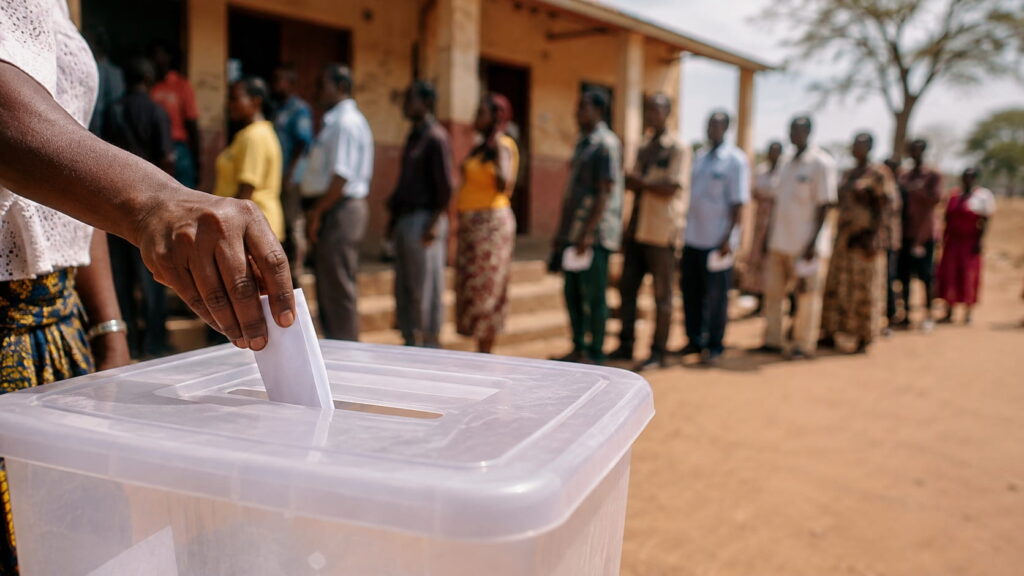
Zambia’s electoral system has changed significantly in the past year, and if you have been trying to make sense of it, you are not alone. Between constitutional amendments, new parliamentary seats, and terms like “mixed member proportional representation” being thrown around in the news, it is easy to feel lost. So let us break it down in plain language.
Zambia’s three key electoral methods are the majoritarian system, First-Past-The-Post (FPTP), and proportional representation (PR). The President is elected under the majoritarian system, constituency and ward-based representatives are elected through FPTP, and designated seats for women, youth, and persons with disabilities are allocated through PR. Since the Constitution of Zambia (Amendment) Act No. 13 of 2025, these components now form mixed-member proportional representation frameworks for both the National Assembly and local councils.
Let us go through each system, how it applies to your vote, and how the whole process fits together ahead of the 2026 general election.
This article reflects Zambia’s electoral framework as established by the Constitution of Zambia (Amendment) Act No. 13 of 2025 and the Electoral Process (Amendment) Act No. 12 of 2026. Electoral procedures can be updated by the Electoral Commission of Zambia, so confirm current details at elections.org.zm before voting.
In this article:
- Quick Answer: What Type of Electoral System Does Zambia Use?
- 1. First-Past-The-Post (FPTP): The Backbone of Zambia's Elections
- 2. Proportional Representation (PR): Reserved Seats Based on the Presidential Vote
- 3. Majoritarian System: How Zambia Elects Its President
- What Changed in Zambia's Electoral System in 2025?
- How Do Elections Work in Zambia?
- Electoral Systems vs. Types of Elections: Don't Confuse the Two
- What Do Zambians Vote For?
- When Are General Elections Held in Zambia?
- Types of Electoral Systems in the World
- Why This Matters for Zambian Voters
- Final Thoughts
- Frequently Asked Questions
Quick Answer: What Type of Electoral System Does Zambia Use?
Here is a simple snapshot of what type of electoral system Zambia uses at each level:
| What Is Being Elected? | Electoral System Used | Result |
|---|---|---|
| President | Majoritarian (more than 50% of valid votes) | Head of State |
| National Assembly (constituency seats) | First-Past-The-Post (FPTP) | 226 constituency MPs |
| National Assembly (reserved seats) | Proportional Representation (PR) | 40 seats for women, youth, and persons with disabilities |
| Local Government (mayor/chairperson & wards) | First-Past-The-Post (FPTP) | Mayors, council chairpersons, ward councillors |
| Local Government (reserved seats) | Proportional Representation (PR) | Reserved women, youth, and disability seats on councils |
Notice that FPTP and PR do not run as two separate, standalone systems. They are the building blocks of a single framework, which is why both the National Assembly and councils are now officially described as operating under a mixed-member proportional representation (MMPR) system.
Not every Member of Parliament is elected, though. The National Assembly also includes up to 11 nominated MPs, who are appointed rather than elected under any of the three systems above, along with the Vice-President, the Speaker, and the First and Second Deputy Speakers, who sit as ex-officio members. If you come across a different total seat count elsewhere, this is usually why: some sources count only the 226 FPTP plus 40 PR seats, while others include the nominated and ex-officio members too.
1. First-Past-The-Post (FPTP): The Backbone of Zambia’s Elections
First-Past-The-Post is the system most Zambians already know well, since it has been used since independence for parliamentary and local elections. Under FPTP, the candidate who gets the most votes in a constituency or ward wins, even if that candidate does not cross the 50 percent mark. There is no runoff and no vote transfer involved.
For example, if four candidates contest a constituency seat and the votes are split 30, 28, 25, and 17 percent, the candidate with 30 percent wins outright. This is why FPTP is often described as a “winner takes all” system.
Following the 2025 constitutional amendment, FPTP now applies to 226 constituency-based parliamentary seats, up from the previous 156. It also remains the system used to elect mayors, council chairpersons, and ward councillors at local government level.
The main appeal of FPTP is that it is simple to understand and quick to count. Critics, however, argue that it can produce results where a party wins a large share of seats without winning a majority of the national vote, since votes cast for losing candidates in each constituency do not carry over to anything beyond that seat.
2. Proportional Representation (PR): Reserved Seats Based on the Presidential Vote
This is the part of Zambia’s system that trips people up the most, so it is worth explaining carefully.
Proportional Representation allocates a fixed number of seats to political parties, on top of the seats they win through FPTP. In Zambia’s case, this applies to 40 parliamentary seats, made up of:
- 20 seats for women
- 15 seats for youth (aged 18 to 35)
- 5 seats for persons with disabilities
Here is the part that matters most: these seats are not decided by a separate PR ballot, and they are not decided by your parliamentary vote either. Under the amended Constitution, the 40 PR seats are distributed to political parties in proportion to the total valid votes received by that party’s presidential candidate.
Important: There is no separate PR ballot for the 40 reserved parliamentary seats. Your presidential vote contributes to your chosen party’s national presidential vote total, and it is that aggregate total, not your individual ballot on its own, that the ECZ uses to work out each party’s share of the PR seats.
The same principle applies at council level. Councils operate under the same MMPR framework, combining FPTP for mayors, council chairpersons, and ward-based seats with a proportional representation mechanism for reserved women, youth, and disability seats. The Electoral Process (Amendment) Act No. 12 of 2026 confirms that this is calculated using the identical presidential-vote-based formula applied at the national level.
So when you go to vote, there is no extra ballot paper for PR. The Electoral Commission of Zambia (ECZ) calculates the PR allocation after the election, using the presidential vote totals each party’s candidate received, and fills the reserved seats from lists submitted by qualifying parties. The exact formula for this calculation, covering both the National Assembly and councils, is set out in the Electoral Process (Amendment) Act No. 12 of 2026.
3. Majoritarian System: How Zambia Elects Its President
The third type is the majoritarian, or absolute majority, system, and it applies only to presidential elections. Unlike FPTP, a presidential candidate cannot win with a simple plurality of votes. The winning candidate must secure more than 50 percent of the total valid votes cast, commonly referred to as the 50%+1 rule.
If no candidate crosses that threshold in the first round, the law provides for a runoff between the two candidates with the highest number of votes. This ensures that whoever becomes president has the backing of a genuine majority, not just the largest minority.
This is an important distinction to keep in mind, since the presidency and Parliament are governed by different rules entirely, even though both are decided on the same election day.
What Changed in Zambia’s Electoral System in 2025?
If you have come across older civic education material describing Zambia as simply using FPTP for Parliament and local government, plus a majoritarian system for president, that description was accurate before December 2025. It is no longer the complete picture.
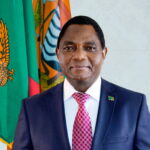
President Hakainde Hichilema signed the Constitution of Zambia (Amendment) Act No. 13 of 2025 into law on December 18, 2025. The amendment made three major changes:
- It introduced 40 parliamentary seats allocated through proportional representation, reserved for women, youth, and persons with disabilities.
- It increased constituency-based parliamentary seats from 156 to 226.
- It extended the same mixed-member proportional representation model to local councils.
These changes take full effect at the 2026 general election, the first general election scheduled to be conducted under this amended framework. If you are researching Zambia’s electoral system for the 2026 vote specifically, this is the version that applies, as confirmed by the IFES 2026 Zambia election snapshot.
Why Do Some Websites Still Say Zambia Uses FPTP for Parliament?
If you search around, you will still find plenty of voter education material, including some official pages, describing Zambia as using FPTP for the National Assembly and local government, with a majoritarian system reserved for the presidency. That description was accurate before December 2025. It simply has not been updated to reflect the new constitutional framework.
Under the current law, FPTP has not disappeared. It is still very much part of the system, just no longer the whole story. FPTP and PR now operate together as components of a single mixed-member proportional representation framework for both the National Assembly and councils, rather than as the complete picture on their own.
How Do Elections Work in Zambia?
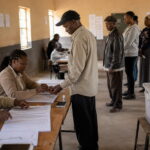
On election day, you cast separate ballots for different offices, and each one feeds into a different part of the system:
- Your presidential vote is counted under the majoritarian system to decide who becomes president, and it also determines how the 40 reserved parliamentary seats are shared among qualifying parties.
- Your parliamentary vote decides who wins your constituency seat under FPTP. It does not feed into the PR calculation.
- Your local government vote decides your mayor, council chairperson, and ward councillor, all under FPTP, with council-level PR seats allocated afterward based on the presidential vote in that jurisdiction’s council area.
After polls close, the ECZ tallies constituency and ward results directly, then separately calculates the PR seat allocation using the national presidential vote figures, before releasing the full results.
Electoral Systems vs. Types of Elections: Don’t Confuse the Two
These two ideas often get mixed up, so it helps to separate them clearly.
An electoral system describes how votes are converted into winners or seats. Zambia uses three: majoritarian, FPTP, and PR.
A type of election describes what office or institution is being elected. Zambia has three main categories:
- Presidential elections
- National Assembly elections
- Local government elections
On top of these, Zambia also distinguishes between general elections, held every five years, and by-elections, held to fill a seat that falls vacant between general elections.
What Do Zambians Vote For?
On general election day, registered voters cast ballots for:
- The President
- A constituency-based Member of Parliament
- A mayor or council chairperson, where applicable
- A ward councillor
The 40 reserved parliamentary seats and the reserved council seats are not voted for directly. They are filled afterward, based on the presidential vote totals and the party lists submitted by qualifying political parties.
When Are General Elections Held in Zambia?
Zambia holds general elections every five years. The next general election is scheduled for Thursday, August 13, 2026, the first to be conducted under the new mixed-member proportional representation framework introduced by Act No. 13 of 2025.
Types of Electoral Systems in the World
Zambia’s blend of FPTP, PR, and a majoritarian system is not unique. Globally, electoral systems generally fall into four broad categories:
- Plurality systems, such as FPTP, used in the UK, the US, and for Zambia’s constituency and ward-based seats
- Majority systems, which require an absolute majority or a runoff, such as Zambia’s presidential election
- Proportional representation systems, used widely across much of Europe, and now partly adopted in Zambia’s reserved seats
- Mixed systems, which combine plurality or majority elements with PR, such as Germany’s model and Zambia’s current MMPR framework
Zambia’s approach draws on three of these four categories at once, which is why it is best described as a hybrid model rather than a single, uniform system.
Why This Matters for Zambian Voters
Understanding these systems is not just an academic exercise. It affects how your vote is used and how power ends up distributed in Parliament and in council chambers. A voter whose preferred MP candidate loses the local FPTP race might still see their presidential vote contribute to their party gaining a reserved PR seat elsewhere in the country.
This is exactly why the ECZ provides voter education resources ahead of the 2026 general election, to help citizens understand how the electoral process works and participate meaningfully.
Final Thoughts
Zambia’s electoral system today rests on three key methods: the majoritarian system for the presidency, First-Past-The-Post for constituency and ward-based seats, and proportional representation for reserved seats allocated on the strength of the presidential vote. Since the 2025 constitutional amendment, these three methods now operate together as a mixed-member proportional representation framework for both the National Assembly and local councils.
Whether you are a first-time voter or simply trying to keep up with Zambia’s evolving political landscape, understanding how these systems work puts you in a far stronger position to interpret the results of the 2026 general election.
A note on accuracy: Zambia’s electoral framework has been amended twice in the past year, first through the Constitution of Zambia (Amendment) Act No. 13 of 2025, then through the Electoral Process (Amendment) Act No. 12 of 2026, which set out the detailed seat-allocation formula. This article reflects the law as it stood in August 2026. For the latest updates or clarifications ahead of the election, check the Electoral Commission of Zambia’s official website.
Frequently Asked Questions
What are the 3 main types of electoral systems in Zambia?
The three main methods are the majoritarian system, used for presidential elections; First-Past-The-Post, used for constituency and ward-based seats; and proportional representation, used for reserved seats for women, youth, and persons with disabilities.
What type of electoral system does Zambia use?
Zambia uses a mixed system. The presidency is decided by an absolute majority, while the National Assembly and local councils combine First-Past-The-Post with proportional representation under a mixed-member proportional representation framework introduced in 2025.
Does Zambia use proportional representation?
Yes, but only for a fixed number of reserved seats. Zambia allocates 40 parliamentary seats, for women, youth, and persons with disabilities, through PR, based on each party’s share of the presidential vote, not a separate PR ballot.
How many parliamentary seats are elected through PR in Zambia?
40 seats: 20 for women, 15 for youth, and 5 for persons with disabilities. These come on top of 226 constituency seats decided by FPTP.
What are the 3 types of elections in Zambia?
Presidential, National Assembly, and local government elections, all held on the same day every five years, alongside occasional by-elections between general elections.
How do elections work in Zambia?
Voters cast separate ballots for president, their constituency MP, and local leaders. The president is decided by majority vote, MPs and local leaders by FPTP, and the reserved PR seats are calculated afterward from the presidential vote totals.
When are general elections held in Zambia?
Every five years. The next general election is on August 13, 2026.
Is Zambia’s electoral system FPTP or proportional representation?
Both. Zambia is not exclusively one or the other. FPTP decides constituency, ward, mayoral, and council chairperson seats, while PR fills a fixed number of reserved seats. They operate together, not as competing alternatives.
How many constituencies are there in Zambia?
226, following the ECZ’s 2025 boundary delimitation exercise that added 70 new constituencies to the previous total of 156, ahead of the 2026 general election.
What is mixed-member proportional representation in Zambia?
It is the framework combining FPTP and PR within a single electoral system. Zambia’s National Assembly and local councils both use it: FPTP decides the directly contested seats, while PR fills a reserved set of seats based on the presidential vote.