Explore 27+ powerful African proverbs about women with meanings, origins, and life lessons. Cultural wisdom on mothers, strength, marriage, and leadership.
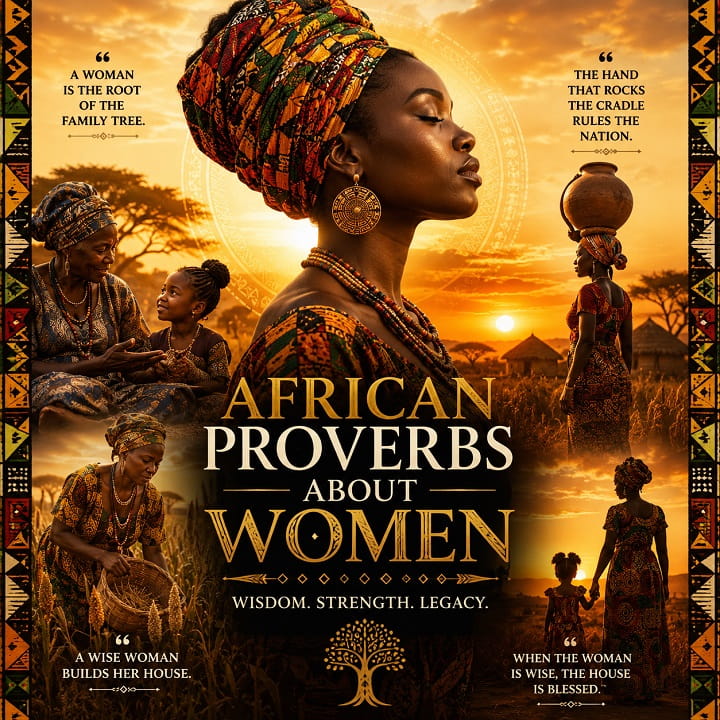
African proverbs are not just sayings. They are the bones of a culture — carrying the weight of centuries, the lessons of elders, and the lived experiences of entire communities. Nowhere is this more beautifully expressed than in proverbs about women.
Across the continent, from the savannas of East Africa to the rainforests of West Africa, women have been celebrated, honored, cautioned, and uplifted through oral tradition. These proverbs reflect how African societies understood womanhood — in all its complexity.
Whether you are seeking inspiration, cultural understanding, or simply a powerful quote to share, this collection offers something rare: African wisdom, explained honestly and in depth.

Table of Contents
- Why African Proverbs Matter
- African Proverbs About Women and Their Meanings
- African Proverbs About Mothers
- African Proverbs About Marriage and Family
- African Proverbs About Strong Women
- African Proverbs About Wisdom and Leadership
- African Proverbs About Respect and Character
- Funny and Clever African Sayings About Women
- Most Powerful African Proverbs About Women
- Short African Proverbs for Social Media Captions
- Lessons Children Can Learn From These Proverbs
- How African Proverbs Empower Women Today
- How Proverbs Preserve African Oral Tradition
- Modern Relevance of African Proverbs
- FAQ: African Proverbs About Women
Why African Proverbs Matter
Africa is not one country, one tribe, or one voice. It is a continent of over 3,000 distinct ethnic groups, each with its own language, customs, and oral traditions. Yet across this vast diversity, one thing unites them: the proverb.
In African cultures, proverbs — called owe in Yoruba, izaga in Zulu, maadili in Swahili — are the tools of elders, the currency of wise counsel, and the moral compass passed down through generations. They are spoken at weddings, funerals, naming ceremonies, and community gatherings. They settle disputes and inspire action.
Women hold a central place in this tradition. As mothers, community leaders, farmers, healers, and keepers of memory, African women have both been the subject of these proverbs and the ones most responsible for passing them on.
Understanding these proverbs means understanding something real about African philosophy: that wisdom is communal, that women are foundational, and that the lessons of the past are never fully finished teaching.
African Proverbs About Women and Their Meanings
1. “A woman is the root of the family tree.”
Origin: Pan-African (commonly cited across sub-Saharan Africa)
Meaning: Just as a tree draws life from its roots, the family draws its strength, identity, and continuity from women — particularly mothers and grandmothers.
Life Lesson: Never underestimate the quiet, foundational work of women in holding families together.
Cultural Interpretation: In many African societies, lineage, memory, and emotional continuity are traced through women. The grandmother is often the anchor of multiple generations.
Modern Relevance: In communities around the world, research consistently shows that women are more likely to invest resources back into their families and communities. This proverb captures that truth centuries before the data did.
2. “The hand that rocks the cradle rules the nation.”
Origin: Variant found across Swahili-speaking East Africa
Meaning: Mothers shape the values, beliefs, and character of children — and through those children, they shape the future of societies.
Life Lesson: Raising children well is not a small act. It is one of the most consequential things a person can do.
Cultural Interpretation: In African communities, motherhood carries enormous moral authority. A woman who raises honest, brave, and generous children is considered one of the greatest contributors to society.
Modern Relevance: Early childhood development is one of the most studied areas in modern education. This proverb understood the science intuitively: the first few years of life, shaped largely by mothers and primary caregivers, determine much of who we become.
3. “When the woman is wise, the house is blessed.”
Origin: Akan people, Ghana
Meaning: The intelligence and good judgment of a woman shapes the atmosphere, success, and peace of the home.
Life Lesson: Wisdom in a woman is not just a personal virtue — it is a communal gift.
Cultural Interpretation: Among the Akan, women hold significant social and property rights. The matrilineal system means lineage and inheritance pass through the mother’s side. A wise woman, therefore, is not just an asset to her family — she is the backbone of the clan.
Modern Relevance: Studies on family financial stability, child outcomes, and mental health consistently point to the role of women’s decision-making. This proverb is backed by modern evidence.
4. “A woman who does not have children is like a tree without fruit.”
Origin: Various East and West African communities
Meaning: In traditional African thought, children are considered a form of legacy and continuity. This proverb reflects the cultural weight placed on fertility and motherhood.
Life Lesson: Legacy matters — though what constitutes legacy may take many forms.
Cultural Interpretation: This proverb reflects a traditional worldview where biological children were the primary means of continuing a family line and securing old-age care. It is important to note that this view is contested within modern African feminist scholarship, which rejects its limiting implications.
Modern Relevance: Many African women today have expanded the definition of “fruit” — through creative work, mentorship, community impact, and professional achievement. Legacy is no longer solely biological.
5. “A woman’s beauty lies in her character, not her face.”
Origin: Widely attributed across West Africa, including Nigeria and Senegal
Meaning: True beauty is internal — manifested through kindness, integrity, patience, and strength of spirit.
Life Lesson: Invest in who you are, not just how you appear.
Cultural Interpretation: Many African traditions prize ubuntu — a concept that roughly translates as “I am because we are.” A person’s goodness is measured by how they treat others, not how they look.
Modern Relevance: In an age of social media and appearance-obsessed culture, this proverb is a powerful counter-narrative. Character compounds over time. Beauty fades. How you treat people echoes forever.
African Proverbs About Mothers
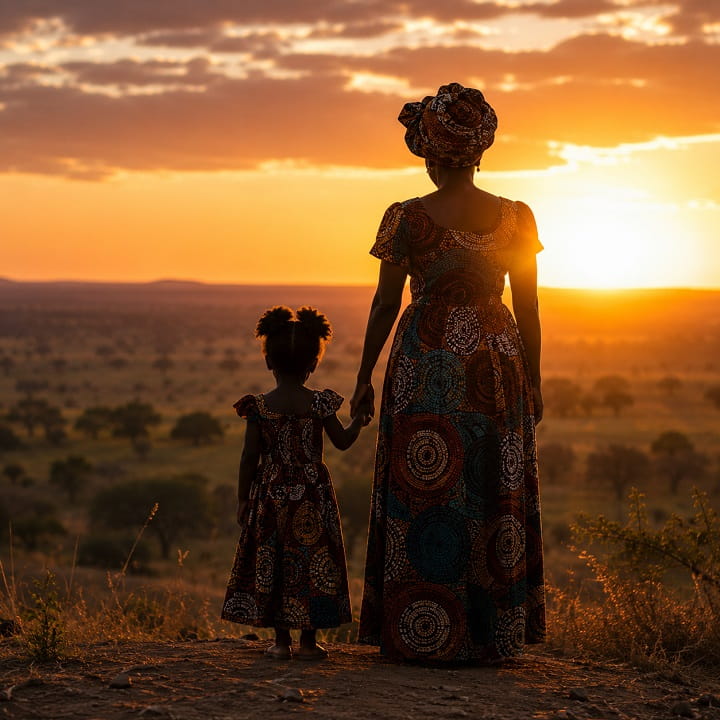
The African mother occupies a sacred space in cultural imagination. These proverbs reflect that reverence.
6. “A child who is not embraced by the village will burn it down to feel its warmth.”
Origin: Often attributed to African oral tradition broadly; popularized in Pan-African discourse
Meaning: Children who do not receive love, belonging, and community support become destructive — not out of evil, but out of desperate unmet need.
Life Lesson: Nurturing children is not only a family obligation but a communal responsibility. Neglect has consequences that ripple outward.
Cultural Interpretation: The African concept of community child-rearing — it takes a village — stems from this understanding. Mothers alone are not meant to bear the entire weight. The village is the extended mother.
Modern Relevance: Youth radicalization, gang membership, and social alienation often trace back to childhoods lacking warmth and belonging. This proverb is a call to collective responsibility.
7. “God could not be everywhere, so he created mothers.”
Origin: Widely attributed across Africa, often in Swahili-speaking communities; also appears in Jewish tradition
Meaning: Mothers carry a divine-like quality of care — present, watchful, and sacrificial in ways that transcend ordinary human capacity.
Life Lesson: Honor the people who give more than they take. That often begins with your mother.
Cultural Interpretation: Across Africa, the spiritual status of mothers is frequently elevated. In some traditions, prayers and offerings are made through ancestral mothers. The connection between motherhood and the sacred is deep and consistent.
Modern Relevance: Maternal sacrifice is one of the least acknowledged forms of labor in modern economies. This proverb calls it what it is — extraordinary.
8. “A mother’s love is the foundation upon which all great things are built.”
Origin: Pan-African
Meaning: The unconditional love of a mother provides children with the emotional security to explore, to risk, and to grow into their potential.
Life Lesson: Secure attachment in childhood creates confidence in adulthood. Love is not soft. It is structural.
Cultural Interpretation: In African traditions, the mother’s blessing carries significant spiritual weight. A mother’s curse, conversely, is considered grave. This reflects the understanding that maternal emotion shapes reality.
Modern Relevance: Attachment theory in developmental psychology mirrors this proverb almost exactly. Children with secure maternal bonds develop better resilience, emotional regulation, and interpersonal skills.
9. “The mother is the teacher of all teachers.”
Origin: Yoruba people, Nigeria
Meaning: Before any school, mentor, or elder, the mother is a child’s first and most important educator.
Life Lesson: What you learn at home is the most durable knowledge you will ever carry.
Cultural Interpretation: In Yoruba culture, the iya (mother) holds immense educational and moral authority. Children are expected to honor that role long into adulthood.
Modern Relevance: Research in early childhood education confirms that home learning environments — shaped primarily by mothers in many contexts — have lifelong effects on literacy, numeracy, and emotional intelligence.
African Proverbs About Marriage and Family
Marriage in African traditions is rarely a private matter — it is a covenant between families, clans, and sometimes entire communities. These proverbs reflect the depth of that understanding.
10. “Before you marry, keep both eyes open; after you marry, close one eye.”
Origin: Jamaican-African diaspora proverb, also found in West African coastal communities
Meaning: Choose a partner carefully and with full awareness. Once committed, practice grace, acceptance, and selective forgiveness over perfection.
Life Lesson: Perfect partners do not exist. Good marriages are built on clear-eyed choice followed by generous love.
Cultural Interpretation: African marital traditions often emphasize negotiation, patience, and community mediation over individual romantic idealism. Marriage is understood as a continuous practice, not a destination.
Modern Relevance: Marriage counselors echo this proverb almost verbatim. The combination of intentional partner selection and practiced forbearance is among the most consistent predictors of long-term relationship success.
11. “A man without a wife is like a vase without flowers.”
Origin: West African, widely shared among Akan and Ewe communities
Meaning: A home without a woman’s presence, care, and spirit lacks fullness and beauty.
Life Lesson: Partnership is not weakness. It is completion.
Cultural Interpretation: This proverb affirms the complementary nature of gender roles in many traditional African frameworks — not hierarchy, but interdependence. Each brings something the other cannot fully replicate alone.
Modern Relevance: Loneliness and isolation are among the leading public health crises in the modern world. The wisdom of partnership — whether in marriage, friendship, or community — is more relevant now than ever.
12. “A wife is like a blanket — she covers you and keeps you warm, yet at times she smothers you.”
Origin: Ashanti people, Ghana
Meaning: Marriage brings comfort, protection, and intimacy — and also, inevitably, moments of friction and constraint.
Life Lesson: Embrace the whole of a relationship, not just the comfortable parts.
Cultural Interpretation: Ashanti oral tradition has a rich sense of humor about marriage. The Ashanti understand that love without tension is incomplete — the friction is part of what makes the relationship real and alive.
Modern Relevance: Romanticized ideas of marriage often leave people unprepared for its dailiness. This proverb is refreshingly honest about the give and take that sustains any long-term bond.
13. “The woman who tells her husband’s secrets destroys the house she lives in.”
Origin: Hausa people, Northern Nigeria / Niger
Meaning: Trust within a marriage is the foundation of the home. Betraying private matters — even to family or friends — erodes that foundation slowly and irreparably.
Life Lesson: Loyalty is not just a feeling. It is a practiced behavior, especially in how we speak about those closest to us.
Cultural Interpretation: Among the Hausa, the concept of kunya (shame and modesty) includes discretion about private family matters. A woman who gossips about her husband is seen as weakening the social fabric of her household.
Modern Relevance: Privacy within intimate relationships is consistently named by couples as a cornerstone of trust. This applies equally to both partners.
African Proverbs About Strong Women
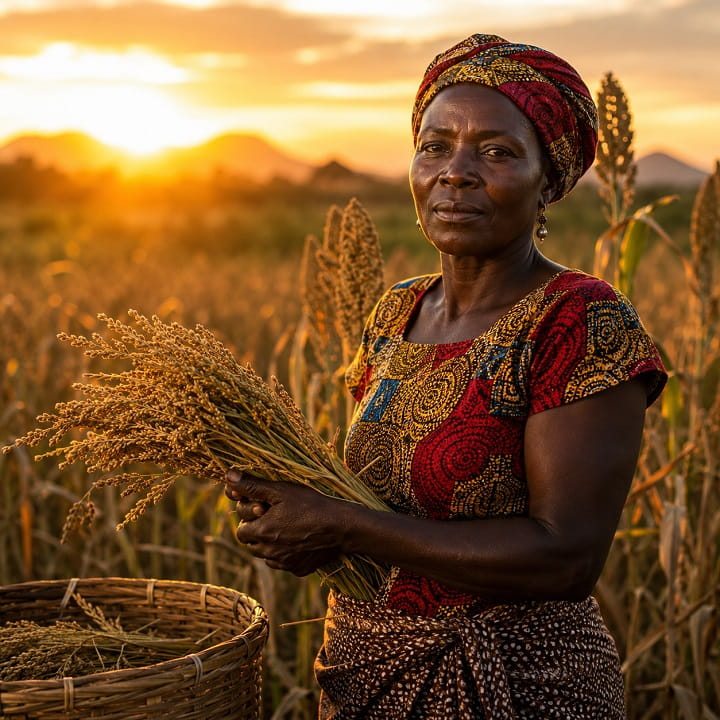
African oral tradition is full of proverbs that celebrate the power, resilience, and courage of women. These are not passive subjects, they are forces of nature.
14. “A woman with a voice is, by definition, a strong woman.”
Origin: Often attributed to Pan-African feminist discourse, rooted in Igbo and Yoruba oral traditions
Meaning: The act of speaking — of claiming space, demanding justice, naming truth — is itself an act of strength.
Life Lesson: Do not silence yourself in order to make others comfortable. Your voice is your power.
Cultural Interpretation: In many African societies, women who spoke publicly were considered either dangerous or divine — rarely ordinary. The woman who raised her voice despite the risk was deeply remembered.
Modern Relevance: In every measure of gender equity, women’s voice — literal and figurative — is the critical variable. Societies where women speak freely perform better on every index of human development.
15. “Rain does not fall on one roof alone.”
Origin: Cameroonian proverb
Meaning: Hardship is communal. No one suffers in isolation, and no one should bear their burdens alone.
Life Lesson: Reach out. Lean on community. Allow others to carry with you.
Cultural Interpretation: This proverb is frequently invoked by women supporting one another through loss, difficulty, or injustice. It is a call to solidarity — a reminder that shared suffering is lightened.
Modern Relevance: The mental health benefits of community support are well documented. Women who have strong social networks recover faster from illness, grief, and trauma.
16. “The woman who does not bow down is the one who carries the nation on her back.”
Origin: Pan-African, commonly invoked in liberation movements
Meaning: The most enduring strength is the kind that refuses submission in the face of oppression.
Life Lesson: Stand firm. Your refusal to yield is not stubbornness — it is the architecture of change.
Cultural Interpretation: African women have played central roles in anti-colonial and liberation struggles — from the Aba Women’s Riot in Nigeria (1929) to the Women’s March on Pretoria during apartheid. This proverb honors that history.
Modern Relevance: Women’s leadership in social movements from #MeToo to #BringBackOurGirls continues to demonstrate that the woman who will not bow down changes the world around her.
17. “If you want to go fast, go alone. If you want to go far, go together.”
Origin: Often attributed broadly to African wisdom; associated with many traditions
Meaning: Individual ambition moves quickly but burns out. Collective strength endures and achieves more.
Life Lesson: Build coalitions. Invest in relationships. Slow down enough to bring others with you.
Cultural Interpretation: This proverb reflects the African communal worldview in its purest form. It has been embraced by women’s cooperatives, savings circles, and community organizations across the continent.
Modern Relevance: The most transformative women’s organizations in Africa — from Wangari Maathai’s Green Belt Movement to savings groups across rural Kenya — are built on this exact principle.
African Proverbs About Wisdom and Leadership
These proverbs show that African cultures have long recognized women as repositories of wisdom — and, often, as natural leaders.
18. “Only a fool tests the depth of the river with both feet.”
Origin: Widespread across East and Central Africa
Meaning: Wisdom requires caution and discernment. Plunge into nothing blindly.
Life Lesson: Think before you act. Gather information before committing. Wisdom is not fear — it is prudence.
Cultural Interpretation: This proverb is often spoken by elder women counseling younger ones about decisions in love, business, or family. It reflects the African respect for deliberate thought over impulsive action.
Modern Relevance: In a world that prizes speed over reflection, this proverb is an important corrective. The best decisions are tested, not rushed.
19. “Knowledge is like a garden: if it is not cultivated, it cannot be harvested.”
Origin: Guinea proverb
Meaning: Wisdom requires active cultivation — study, practice, reflection, and application.
Life Lesson: Learning is not passive. Grow your mind deliberately.
Cultural Interpretation: In communities where women were historically denied formal education, this proverb was a quiet act of resistance — affirming that women’s minds, too, are gardens worth tending.
Modern Relevance: Girls’ education remains one of the highest-impact development investments globally. Every year of schooling a girl receives has measurable ripple effects on health, economics, and family stability.
20. “A wise woman builds her house; a foolish one tears it down with her own hands.”
Origin: Derived from Proverbs 14:1, widely adapted into African oral tradition across Christian and indigenous frameworks
Meaning: A wise woman creates, nurtures, and sustains. She does not destroy what shelters her through carelessness, anger, or poor choices.
Life Lesson: Every day, you are building or tearing down. Choose your actions accordingly.
Cultural Interpretation: This proverb operates on multiple levels — the literal home, the social relationships, the family reputation, and the community fabric. A woman’s wisdom (or lack of it) has structural consequences.
Modern Relevance: Leadership researchers identify this type of “building” wisdom — creating environments where others can thrive — as a defining quality of transformational leaders. Women leaders consistently score higher on these metrics.
African Proverbs About Respect and Character
These proverbs address how women deserve to be treated — and how women are expected to carry themselves.
21. “Respect a woman as you would respect the earth — for both give life and demand care.”
Origin: Pan-African, associated with indigenous ecological and spiritual traditions
Meaning: Women, like the earth, are life-giving and sustaining — and like the earth, they are often exploited by those who take their gifts for granted.
Life Lesson: Reciprocate care. Respect what sustains you.
Cultural Interpretation: Many African spiritual traditions personify the earth as feminine — as a mother. The connection between respect for women and respect for nature is not metaphorical. It is theological.
Modern Relevance: Both feminist and environmental movements increasingly recognize this connection. The exploitation of the earth and the exploitation of women often occur in the same contexts and for the same reasons.
22. “A woman of good character is a crown to her family.”
Origin: Common across Yoruba, Igbo, and Hausa communities
Meaning: A woman who is honest, hardworking, dignified, and generous brings honor and pride to those around her.
Life Lesson: Your reputation is not what you say about yourself. It is the reflection others see in your eyes.
Cultural Interpretation: In African communal structures, family reputation is a shared resource. A woman’s public conduct reflects on her entire family — which is why good character is praised as highly as physical beauty, or more.
Modern Relevance: Studies on organizational culture find that integrity and character are the most cited predictors of trusted leadership. This is not a new insight — it has been African wisdom for centuries.
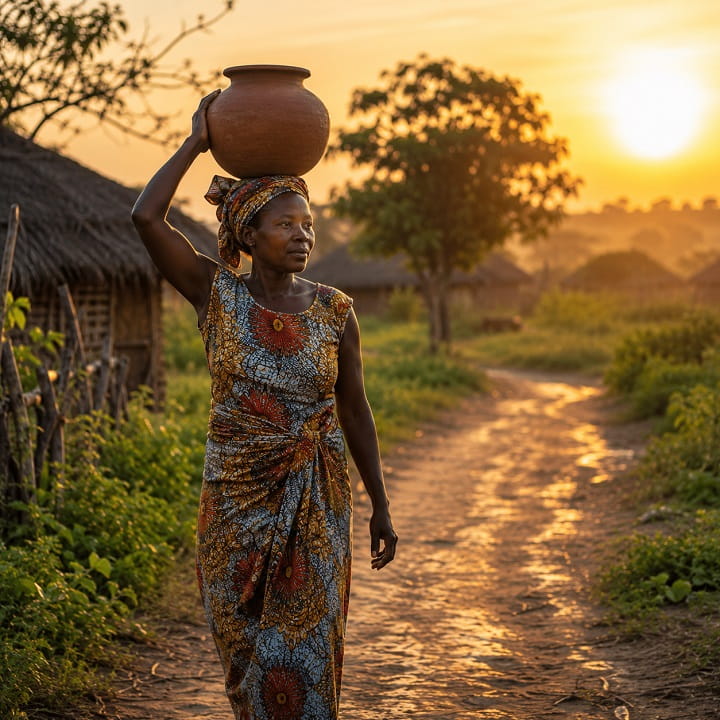
23. “Do not despise the woman who fetches water — without her, the village thirsts.”
Origin: Associated with Sahelian communities of West Africa
Meaning: Labor that is invisible or socially undervalued is often the labor that keeps everything else possible.
Life Lesson: See the person behind the work. Honor what sustains you, even when it goes unnoticed.
Cultural Interpretation: Across sub-Saharan Africa, women perform the majority of agricultural labor and water collection — often walking hours each day. This proverb is a direct rebuke to those who underestimate this work.
Modern Relevance: The concept of “invisible labor” — unpaid, unrecognized work performed disproportionately by women — is central to gender economics. This proverb named it long before economics did.
Funny and Clever African Sayings About Women
Not all proverbs are solemn. African oral tradition has a delicious sense of humor — particularly when it comes to the dynamics between men and women.
24. “A woman who knows what she wants is either a queen or a problem — and sometimes both.”
Origin: Contemporary West African folk wisdom
Meaning: A decisive, clear-eyed woman disrupts those who prefer passive women — but she also achieves things that the undecided never will.
Life Lesson: Know your mind. Own it. The discomfort of others is not your responsibility.
25. “A man who listens to his wife has a quiet house. A man who does not has a loud one.”
Origin: East African, commonly told in Swahili-speaking communities
Meaning: A husband who dismisses his wife’s counsel will experience the consequences of poor decision-making in the most domestic of settings.
Life Lesson: Wisdom does not check gender at the door. Listen to those who know what they are talking about, regardless of who they are.
26. “The woman who cooks bad food is never hungry — because she eats before anyone else arrives.”
Origin: West African, Ghanaian folk humor
Meaning: Those who control a resource — even a modest one — are rarely the ones who suffer from it.
Life Lesson: A lighthearted reminder that power often lives in small, everyday acts of control.
27. “She who sells groundnuts does not eat them all.”
Origin: Hausa proverb, West Africa
Meaning: The discipline to trade your resources rather than consume them entirely is the foundation of economic survival.
Life Lesson: Learn to distinguish between what you produce and what you consume. Self-discipline creates long-term stability.
Most Powerful African Proverbs About Women
| Proverb | Origin | Core Theme |
|---|---|---|
| “A woman is the root of the family tree.” | Pan-African | Foundation |
| “The hand that rocks the cradle rules the nation.” | East Africa | Influence |
| “A woman with a voice is a strong woman.” | West Africa | Empowerment |
| “Respect a woman as you would respect the earth.” | Pan-African | Honor |
| “A wise woman builds her house.” | Pan-African | Wisdom |
| “Rain does not fall on one roof alone.” | Cameroon | Solidarity |
| “The woman who does not bow down carries the nation.” | Pan-African | Resilience |
Short African Proverbs for Social Media Captions
These brief, potent sayings are perfect for Instagram, X (formerly Twitter), LinkedIn, or WhatsApp statuses:
- “A woman’s beauty lies in her character, not her face.”
- “Rain does not fall on one roof alone.”
- “If you want to go far, go together.”
- “Knowledge is a garden — cultivate it.”
- “A woman with a voice is a strong woman.”
- “The mother is the teacher of all teachers.”
- “She who fetches water keeps the village alive.”
Lessons Children Can Learn From These Proverbs
African proverbs are among the finest tools for character education. Here is what young people can draw from this collection:
Respect your mother. Multiple proverbs make clear that the mother is the foundation of everything a family becomes. Understanding that early changes how children treat the women around them.
Character is more valuable than appearance. Beauty fades. How you treat people echoes. Teaching children to value inner character over surface appearance shapes how they judge — and how they are judged — for life.
Community matters. Proverbs like “rain does not fall on one roof alone” and “if you want to go far, go together” teach children that cooperation is not weakness. It is intelligence.
Women deserve respect. These proverbs offer children a framework that honors women’s contributions — as mothers, leaders, wisdom-keepers, and economic agents. Exposure to this framework can reshape attitudes from an early age.
Hard work is dignified. Proverbs honoring women who fetch water, sell groundnuts, and manage households tell children that ordinary labor is noble — not beneath anyone’s dignity.
How African Proverbs Empower Women Today
The empowerment literature often focuses on legal rights, economic access, and political representation. All of that matters. But there is a quieter form of empowerment that proverbs provide: the validation of existing.
When a woman reads “a woman with a voice is a strong woman” and recognizes herself in it, something shifts. When a mother reads “God could not be everywhere, so he created mothers” and understands that her sacrifice has been seen across centuries — that is not small.
African proverbs empower women by:
Naming their contributions. In cultures that often rendered women’s work invisible, proverbs made it visible. Named things have power. Recognized things have dignity.
Providing language for self-advocacy. Women who know these proverbs carry them into negotiation rooms, community meetings, and family conversations. They become rhetorical tools — culturally rooted, hard to dismiss.
Building cross-cultural solidarity. These proverbs travel. Women in Nairobi share them with women in Lagos who share them with women in Birmingham and Atlanta. African wisdom about womanhood has become global currency.
Challenging limiting beliefs. Not all proverbs about women are flattering. The ones that reflect older, constraining views of womanhood are now being actively interrogated by African feminist scholars and community leaders. Proverbs are not static — they are argued with, revised, and reimagined. That dialogue is itself a form of empowerment.
How Proverbs Preserve African Oral Tradition
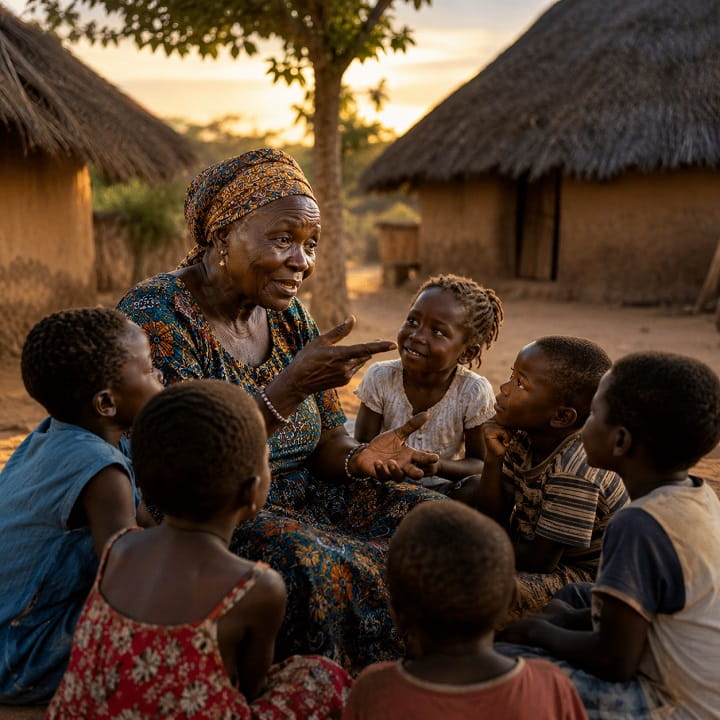
Before written language arrived in many parts of Africa — and long after it did — proverbs carried the work of books, laws, and philosophies combined.
They were mnemonic devices: short enough to remember, dense enough to last. A single proverb could encode an entire ethical framework in twelve words. Children who memorized them were not just learning language. They were absorbing a worldview.
Women were central to this transmission. As primary caregivers, as storytellers, as the figures most present in daily domestic life, women were the most consistent carriers of proverb tradition. They wove them into lullabies, into cooking lessons, into the correction of misbehaving children.
Today, that tradition faces genuine threats: urbanization, social media, the dominance of English and French as prestige languages, and the generational loss of indigenous languages. Many proverbs exist only in the memory of elders who have not yet found someone willing to receive them.
Preserving African proverbs about women is therefore not merely an academic exercise. It is an act of cultural conservation — and, in a deeper sense, an act of love.
Modern Relevance of African Proverbs
It would be a mistake to read these proverbs as relics. They are not museum pieces. They are living documents — relevant, urgent, and in many cases prophetic.
The proverb “the hand that rocks the cradle rules the nation” anticipates what developmental science confirmed a century later. The saying “do not despise the woman who fetches water” foreshadows the entire field of gender economics. The wisdom that “a woman with a voice is a strong woman” predates the global feminist movement by generations.
What Africa knew through oral tradition, the world is slowly rediscovering through research.
More than that, these proverbs offer something that data cannot: emotional resonance. They do not argue. They do not cite studies. They simply tell the truth in a way that lands in the body, not just the mind.
In a fragmented, distracted world, that is a form of power that has not diminished.
FAQ: African Proverbs About Women
What are African proverbs about women?
African proverbs about women are traditional sayings from various African cultures that reflect the roles, wisdom, strength, beauty, and character of women. They are part of Africa’s rich oral tradition and are passed down across generations as tools for moral guidance, cultural education, and community cohesion.
What is the most famous African proverb about women?
One of the most widely known is: “A woman is the root of the family tree.” Others frequently cited include “The hand that rocks the cradle rules the nation” and “God could not be everywhere, so he created mothers.”
What do African proverbs say about mothers?
African proverbs consistently elevate mothers as sacred, foundational figures. They are described as teachers, spiritual protectors, and the emotional backbone of families and communities. The love and sacrifice of mothers is treated with near-divine reverence in many traditions.
How do African proverbs view strong women?
Many African proverbs explicitly celebrate women’s strength — their voice, their refusal to submit to oppression, and their capacity to carry communities. Far from being passive subjects, women in African proverb tradition are often depicted as agents of transformation and resilience.
Are African proverbs relevant today?
Absolutely. While some proverbs reflect historical gender roles that contemporary African feminists challenge and revise, many contain wisdom that is strikingly modern — about women’s leadership, communal support, the value of invisible labor, and the power of education and voice.
Which African country has the most proverbs about women?
No single country dominates, but West African nations — particularly Nigeria (Yoruba, Igbo, Hausa traditions), Ghana (Akan, Ashanti), and Senegal — have some of the richest documented collections. East African traditions in Kenya, Tanzania, and Ethiopia also contain extensive proverb traditions centered on women.
Can African proverbs be used in speeches or writing?
Yes, with cultural sensitivity and attribution where possible. These proverbs add depth, authority, and warmth to speeches, essays, toasts, and personal writing. They are widely used in African public discourse and are increasingly embraced globally.
Related Posts: